

Ambon Container Terminal (TPK Ambon) has celebrated significant achievements through the third quarter of 2024 (Q3 2024), thanks to ongoing transformation efforts focused on standardization and automation, implemented both before and after the Pelindo merger. These enhancements have led to improved performance, evidenced by higher Box/Ship/Hour (BSH) rates, shorter port stays, and increased throughput.
TPK Ambon has been at the forefront of transformation in Indonesia’s port sector, pioneering standardization and automation initiatives. The terminal has reached an average BSH of 25, with a record high of 45, while reducing port stay times to just 16 hours.
As of Q3 2024, throughput has reached 78,478 TEUs (twenty-foot equivalent units), marking a 4.75% year-on-year increase from 74,919 TEUs in Q3 2023. This growth is expected to surpass the yearly throughput from previous years: 95,567 TEUs in 2019, 100,379 TEUs in 2020, 108,682 TEUs in 2021, 108,999 TEUs in 2022, and 103,532 TEUs in 2023.
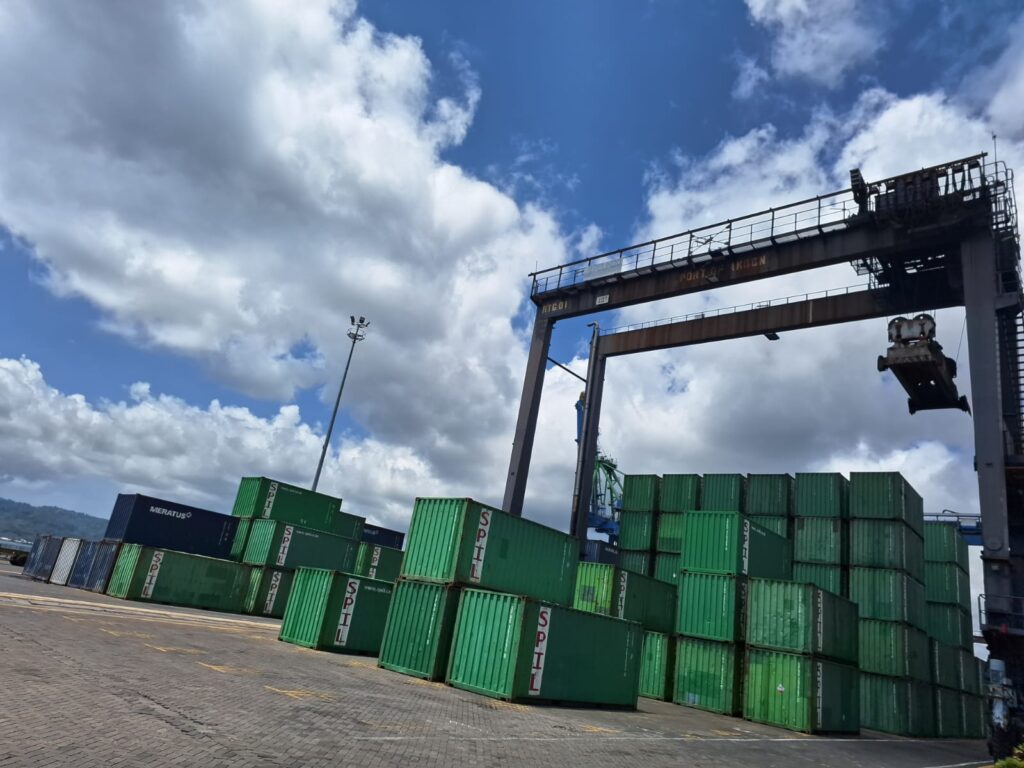
Yandi Sofyan Hadi, Terminal Head of TPK Ambon, attributed this growth to an increase in transshipment containers, facilitated by the national shipping company Salam Pacific Indonesia Line (SPIL). SPIL’s strategy involves stockpiling empty containers in Ambon for distribution to surrounding ports, including Tual, Fakfak, Kaimana, Sorong, and Jayapura.
“The growth in container traffic aligns with the economic development in Ambon, which averaged 3.12% during the first nine months of this year,” Yandi stated during a presentation on Q3 performance on October 16, 2024.
TPK Ambon is a leading port facility in eastern Indonesia, known for being the first to transform and digitize its services even prior to the Pelindo merger. The terminal features a -12 meter low water spring (mLWS) depth and a total pier length of 684 meters, including 334 meters for container ship services, 181 meters for multipurpose use, and 169 meters for passenger vessels. It also has a 6-hectare stacking yard.
Yandi was accompanied by his team, including Andre Rico, Operations Support Manager responsible for Finance, Risk Management, HR, HSSE, Management Systems, and Customer Relations, and Suryo Khasabu, VP of Corporate Communication at PT Pelindo Terminal Petikemas. He highlighted that the terminal handles a variety of commodities, including basic necessities, onions, copra, cement, asphalt, and fish.
Plans are underway to expand the market for transshipment port services to Tual, Saumlaki, and Dobo, as well as optimize cargo consolidation activities with Multi Terminal Indonesia (MTI) in the Line 2 area.
Suryo Khasabu added that the Nusantara Terminal Operating System (TOS) has been implemented at nine container terminal facilities, including IPC TPK Tanjung Priok, TPK-1 Makassar, TPK Ambon, TPK Pontianak, TPK-2 Makassar, TPK Palembang, TPK Belawan (Domestic), TPK Panjang, and TPK Bitung. The TOS Nusantara encompasses several components, including the Palapa portal (operational), Parama (customer), and Praya (internal and financial).
Local Challenges
H.B. Sirait, Chairman of the Indonesian Logistics and Forwarders Association (ALFI) of Maluku Province, praised the terminal’s performance, noting that despite complex logistics challenges in the province, TPK Ambon has achieved positive results. Manumara Oscar, Secretary of ALFI Maluku, echoed these sentiments, highlighting the beneficial impacts of ongoing transformation and digitalization.
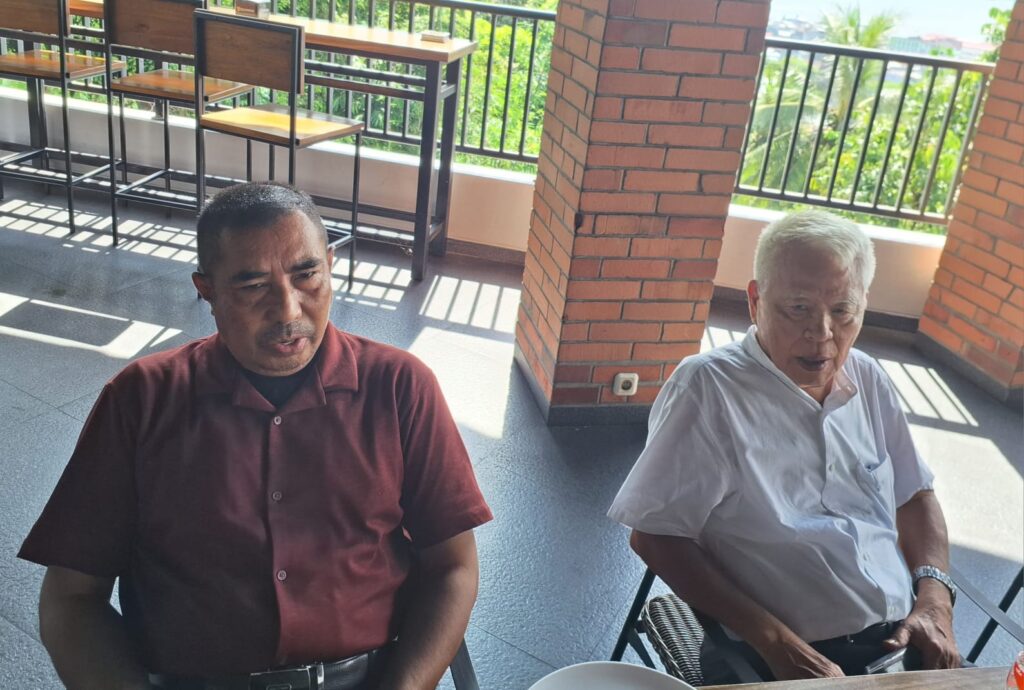
Since TPK Ambon began its transformation in 2020, service quality has significantly improved. However, Sirait urged TPK Ambon to upgrade its equipment, particularly the reach stackers used in cargo consolidation, suggesting that some existing units should be replaced due to age. He also emphasized the importance of enhancing human resource competencies for improved customer service.
Additionally, ALFI encourages TPK Ambon to collaborate with the Regional Government to develop cargo consolidation centers, such as warehousing facilities outside the port. “Ambon is facing complicated logistics problems, including a lack of outbound cargoes, poor collection and storage systems for local products, and inadequate land infrastructure,” he said.
Data from the port confirms these challenges, revealing an imbalance between inbound and outbound cargoes to and from the province.