
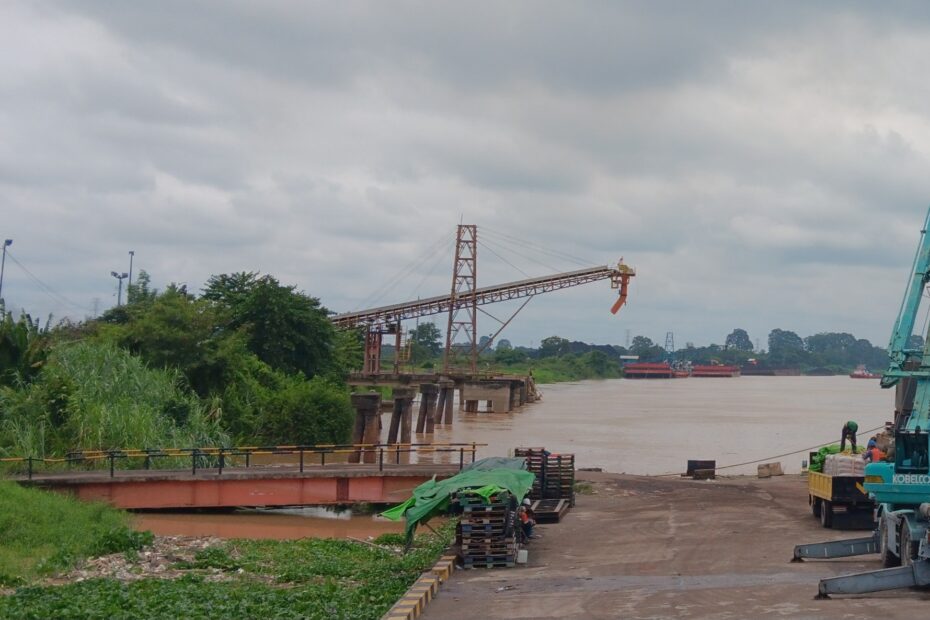
Photo: PTP Nonpetikemas’ Conveyor at Talang Duku
Pelabuhan Talang Duku Jambi, the largest and oldest port in the province, is facing increasing competition from several private Terminals for Self-Interest (TUKS) along the Batanghari River. These private terminals, particularly dominant in coal handling and bulk cargo services, have outpaced Talang Duku’s non-container terminal in recent months, causing concern for the region’s economic vitality.
Despite its long history and strategic location, Talang Duku’s non-container terminal, operated by PT PTP Nonpetikemas, has experienced minimal activity. Industry players, including shipping companies, freight forwarders, and stevedores, report that the terminal has often been underutilized, raising alarms within the local business community.
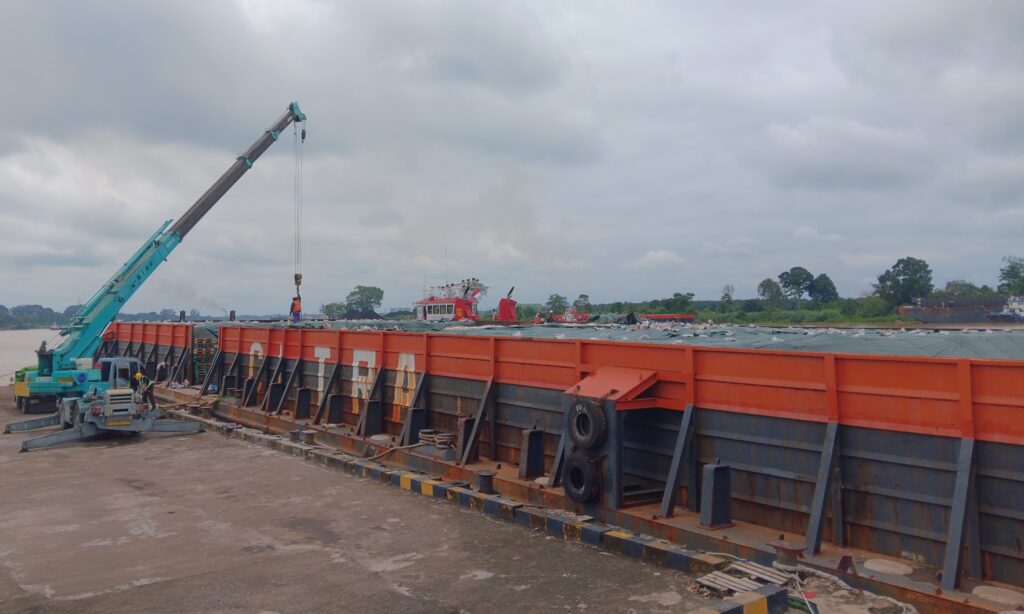
Photo: Talang Duku Non-container Berth
This underperformance is particularly worrying for Jambi Province, given that coal is one of its primary export commodities. According to M. Ihsan Syafitri, Chairman of the Indonesian Stevedoring Companies’ Association (IPSI) Jambi, and Abdul Gani, Secretary of the Indonesian National Shipowners’ Association (INSA) Jambi, three main factors contribute to the decline in competitiveness at Talang Duku’s non-container terminal: outdated infrastructure, high tariffs, and inflexible service procedures.
Outdated Infrastructure, Facilities
One of the primary issues cited is the terminal’s aging equipment, particularly its coal loading and unloading systems. “Many private terminals in the area have more advanced machinery, such as modern conveyor systems, which allow for faster and more efficient loading and unloading,” said Ihsan. “Despite offering lower rates, these private terminals can operate much more efficiently, making it difficult for Talang Duku to remain competitive.”
This equipment disparity leads to significant operational delays. Industry insiders report that unloading 8,000 to 9,000 tons of coal at a private TUKS takes about eight hours, while at Talang Duku’s terminal, it can take up to two days. This slow pace of operations gives private terminals a substantial edge in attracting coal shipments and bulk cargo.

Photo: Abdul Gani
Additionally, the pier at Talang Duku has been damaged due to a barge collision, and has remained out of service for several months. “The damage occurred recently, and Pelindo has yet to repair it,” Ihsan explained. This issue has disrupted normal operations, and ships are temporarily serviced at the container terminal instead.
Tariff Discrepancies
High tariffs at Talang Duku Port further undermine its competitiveness. Private terminals offer much lower rates, making them more attractive to businesses. “Pelindo needs to adjust its tariffs to align with market rates,” said Gani, who is also a member of Jambi City’s Regional House of Representatives (DPRD).
“If the coal loading and unloading tariffs were more affordable, or at least comparable to nearby TUKS, Talang Duku’s situation might improve,” added Ihsan. The disparity in tariffs between Pelindo and private terminals only widens the gap in efficiency and cost-effectiveness, further driving away potential customers.
Bureaucracy and Inflexibility
Another issue contributing to the port’s declining competitiveness is the inflexibility of Pelindo’s service model. “The decision-making process is slow, which is why the pier hasn’t been repaired yet,” Gani lamented. Pelindo’s bureaucratic procedures create delays, whereas private terminals with more agile management can respond more quickly to market demands. This inefficiency not only hampers port operations but also negatively impacts the broader economy of Jambi.

Photo: M. Ihsan Syafitri
Both Gani and Ihsan agree that improving the management structure at Talang Duku could enhance operational efficiency. “It would be more efficient if there was a single point of contact for services,” Gani suggested. “The port isn’t particularly busy, so a centralized approach could streamline operations and speed up processes.”
While Talang Duku Port has made some improvements, it faces significant competition from the more efficient private TUKS in the region. To remain competitive, Pelindo must address the terminal’s infrastructure issues, reduce tariffs, and streamline its services. This would help align the port with the demands of the modern logistics industry and restore its standing in the competitive coal export market.