

The government and national industries are expected to maintain economic stability to minimize the negative impact of the new U.S. import tariff policy (reciprocal tariff). This shift, however, presents an opportunity for Indonesia to strengthen its role in global trade by positioning itself as a central hub for supply chain activities.
Yukki Nugrahawan Hanafi, Chairman of the ALFI Institute and Advisory Board of the Indonesian Logistics and Forwarders Association (ALFI), highlighted the significant effects of the U.S. tariff policy on Indonesia, particularly on its exporters.
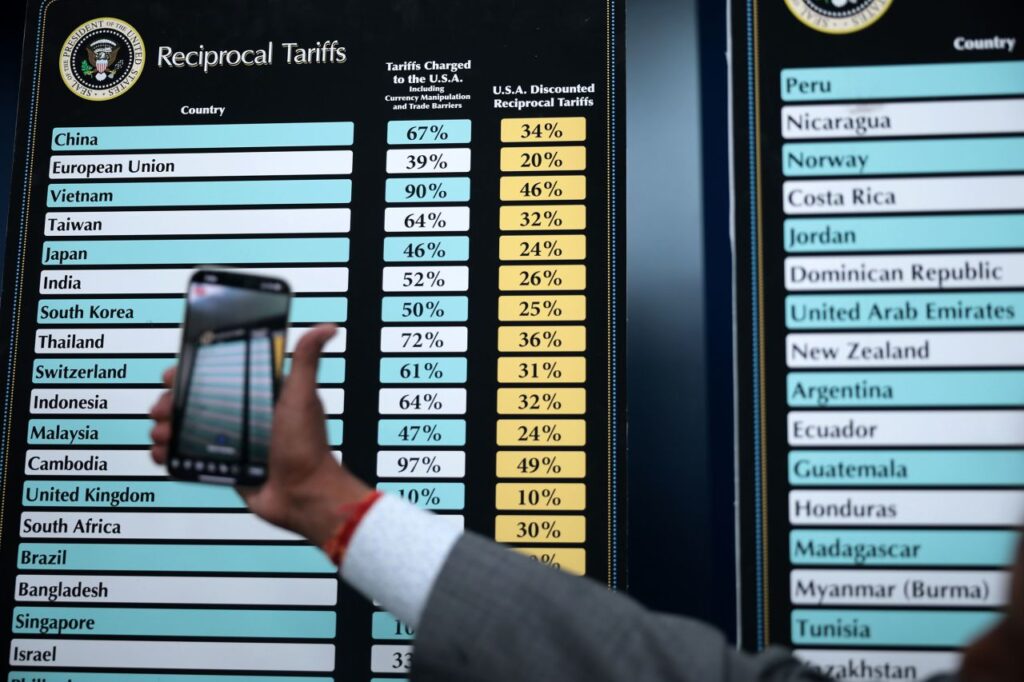
As part of the new policy, the United States, under President Donald Trump, has imposed an import tariff (reciprocal tariff) of 32% on Indonesia, along with 179 other countries. This move directly impacts Indonesia, making it one of the nations affected by the policy.
Donald Trump, on Wednesday announced far-reaching new tariffs on nearly all U.S. trading partners — a 32% tax on imports from Indonesia, 34% from China and 20% on the European Union, among others — that threaten to dismantle much of the architecture of the global economy and trigger broader trade wars.
Trump, in a Rose Garden announcement, said he was placing elevated tariff rates on dozens of nations that run meaningful trade surpluses with the United States, while imposing a 10% baseline tax on imports from all countries in response to what he called an economic emergency.
The president, who said the tariffs were designed to boost domestic manufacturing, used aggressive rhetoric to describe a global trade system that the United States helped to build after World War II, saying “our country has been looted, pillaged, raped and plundered” by other nations.
However, Yukki emphasized that Indonesia could also seize the opportunities arising from this change, particularly in becoming a central hub for supply chain activities.
While Indonesia enjoys a trade surplus with the U.S., the overall trade volume remains relatively modest. Nevertheless, the ripple effects of trade tensions often influence the perceptions of businesses and the health of the national economy.
“The government and industry stakeholders must prioritize stability to reduce the negative consequences of this policy,” Yukki stated.
He also cautioned that the government and business sectors should stay alert to the potential effects of the U.S. tariff policy, particularly the possibility of additional tariffs being imposed. Moreover, the policy may lead Chinese exports to seek new markets, including Indonesia, potentially flooding the market with competitively priced Chinese products.
“This could disrupt the domestic market,” Yukki noted.
Indonesia’s Opportunity as a Supply Chain Hub
Despite these challenges, Yukki sees significant potential for Indonesia, especially within the logistics and supply chain sectors. With the U.S. imposing high tariffs on countries in Southeast Asia, such as Vietnam, Indonesia stands to benefit by attracting the redirected flow of goods that previously went to Vietnam.
“Vietnam’s higher tariff rate of 46% means products like electronics, textiles, shoes, and furniture—formerly routed through Vietnam—could now be redirected to Indonesia,” Yukki explained. “This presents Indonesia with an opportunity to become a more efficient and attractive hub for global supply chains.”
He urged the government to act quickly to capitalize on this opportunity. Steps should include improving the ease of doing business, streamlining licensing processes, enhancing logistics capabilities, and investing in infrastructure.
Additionally, creating a conducive business environment is crucial. This includes eliminating illegal levies (pungli), which could impede growth, to ensure that Indonesia is well-positioned to attract businesses relocating due to higher tariffs in countries such as Vietnam, Laos, Cambodia, and Thailand.
With these strategic measures, Indonesia has the potential to strengthen its position in the global market. By seizing opportunities presented by shifts in global supply chains, Indonesia can optimize the benefits of the new U.S. import tariff policy and attract international businesses seeking more competitive and stable supply chain solutions.