

Indonesia’s container terminals delivered a robust performance in the first quarter of 2025, fueled by a booming logistics sector and strong industrial growth across key regions.
PT Pelindo Terminal Petikemas (Pelindo Petikemas), the nation’s leading container terminal operator, posted a notable 6.57% increase in container throughput, a testament to the sector’s upward momentum.
According to corporate data, Pelindo Petikemas handled 3.15 million twenty-foot equivalent units (TEUs) in Q1 2025, up from 2.96 million TEUs during the same period in 2024.
Corporate Secretary Widyaswendra detailed the composition of this growth, citing 1.02 million TEUs in international cargo and 2.13 million TEUs in domestic shipments.
“International container volume grew by approximately 14.83%, while domestic containers increased by 3.02% compared to the same period last year,” explained Widyaswendra.
Drivers Behind the Surge
The growth in international throughput was attributed to several key factors, including increased ship traffic at Terminal Petikemas Surabaya (TPS). Although originally scheduled to receive 239 vessels in the first quarter, TPS welcomed 249 ship calls—boosting international trade volume significantly.

Meanwhile, Terminal Petikemas Semarang (TPK Semarang) also saw an uptick in activity, hosting seven additional ship visits between January and March. The terminal reported a sharp rise in export volumes to major markets, with shipments to the United States up 28%, South Korea up 21%, and Japan up 15%.
“Overall, export containers rose by 15.93%, and imports were up by 12.3%,” Widyaswendra added.
On the domestic front, the increase in container traffic was largely driven by heightened demand for essential goods during the fasting month of Ramadan and Eid al-Fitr festivities.
Upstream Growth in Logistics and Industry Sectors
This upswing at the ports mirrors a broader trend across the logistics and industrial sectors. In Central Java and surrounding areas, the logistics and forwarding industry experienced an impressive 20% growth in Q1 2025, propelled by a surge in regional industrial activity.
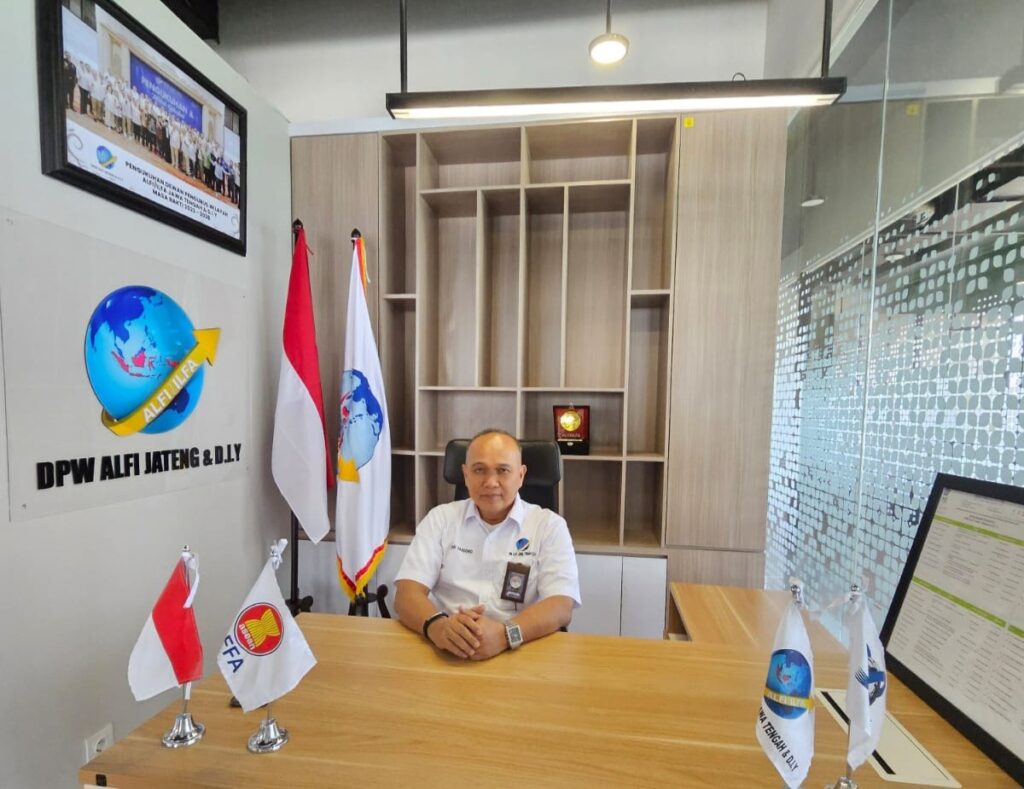
Teguh Arif Handoko: “The industrial sector is currently experiencing healthy growth, and that’s directly impacting logistics demand.”
Teguh Arif Handoko, Chairman of the Indonesian Logistics and Forwarders Association (ALFI) for Central Java and Yogyakarta (DIY), emphasized that strong industrial performance remains the primary catalyst behind the logistics boom.
“The industrial sector is currently experiencing healthy growth, and that’s directly impacting logistics demand,” he stated.
However, Teguh also highlighted growing operational challenges. Logistics providers are grappling with fleet shortages and congested container depots, particularly during peak shipping days.
“Fridays, Saturdays, and Mondays are especially problematic due to long queues. We hope depots can extend operating hours to a 24/7 schedule for better efficiency,” he said.
The private sector is also riding the wave of momentum. Gateway Container Line, a national logistics firm specializing in Less than Container Load (LCL) cargo consolidation, reported exceptional performance in early 2025.
According to Arifin, Branch Manager of Gateway Container Line for Central Java and DIY, the company saw LCL export volumes soar by 83%, while imports rose by 42.15%. Gateway also recorded a 31% year-on-year revenue increase, underlining the sector’s strength.
“The rapid industrial development in Central Java has significantly boosted demand for logistics services, particularly for small to mid-scale shipments,” said Arifin.
He noted that rising port throughput directly reflects upstream market activity. “An increase in port volume is a clear indicator of growing goods movement upstream, and we’re experiencing that firsthand,” he added.

Arifin: “An increase in port volume is a clear indicator of growing goods movement upstream, and we’re experiencing that firsthand“
Elsewhere in East Java, where the logistics sector exhibited strong growth in both domestic and international segments. According to Sebatian Wibisono, Chairman of ALFI East Java, port activities—particularly at Tanjung Perak Port—have surged considerably.
“We’re seeing across-the-board growth, both in exports and domestic logistics. The increase has been quite balanced,” said Wibisono, who is known as Wibi.
While precise figures have yet to be released, Wibi estimates the logistics sector in East Java grew by 15–20% in Q1 2025. Tanjung Perak Port, a critical hub for shipments to eastern Indonesia, reported significant growth in container volume compared to the same period last year.

Sebatian Wibison: “We’re seeing across-the-board growth, both in exports and domestic logistics”
“The uptick not only signals stronger trade but also points to more streamlined inter-island logistics operations,” Wibi concluded.
With the industrial and logistics sectors aligned in growth, container terminals across Indonesia are well-positioned for sustained momentum in the months ahead. As infrastructure and service improvements continue, industry stakeholders remain optimistic about maintaining this upward trajectory throughout 2025.