

Singapore-based Pacific International Lines (PIL) has resumed direct shipping operations between China and Indonesia with the launch of its North China Indonesia (NCI) Service, restoring a key trade route after a five-year hiatus.
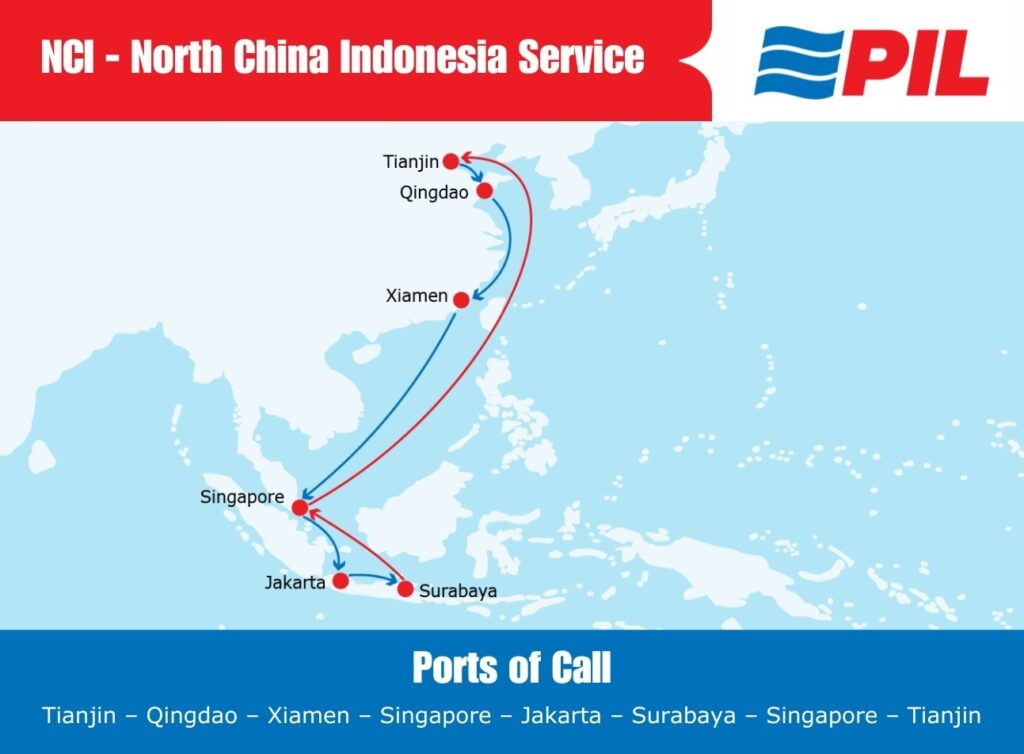
The inaugural vessel Kota Sejati called at Jakarta’s TPK Koja container terminal on July 5, marking the official start of the weekly service. The NCI loop links Xingang and Qingdao in North China, and Xiamen in the south, with major Indonesian ports including Jakarta (TPK Koja) and Surabaya (TPS Surabaya).
“Bringing back this direct connection was a priority,” Sujeeva Salwatura, President Director of PIL Indonesia, told Indonesia Shipping Gazette during the maiden call.

Sujeeva Salwatura (center): “Bringing back this direct connection was a priority.”
“We identified a gap in consistent, direct services between China and Indonesia, and our NCI service is designed to address that, with the capacity and frequency our customers require.”
PIL is deploying three of the five vessels in the service, each averaging 4,000 TEUs in capacity and 263 meters in length. The remaining two ships are operated by a South Korean carrier and a Singapore-based SOC operator, forming a vessel-sharing agreement. The larger vessels reflect a broader industry shift toward scaling up for efficiency in a cost-sensitive trade lane.
The NCI service promises transit times between 14 to 16 days and accommodates both dry and refrigerated cargo. With China accounting for roughly a quarter of Indonesia’s global trade volume, the renewed connection is expected to bolster logistics reliability for importers and exporters alike.
“Market volumes between China and Indonesia have remained remarkably stable,” Sujeeva said.
“This consistency allows us to maintain weekly sailings, even during seasonal fluctuations like Chinese New Year,” he said further.
The NCI service marks a return to familiar territory for PIL, which has operated in Indonesia for nearly three decades. The company previously ran multiple Southeast Asia routes, but scaled back during the COVID-19 pandemic and subsequent corporate restructuring.

Nuryono Arif, Deputy General Manager for Operations at TPK Koja, welcomes the captain of container ship Kota Sejati upon the vessel’s maiden call
As Kota Sejati departed Jakarta on July 6, it did more than meet its schedule. It signaled PIL’s renewed presence in a vital maritime corridor, reaffirming its role as a key player in intra-Asia trade.
“This is part of our transformation journey,” said Sujeeva. “We are putting customers at the center and delivering consistent, reliable solutions in the region.”
Financial Upswing Fuels Expansion
PIL’s regional expansion comes amid a sharp rebound in financial performance. Pacific International Lines (PIL) posted a strong financial performance for FY2024, recording a net profit of US$1.342 billion, a significant increase from US$306.93 million in FY2023, according to the company’s report as published in its website (https://www.pilship.com/newsroom/pil-delivers-strong-fy2024-financial-performance-with-net-earnings-of-us1-342-billion/).
This surge was driven by a 49% increase in revenue to US$4.305 billion, fueled largely by its container shipping business, which saw US$3.764 billion in revenue, a result of higher freight rates, strong asset utilization, and a 9.6% rise in volume.
The company’s container manufacturing segment also grew, generating US$541.14 million in revenue, helped by demand spikes related to global disruptions like the Red Sea crisis and U.S. restocking ahead of elections.
EBITDA rose from US$566.17 million to US$1.692 billion, reflecting strong operational efficiency and cost control. By year-end, PIL maintained a cash balance of US$2.33 billion and operated 101 vessels (89 owned, 12 chartered-in), including progress on its order of 18 LNG dual-fuel ships, with six already delivered.
Strategic Port Choice
PIL selected TPK Koja in Jakarta as the NCI service’s Indonesian hub, citing its modern infrastructure and ability to handle 4,000-TEU class vessels. Operations during the first call were reported to be smooth and efficient.
“We were warmly received by KOJA and impressed by their handling capabilities,” Sujeeva said. “They’ve provided exactly what we need to ensure dependable and punctual service.”
During her maiden call at Jakarta’s TPK Koja terminal, Kota Sejati, the first vessel under PIL’s newly launched NCI service, handled a total of 1,715 containers, comprising 920 boxes discharged and 795 boxes loaded, representing approximately 40% of the vessel’s total capacity.
Meanwhile, TPS Surabaya is expected to contribute around 30% of the vessel’s load factor, underscoring Indonesia’s substantial role in supporting the overall performance of the North China Indonesia service.
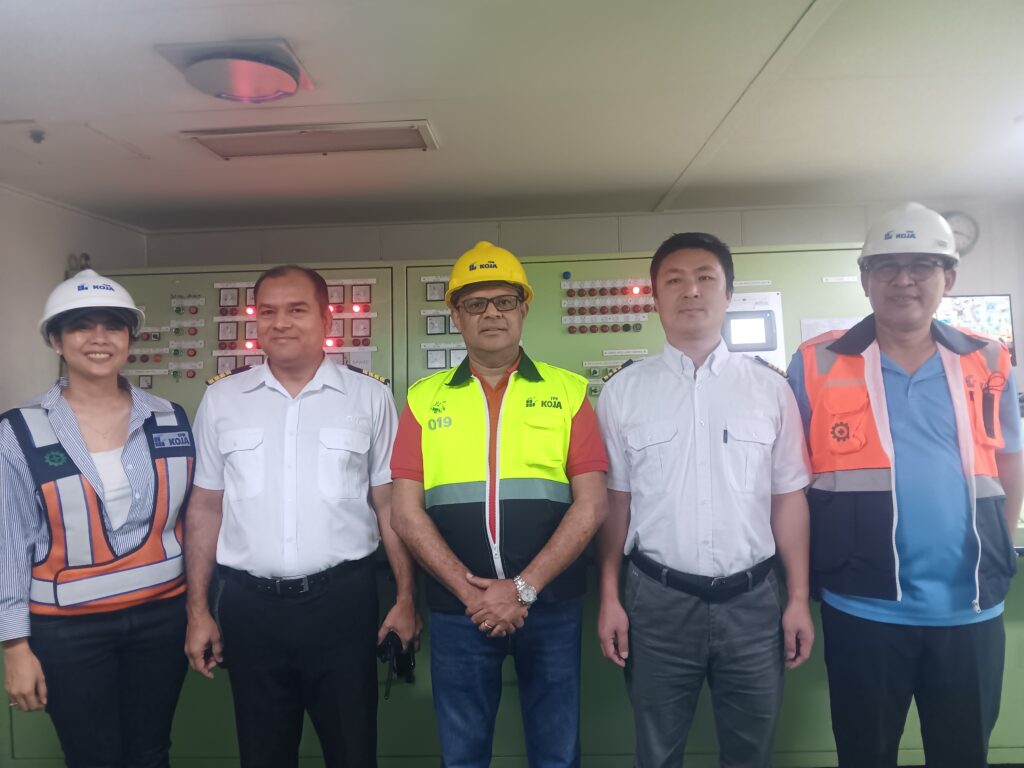
Amanda Maulina (Left): “We are committed to strengthening our partnership and supporting this important trade link.”
The terminal echoed the sentiment. Amanda Maulina, Deputy General Manager for Commercial at TPK Koja, welcomed PIL’s return and pledged continued support for the service’s success.
“We sincerely appreciate and thank PIL for its trust in TPK Koja,” Maulina said. “We are committed to strengthening our partnership and supporting this important trade link.”
TPK Koja is also preparing infrastructure upgrades, including new quay container cranes and additional reefer plugs, to meet rising customer demand.