
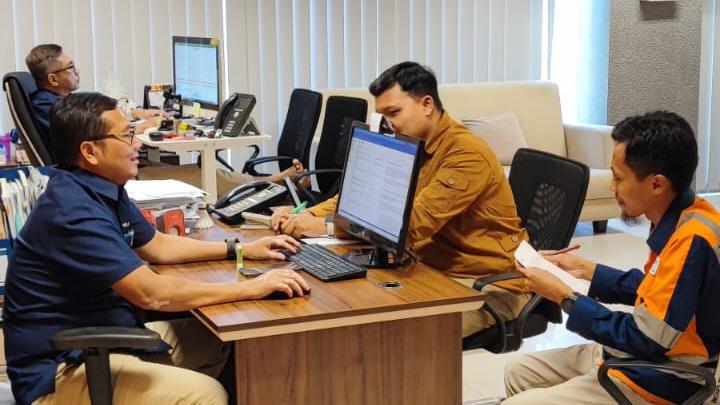
PT Terminal Teluk Lamong (TTL) has reaffirmed its commitment to operational excellence and global standards with the successful completion of its Integrated Management System (ISM) Audit for the first half of 2025.
The two-week audit, concluded in July as scheduled, reviewed compliance across all TTL divisions, including the Nilam Container Terminal (TPK Nilam). The process forms part of TTL’s broader strategy to ensure service quality, promote continuous improvement, and foster an adaptive work culture in a fast-evolving logistics landscape.
The audit covered six internationally recognized management systems, integrated to streamline the process and increase efficiency. These include:
- ISO 9001:2015 (Quality Management)
- ISO 45001:2018 (Occupational Health and Safety)
- ISO 14001:2015 (Environmental Management)
- ISO 50001:2018 (Energy Management)
- ISO 37001:2016 (Anti-Bribery Management)
- ISPS Code (Port Facility Security)
All audit procedures were conducted digitally through TTL’s E-Lamps platform, which manages everything from initial audit requests to findings and follow-up actions. The digital system allows real-time monitoring and enhances transparency across departments.
“An audit is not merely an evaluation, but a strategic moment to identify opportunities for improvement at all levels,” said Anang Januriandoko, TTL’s Senior Manager for Management Systems and HSSE. “Every finding is followed up promptly through our integrated digital platform.”
TTL positions the audit not only as a compliance measure, but as a foundation for building a resilient, forward-looking organization. As a result of the latest audit, the company has implemented several key initiatives, including:
- Streamlining operational procedures for greater efficiency
- Enhancing use of the MARCO CRM platform
- Deploying the P-RKM application to track management plan outcomes
- Tightening controls on Work Permits (SIK) to reduce workplace accidents
- Introducing a fatigue management program to sustain workforce productivity
These changes, according to Anang, reflect TTL’s identity as a port that prioritizes environmental sustainability, technology, and continuous innovation.
“We aim not only to meet global standards but to surpass them. TTL is not just a terminal operator—we are shaping the future of port operations in Indonesia through transparency, resilience, and adaptability,” he said.
TTL believes a mature and integrated management system is key to navigating the volatile logistics sector. With routine internal audits forming the backbone of this system, the company is optimistic about maintaining safe, customer-focused terminal operations built on best practices and global benchmarks.