
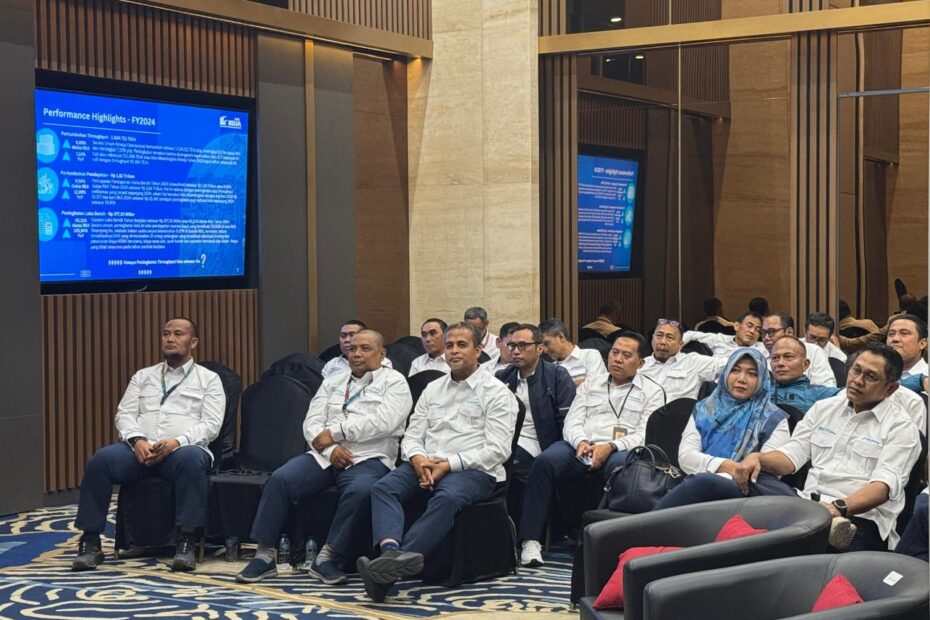
Koja Container Terminal (TPK Koja), one of strategic gateway in Indonesia’s international trade, is embarking on a sweeping transformation that blends heavy infrastructure investment with a sharp focus on workforce readiness, a dual-track strategy aimed at fortifying its competitiveness in an increasingly volatile maritime industry.
Speaking at the company’s second Town Hall of the year on Monday, July 28, 2025, TPK Koja General Manager Ali Mulyono said the transformation will hinge not only on equipment like quay container cranes (QCCs) and rubber-tyred gantry cranes (RTGs) but on the adaptability and skill of the company’s human capital.
“The challenges ahead are increasingly complex, but we believe they can be turned into opportunities,” Ali said. “The key to that is improving the quality of our people. High technology equipment requires competent human resources,” Ali added.
The remarks come as the terminal prepares for the arrival of three new quay container cranes (QCCs) and four rubber-tyred gantry cranes (RTGs), part of a broader strategy to modernize operations and sustain throughput above 1 million twenty-foot equivalent units (TEUs) annually.
Balancing Technology with Talent
TPK Koja, jointly operated by state-owned PT Pelabuhan Indonesia (Pelindo) and private operator Hutchison Ports Indonesia (HPI), is investing heavily in both infrastructure and workforce development as it seeks to keep pace with surging demand and intensifying competition within Tanjung Priok port.
“We’ve completed procurement for the new QCCs and RTGs, which are scheduled to arrive in September and begin operations by November,” said Seto Baskoro, CEO of HPI. “But even the best equipment is only as effective as the people who operate it.”
Seto pointed to multiple external pressures, from shifting global trade routes to tighter domestic regulations, including yard occupancy ratio (YOR) limits, that require not just operational agility but cohesive teamwork and capable leadership.
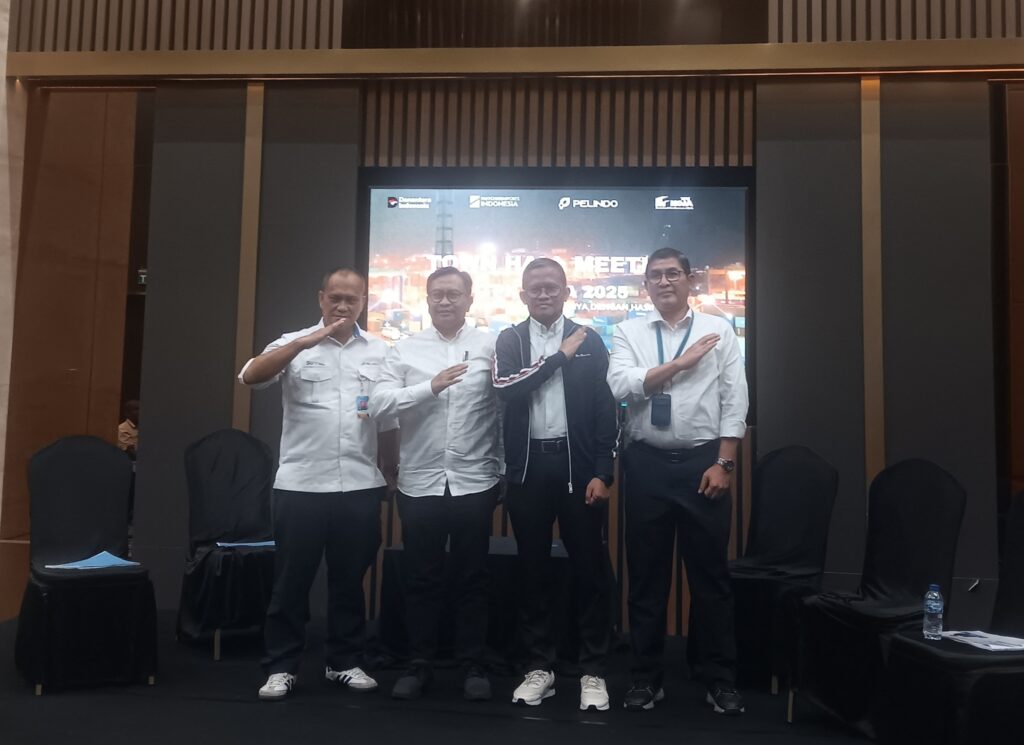
“TPK Koja must be adaptive and productive,” he said. “That starts with competent human resources and unified management.”
Preparing for a Generational Shift
Internally, TPK Koja is also managing a critical generational transition. Over the next five years, nearly half of its workforce is expected to reach retirement age. In response, management is rolling out a voluntary early retirement initiative, known as the “golden handshake”, coupled with a structural reorganization aimed at streamlining operations and developing future leaders.
“The aim is to create a leaner, more agile, and responsive organization,” said Wiluyo Karyanto, Deputy General Manager for Human Resources and Administration. “The golden handshake is not just about releasing employees. It’s also about preparing them for life after TPK and ensuring continuity within the terminal.”
The reorganization includes consolidating the number of deputy general manager (DGM) divisions from five to four, part of an effort to build a more integrated leadership framework.
TPK Koja’s management is treading carefully to avoid operational gaps, especially if multiple personnel from a single division opt into the program. Succession planning and service continuity remain top priorities.
Shareholder Confidence, Industry Headwinds
TPK Koja’s efforts have won strong backing from both shareholders. Speaking on behalf of Pelindo, Cucu Kuswoyo, Group Head of Portfolio Management for Subsidiaries at PT Pelabuhan Indonesia (Pelindo), praised the terminal’s consistent performance amid global trade volatility, highlighting its ability to maintain high productivity levels and solid financials.
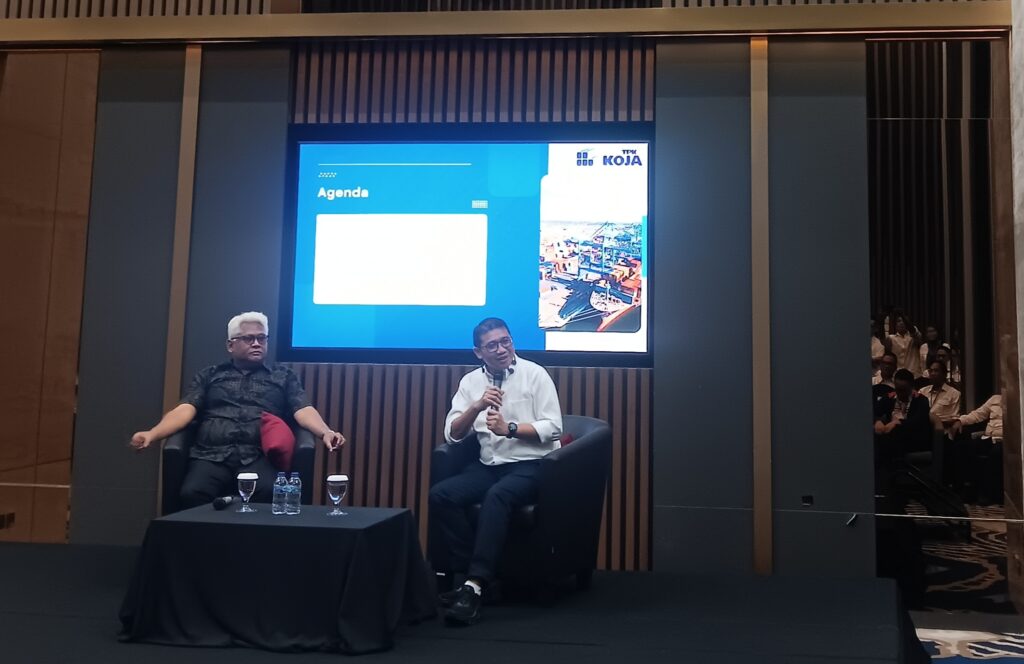
“But we cannot be complacent,” Cucu warned. “Operational KPIs must keep improving. Human capital will be the driving force that gets us there.”
He urged staff to embrace disruption, citing the example of Indonesia’s Law No. 17/2008 — once feared by the industry, now seen as a pivotal driver of Pelindo’s evolution.
“TPK Koja is our shared home. We all have a role in keeping it relevant and leading,” he said.
Navigating Toward a Smarter, Stronger Terminal
The terminal’s leadership is positioning the current transformation as more than just a facelift. For TPK Koja, the goal is to emerge not only more technologically advanced but also more resilient and responsive to change.
In recent years, the terminal has weathered regulatory shifts, digital transformation, and geopolitical uncertainty, all while maintaining stable throughput.
With a combination of modern equipment, strategic foresight, and a sharpened focus on its workforce, TPK Koja aims to remain a key player in Indonesia’s maritime ecosystem.
“This transformation is about more than just machines,” Ali concluded. “It’s about preparing our people to meet the future.”