
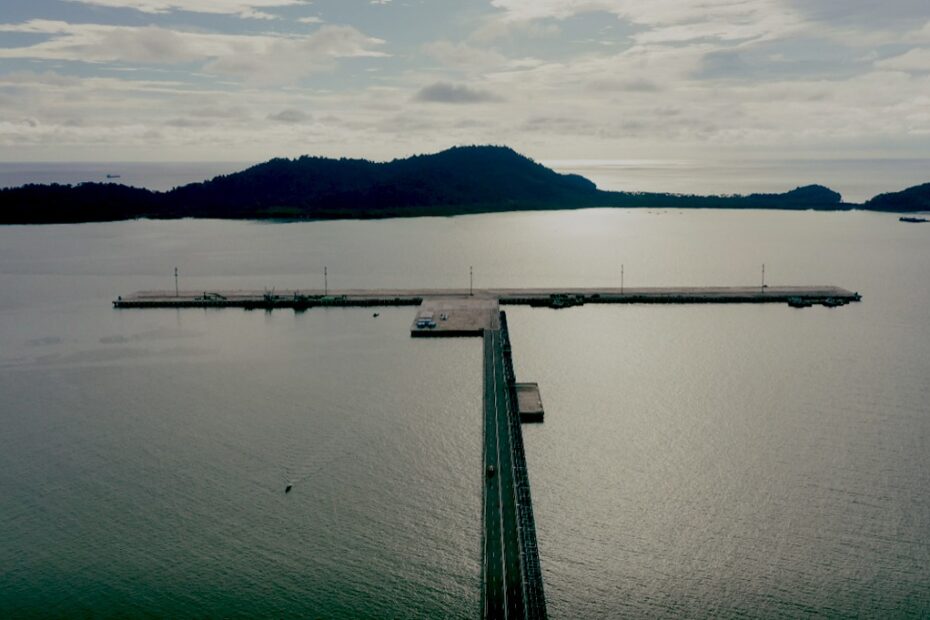
Terminal Kijing is accelerating its role as a vital logistics hub in West Kalimantan, bolstering non-container cargo handling with the addition of four harbor mobile cranes (HMCs) and other critical equipment.
The move underscores efforts by PT Pelabuhan Tanjung Priok (PTP Nonpetikemas), a subsidiary of the Pelindo Multi Terminal (SPMT Group), to capitalize on growing trade volumes and optimize operations across its network.
Located on the coast of Mempawah Regency, Kijing Terminal forms part of the government’s National Strategic Project (PSN) portfolio. Since commencing operations in August 2022, the terminal has emerged as a key node in Indonesia’s non-container cargo flow, serving the region’s robust hinterland of palm oil, rubber, and industrial exports.
In 2023, the terminal processed 2.27 million tons of cargo. That number is expected to climb to 3.09 million tons in 2024 and reach an estimated 3.3 million tons by year-end 2025, according to internal projections. Much of the volume is driven by liquid bulk commodities—including crude palm oil (CPO) and caustic soda—alongside growing dry bulk and general cargo segments.
To meet the increased demand, PTP Nonpetikemas has undertaken a major asset reallocation program, transferring underutilized equipment from other terminals in the SPMT network to Kijing. The redeployment includes four harbor mobile cranes, nine hoppers, three grabs, four buckets, and a weighbridge, with the final piece—a 100-ton crane from the Dumai terminal—arriving later this year.
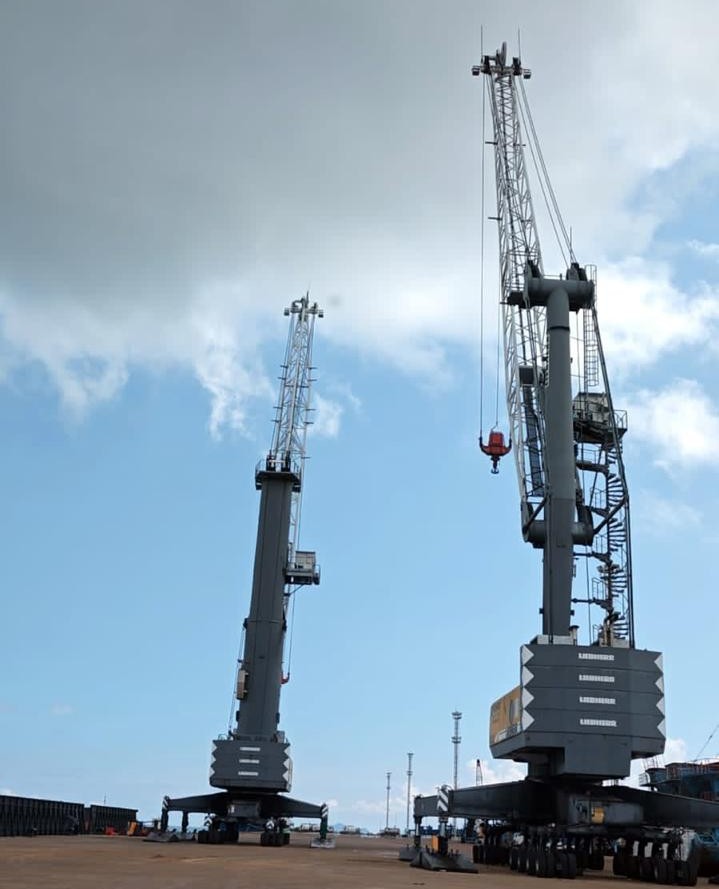
Photo: New arrival HMCs at Terminal Kijing
“The reallocation is a strategic move to turn idle assets into productive ones,” said Dwi Rahmad Toto S., Director of Commercial and Business Development and Acting Director of Operations at PTP Nonpetikemas. “This synergy within the SPMT Group has a direct impact on our operational capacity and service performance.”
Operational Momentum
The results have been tangible. In the first half of 2025, throughput for dry bulk commodities surged 225% compared with the same period a year earlier. Average throughput now stands at 2,716 tons per ship per day, up from 836 tons in the first half of 2024. By June, the terminal had already handled 2 million tons of cargo, with dry bulk overtaking liquid bulk as the largest segment.
The cargo mix reflects the diversified demand: dry bulk (965,000 tons), liquid bulk (759,000 tons), and general cargo (328,000 tons). Notable products include coal, fertilizer, palm kernel cake, rubber, and wood-based materials.
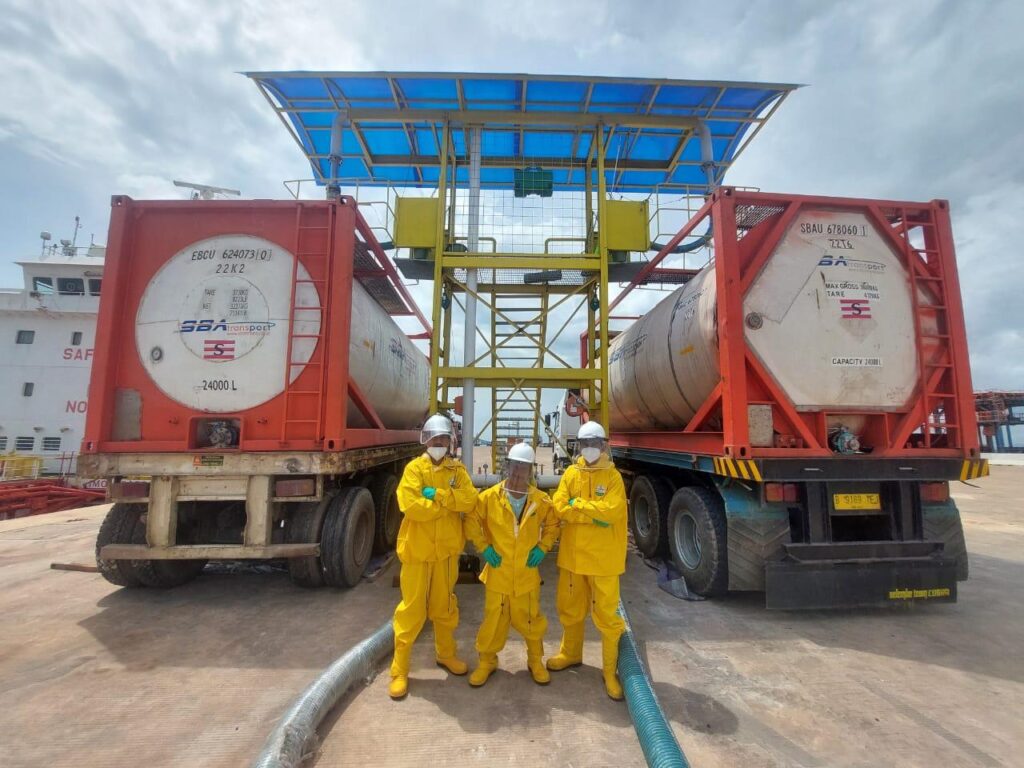
Photo: PTP prioritizes safety by strictly adhering to HSSE standards during the handling of hazardous cargoes such as caustic soda
The company is not just responding to demand, but planning ahead. Infrastructure upgrades are underway, including a dedicated liquid bulk terminal, expanded jetty capacity, and new pipe racks. Logistics zones are also being redesigned to accommodate incoming tenants and better integrate the region’s supply chains.
Regional Growth Driver
Kijing Terminal is strategically located near Indonesia’s CPO production heartland, and its role is expanding beyond commercial logistics. It has already supported key industrial projects, including the Smelter Grade Alumina Refinery (SGAR) developed by PT Borneo Alumina Indonesia, and is expected to facilitate logistics for future phases of that facility and the Mempawah smelter.
“Customer confidence is growing in step with our operational reliability,” said Toto. “We are building the terminal not just for today’s volumes, but to serve the broader economic transformation in West Kalimantan.”
That transformation includes prospective roles in the development of Special Economic Zones (SEZs) and the proposed Integrated Aluminum Industry Zone—initiatives aligned with Indonesia’s national downstreaming agenda.
As infrastructure strengthens and throughput continues to climb, Kijing Terminal is evolving into a modern, high-capacity logistics platform with regional and national implications. For now, it stands as a textbook example of asset optimization—and of how a non-container port, often overshadowed by container mega-hubs, can punch well above its weight in driving trade and growth.