
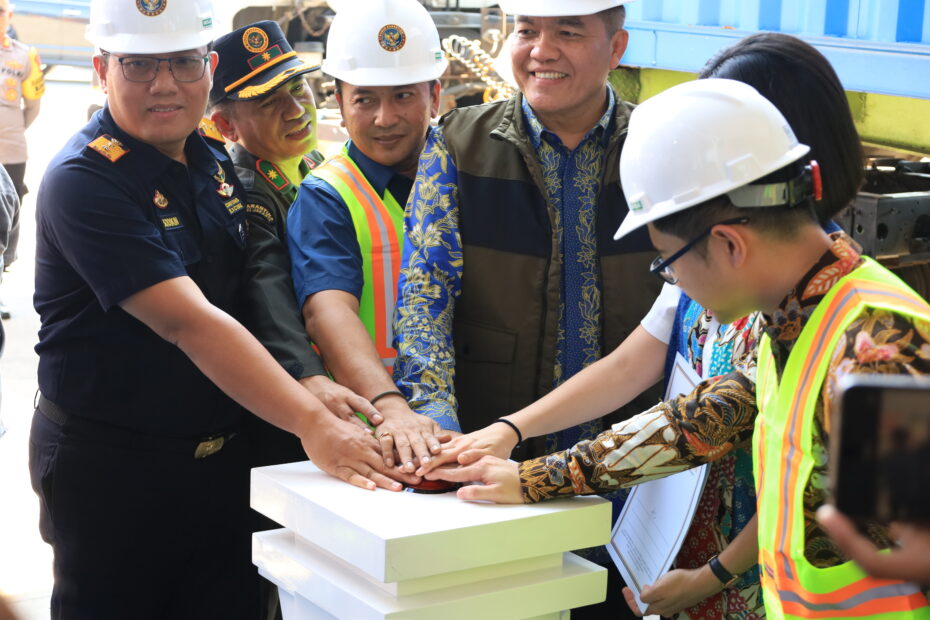
Indonesia exported its first 6.2 tonnes of processed bird’s nest products to Vietnam on Tuesday, marking a milestone in the country’s efforts to add value to local commodities and expand its presence in Southeast Asia’s export markets.
The shipment, dispatched from the Container Distribution Center (CDC) warehouse operated by state-owned logistics firm PT Multi Terminal Indonesia (MTI) in Tanjung Priok, Jakarta, is the result of a joint initiative between the Indonesian Quarantine Agency, PT MTI—a subsidiary of PT Pelindo Solusi Logistik (SPSL)—and other government and industry stakeholders.
“This is a concrete step in implementing President Joko Widodo’s directive to strengthen downstream industries and improve the global competitiveness of Indonesian products,” said Sahat Manaor Panggabean, head of the Indonesian Quarantine Agency, during a ceremony at the port.
Panggabean emphasized that the export of processed bird’s nest—traditionally consumed as a delicacy and health supplement in Asia—not only adds economic value but also creates jobs and supports regional development.
Amir Hasanuddin, head of the Jakarta Quarantine Office, said the shipment followed sustained technical support and regulatory guidance from his office. He expressed hope that similar exports would become routine and sustainable.
The exporter, PT Realfood Winta Asia, welcomed the government’s backing. CEO Edwin Pranata said the company is already eyeing its next market.
“After Vietnam, we are targeting Thailand for our next shipment in December,” he told reporters.
PT MTI, which handled the logistics, reaffirmed its role in facilitating national export growth by offering integrated supply chain solutions.
“We provide end-to-end logistics services, from factory to port, in line with MTI’s mission to contribute to national economic development,” said Sucahyo, the company’s corporate secretary.
Senior officials from Tanjung Priok Port, Customs and Excise, and the Port Police also attended the export launch, underscoring the coordination between government agencies, state-owned enterprises, and private sector players.
The initiative is part of Indonesia’s broader strategy to shift away from raw commodity exports and promote higher-value goods in global markets.