
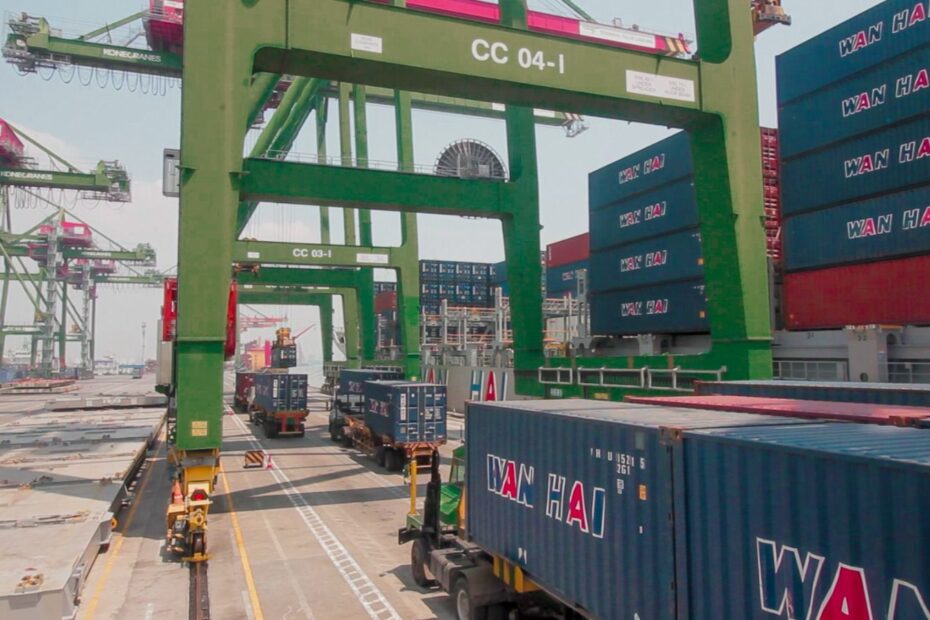
PT Terminal Teluk Lamong (TTL), a subsidiary of state-run port operator PT Pelindo Terminal Petikemas (SPTP), reported a sharp rise in container throughput in October, boosted by East Java’s solid economic growth and expanding international trade routes.
TTL, which manages three container terminals – TPK Lamong, TPK Nilam, and TPK Berlian – handled 2.3 million twenty-foot equivalent units (TEUs) as of October 2025, up 4.19% from 2,206,632 TEUs in 2024 to 2,298,980 TEUs in 2025.
The growth was driven mainly by international container traffic, helped by the arrival of 29 ad hoc vessels and the opening of new trade routes connecting intra-Asia, the Indian Subcontinent, and the Middle East.
“The increase in international container traffic at TPK Lamong shows growing confidence from our customers in TTL’s services,” said Muhammad Syukur, TTL’s Director of Operations.
“We remain committed to maintaining that trust through customer-oriented services and by prioritizing Environmental, Social and Governance (ESG) principles to stay competitive,” he added.
From January to October 2025, international container volumes at TPK Lamong climbed 14.4% year-on-year, while domestic traffic rose 8.25%. TTL’s recently managed TPK Berlian terminal, which the company began operating on July 1, also posted gains, with throughput rising 2.16% to 1.13 million TEUs.
The performance aligns with East Java’s robust economic expansion, with the province’s gross regional domestic product (GRDP) growing 5.04% in the third quarter, according to data from Statistics Indonesia (BPS).
TTL said it continues to strengthen operational safety across all terminals by enforcing occupational safety and health (K3) standards, including clearer road markings, safety signage, and strict personnel screening within restricted areas. The company said these measures underpin customer confidence in the reliability and safety of its port services.
Buoyed by its recent results and commitment to ESG standards, TTL said it remains optimistic about navigating intensifying competition and supporting Indonesia’s logistics connectivity and trade growth.