
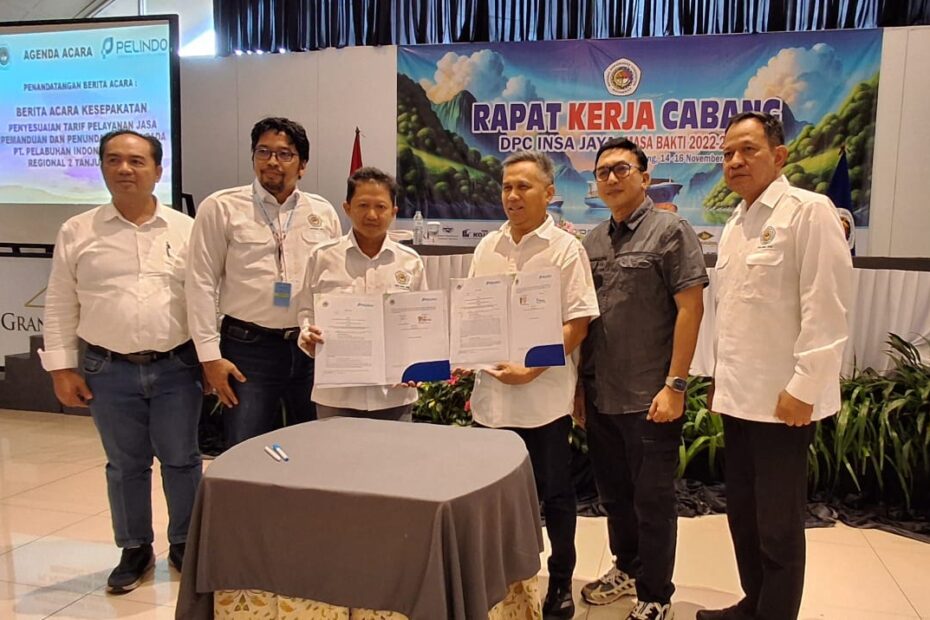
The Indonesian National Shipowners’ Association Chapter Jakarta (INSA Jaya) and state port operator Pelindo Regional 2 Tanjung Priok on Saturday signed an agreement to adjust pilotage and towing tariffs at the country’s busiest port, marking a key step toward eliminating fuel surcharges and harmonizing vessel service rates across the Pelindo network.
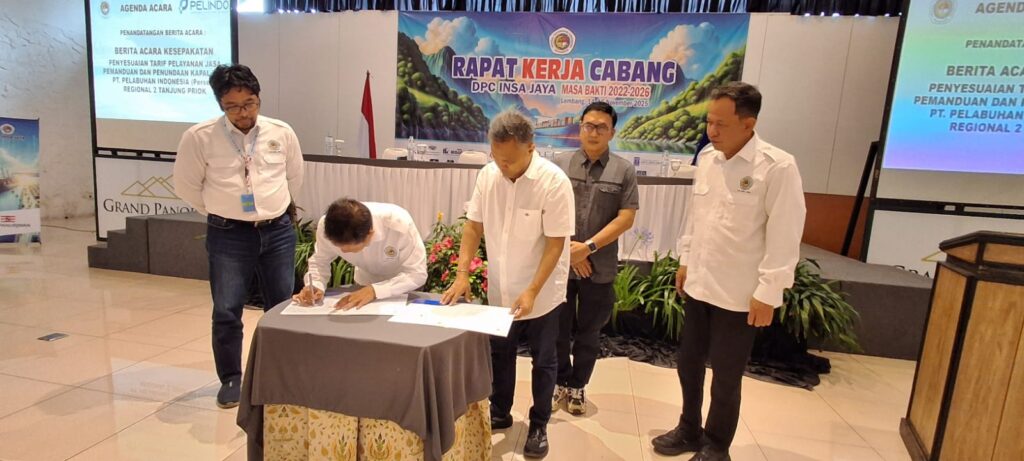
The memorandum of understanding was inked during INSA Jaya’s Branch Working Meeting (Rakercab) for the 2022–2026 term, held in the highlands of Lembang, West Java. The annual forum gathered 85 representatives from 65 shipping companies, alongside port regulators, terminal operators and maritime service providers.
The agreement was signed by Pelindo Regional 2 Tanjung Priok Executive General Manager Yandri Trisaputera and INSA Jaya Board Chairman Andi S. Patonangi.
It follows months of discussions between Pelindo Head Office the INSA Central Executive Board over the planned phase-out of fuel surcharges (FS).
Under the deal, INSA Jaya and Pelindo will develop a new tariff formulation that embeds fuel components directly into pilotage and towing fees, replacing the surcharge model entirely.
The new rates will reflect operational realities such as inflation and fluctuating average fuel prices, Pelindo officials said.
Once finalised, the tariff proposal will undergo mandatory consultations with relevant ministries before receiving regulatory approval.
Recalibrating Tariffs at a Strategic Gateway
Speaking to participants, port authority officials underscored the urgency of maintaining efficiency at Tanjung Priok, which handles more than half of Indonesia’s international trade flows.
“Tanjung Priok is the front line of our national logistics system. Its effectiveness directly influences the competitiveness of the national economy,” said Heru Susanto, Head of the Tanjung Priok Harbormaster and Port Authority (KSOP).
“We invite collaboration with all stakeholders, including INSA Jaya, to achieve transparent and efficient services. This is essential to lowering logistics costs.”
For Pelindo, the tariff adjustment is portrayed not as a commercial increase but as an operational necessity to sustain service quality.
“We are committed to maintaining a consistent level of service,” said Yandri.
“As the busiest port in Indonesia, we have an obligation to ensure ship movements remain safe, smooth and efficient. Tariff adjustments must reflect the resources required to uphold those standards.”
Trisaputera added that the port operator aims to harmonize service rates across the national Pelindo network, reducing disparities between regions and creating a more level playing field for domestic and international shipping lines.
Industry Backs Move, Urges Efficiency Gains
INSA Jaya Chairman Andi S. Patonangi welcomed the deal, saying shipowners have long supported tariff reforms as long as they come with demonstrable service improvements.
“Shipping companies have never rejected Pelindo tariffs when they are aligned with efficient and reliable service,” Andi said. “That is what we all hope to strengthen through this cooperation.”
He also suggested that the relationship between Tanjung Priok Port and nearby Marunda Port should be seen not as rivalry but as a potential source of synergy to reinforce the national logistics ecosystem.
“The two ports can complement each other. Integration and collaboration will help us face a more complex global supply chain environment,” he said.
Strategic Dialogue
This year’s Rakercab also served as a planning session for INSA Jaya’s 2026 work programme, covering organizational performance evaluations, advocacy priorities, and coordination improvements among members.
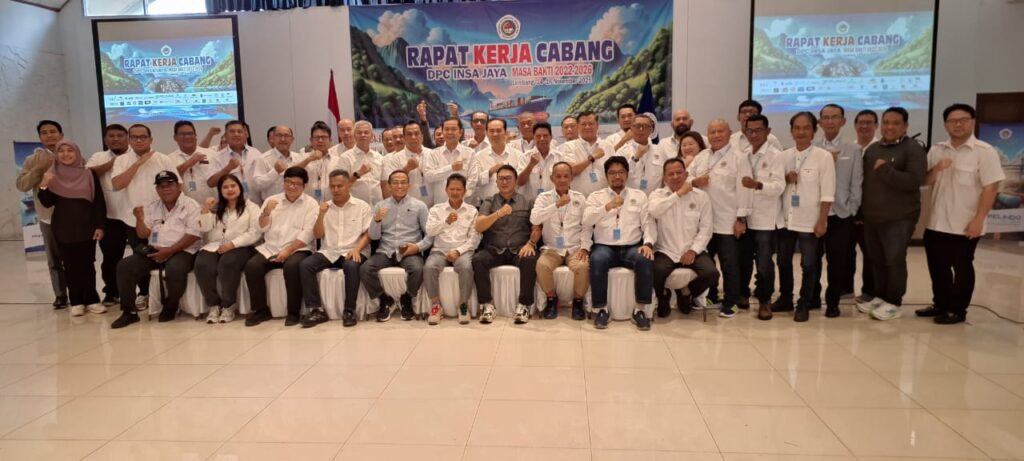
Organizing Committee Chairman M. Erwin Yahya Zubir said the discussions reinforced INSA’s national role as an official representative body for the merchant shipping industry, providing policy input to the government and supporting maritime safety, logistics efficiency, and inter-island transport.
Founded as the government-recognized forum for merchant shipping companies, INSA has long advocated for reforms aimed at strengthening the national fleet and safeguarding Indonesia’s maritime sovereignty.
Toward a More Competitive Port Ecosystem
The signing of the tariff adjustment MoU was viewed by many participants as a milestone in a broader effort to modernize Indonesia’s port service structure. The pilotage and towing sectors, critical for ensuring ship safety in congested waters, have faced mounting cost pressures in recent years, heightening the need for transparent and predictable pricing.
For shippers, a clearer tariff structure could reduce uncertainty and improve cost planning. For Pelindo, it supports long-term operational investment, especially as Indonesia pushes to reduce logistics costs, which remain among the highest in the region.
By the end of the meeting, industry players, port regulators, and terminal operators reaffirmed their commitment to closer collaboration.
“This is not only about tariffs,” said one senior participant. “It’s about creating a port ecosystem that is competitive, safe, and ready to support Indonesia’s economic ambitions.”
The tariff formulation process is expected to proceed in stages over the coming months, with implementation subject to regulatory approval.