
Indonesia’s trucking industry pledged support for fleet modernization and digitization and the government’s Zero ODOL 2027 initiative during Aptrindo’s national congress attended by transportation regulators, police and industry stakeholders in Jakarta.
Indonesia’s trucking industry is seeking a greater role in shaping national logistics reforms as operators face rising costs, regulatory pressure and mounting demands for safer and more efficient freight transportation.
The Indonesian Trucking Association (Aptrindo) used its 3rd National Congress (Munas) in Jakarta on Wednesday, May 20, to call for accelerated modernization of the logistics sector, including transportation digitization, fleet rejuvenation and the nationwide implementation of the government’s Zero Over-Dimension and Overload (ODOL) policy.
On his remark speech for the congress, Aptrindo Chairman Gemilang Tarigan said trucking operators remain a critical pillar of Indonesia’s supply chain despite increasingly complex business challenges.
“Logistics activities never stop. When people rest, fleets continue operating. When industries require raw materials, when ports remain active, and when export-import activities continue, transportation operators maintain the pulse of the national economy,” Gemilang said.
He said transportation businesses should not merely observe changes in the logistics industry but must become active participants in the sector’s transformation.
Issues on Top Concern
According to Gemilang, the organization aims to strengthen its role in protecting trucking businesses through advocacy for fair regulations, greater business certainty and improved logistics efficiency.
He said Aptrindo would prioritize transportation modernization and digitization, while also focusing on improving the welfare of trucking entrepreneurs and drivers.
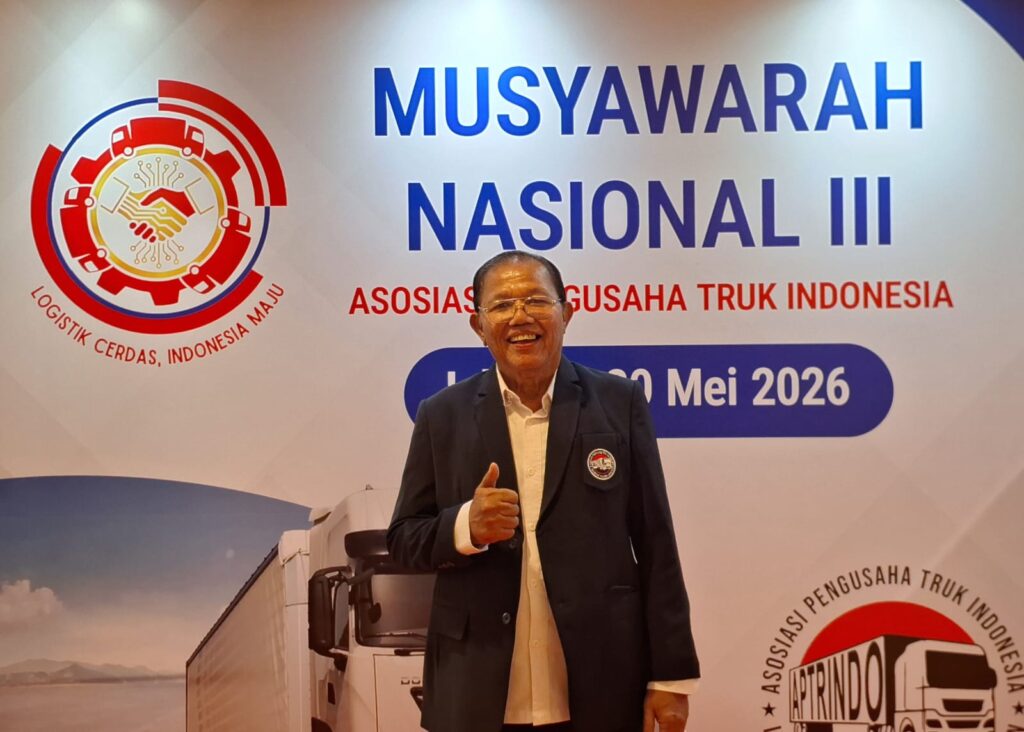
“We want national distribution not to be concentrated in one area only, but to grow evenly across Indonesia so logistics costs can become more competitive,” he said.
Indonesia’s logistics sector has long struggled with high transportation costs, fragmented infrastructure and congestion at ports and industrial areas. Trucking operators also face operational challenges linked to fuel prices, vehicle taxes, regulatory restrictions and rising spare-part costs.
Gemilang said the industry had repeatedly demonstrated resilience through economic downturns and operational disruptions.
“We have gone through economic crises, rising spare-part prices, congestion at ports and depots, and various policy restrictions, yet transportation operators continue to survive,” he said.
He urged Aptrindo members to maintain solidarity and strengthen cooperation within the organization amid the industry’s ongoing transition.
“This organization must become a shared home for our collective struggle — a place where members support and strengthen one another,” he added.
The conference was attended by several government and industry representatives, including Indonesian National Police Traffic Corps Chief Inspector General Agus Suryo Nugroho, Director of Road Transportation at the Ministry of Transportation Muiz Thohir, Deputy Secretary for Connectivity Coordination Rustam Efendi, and Director of Services and Non-Industrial Business Licensing Raharjo Siswohartono.
Representatives from the National Transportation Safety Committee (KNKT), the Indonesian Chamber of Commerce and Industry (KADIN), state-owned port operator Pelindo, BPH Migas and several business associations also attended the event.
Zero ODOL 2027 a Major Focus
A major focus of the conference was the government’s Zero ODOL 2027 program, which aims to eliminate overloaded and over-dimension freight vehicles from Indonesian roads.
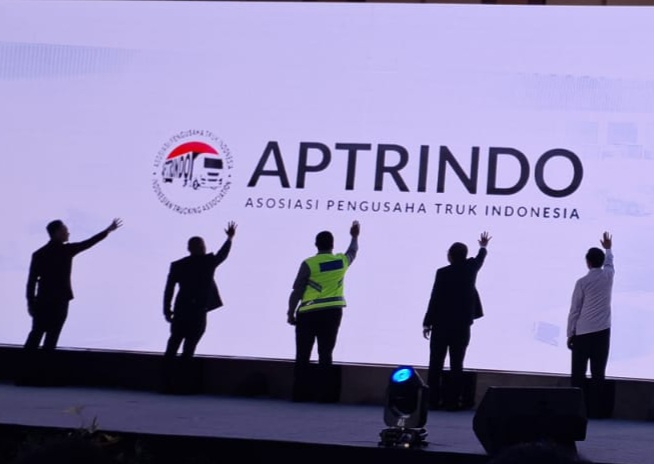
The policy has become one of the government’s central transportation safety initiatives, targeting road safety improvements, infrastructure protection and logistics efficiency.
Muiz Thohir said the conference aligned with the government’s broader efforts to improve national logistics performance and freight transportation standards.
“We appreciate the organization of this conference and hope it becomes a forum for discussing current issues in freight transportation,” Muiz said in remarks delivered on behalf of the transportation minister.
He said the Ministry of Transportation remained committed to improving regulations, operational systems and transportation standards in the freight sector.
The ministry also called on trucking businesses and Aptrindo members to strengthen cooperation in supporting the Zero ODOL 2027 agenda.
Indonesia has repeatedly delayed nationwide implementation of the Zero ODOL policy due to concerns from logistics operators and industry players over operational costs and fleet readiness. However, the government continues to push for gradual enforcement as road damage and traffic safety concerns increase.
Traffic Corps Chief Agus Suryo Nugroho said vehicle roadworthiness remained one of the key pillars of traffic safety and stressed the importance of addressing ODOL violations.
“Vehicle roadworthiness is a crucial pillar of traffic safety. Therefore, the ODOL issue must become a shared concern,” Agus said.
He added that under Indonesian law, over-dimension violations are classified as criminal offenses, while overloading constitutes a traffic violation.
Industry players have argued that successful implementation of Zero ODOL will require not only stricter law enforcement but also improved logistics infrastructure, fair tariff structures and better coordination between regulators and businesses.
Synergy for Smart Logistics Ecosystem
Gagan Gartika Eryana, chairman of the organizing committee for the 3rd Aptrindo National Conference, said the event was attended by representatives from 24 regional boards and 42 branch offices across Indonesia.
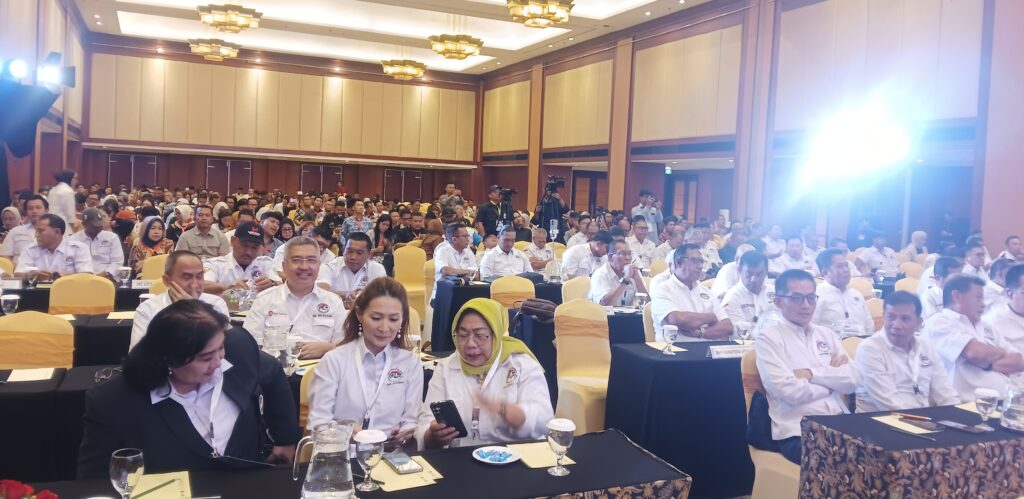
The conference carried the theme: “Synergy of Indonesian Truck Entrepreneurs in Strengthening the Smart Logistics Ecosystem: Technology-Based Fleet Innovation and Rejuvenation to Achieve National Logistics Resilience.”
The three-day event began with a gala dinner on May 19, followed by a talk show, exhibition and the national conference session on May 20.
On May 21, participants are scheduled to visit Tanjung Priok Port, Indonesia’s busiest seaport, and attend a golf networking event involving Aptrindo members and industry partners.