
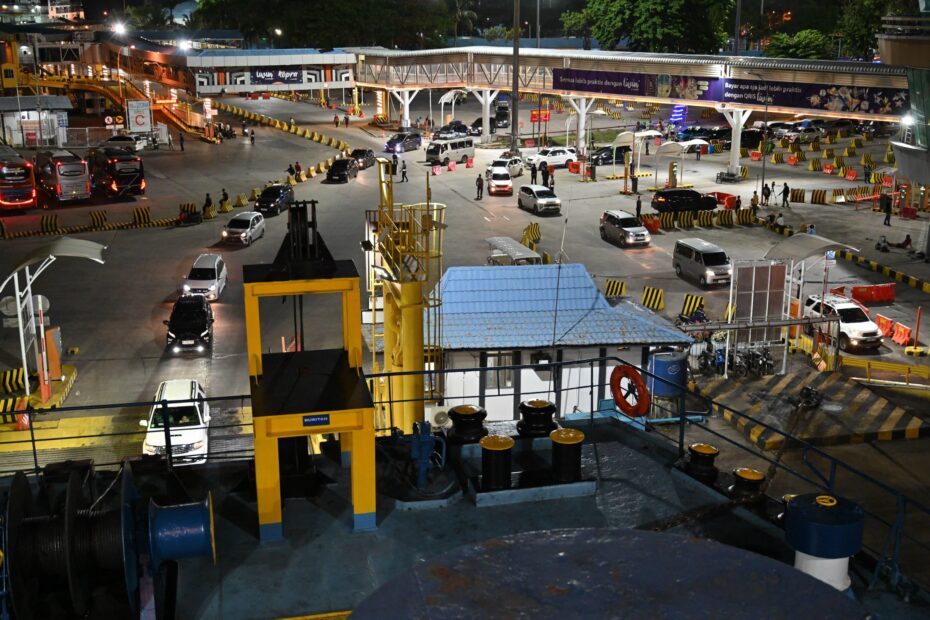
State-owned ferry operator PT ASDP Indonesia Ferry (Persero) has begun implementing a port sterilization program at Merak and Bakauheni, Indonesia’s busiest ferry gateways, as part of efforts to strengthen security, improve operational efficiency and modernize ferry services.
The policy entered a trial phase on June 1 and is scheduled to be fully implemented on June 15, 2026, the company said.
ASDP President Director Heru Widodo said the initiative forms part of a broader transformation program aimed at creating safer, more orderly and more efficient port operations while supporting the movement of passengers, vehicles and logistics between Java and Sumatra.
“The implementation of this policy reflects our commitment to delivering more orderly, secure and modern port governance,” Heru said in a statement. “Through this program, activities within the port area will become more organized, access will be better controlled and operational safety standards will be strengthened.”
The sterilization program includes tighter monitoring and access control across operational areas, mandatory identification and personal protective equipment for authorized personnel, regulation of vehicle and personnel movements through digital platforms and sticker-based access systems, and closer coordination with stakeholders operating within the ports.
At Merak Port, ASDP has introduced a One Gate System, which has been under trial since May 25. Under the scheme, vehicles using both Express and Regular ferry services are directed through a single entry point at the Executive Gate to improve traffic management and enhance monitoring of passenger and vehicle movements.
At Bakauheni Port, the company is focusing on technology-based security measures, including facial recognition systems, RFID technology, CCTV surveillance, vehicle tracking and integrated digital monitoring platforms.
ASDP Corporate Secretary Windy Andale said the sterilization program also supports the company’s environmental objectives through the introduction of electric shuttle buses and electric motorcycles for operational activities within port areas.
Under the new arrangement, registered users are required to park conventional fuel-powered vehicles in designated areas and use electric transportation while operating inside the port complex.
“The initiative is designed not only to create a more orderly and controlled operational environment, but also to support the development of greener and more sustainable ports,” Windy said.
The program is being implemented in accordance with national shipping, transportation and environmental regulations, including policies aimed at promoting electric vehicle adoption and strengthening security standards at ferry terminals.
ASDP said the combination of stricter operational governance, digital technology and sustainability measures is expected to improve service quality and support Indonesia’s long-term connectivity and logistics objectives.