
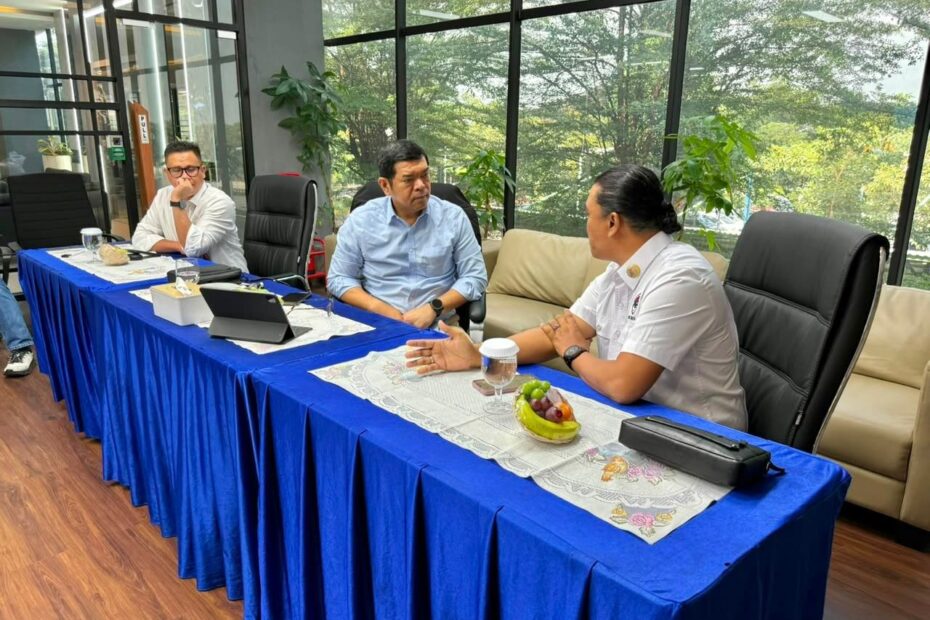
Terminal operator and trucking association agree to strengthen coordination and improve compliance with the Terminal Booking System to ease congestion, optimize capacity utilization, and support smoother logistics flows
PT Terminal Teluk Lamong (TTL) and the Surabaya branch of the Indonesian Trucking Entrepreneurs Association (APTRINDO) agreed to strengthen cooperation to improve logistics efficiency through greater compliance with the terminal’s Truck Booking System (TBS), the companies said following a meeting on Thursday.
The discussion brought together APTRINDO Surabaya Chairman I Wayan Sumadita, TTL President Director David P. Sirait, TPK Teluk Lamong Terminal Head Pierre Rochel Tumbol, and representatives from both organizations.
The meeting focused on truck arrival patterns, traffic congestion during peak periods and measures to improve cargo distribution efficiency in East Java, as logistics volumes continue to grow.
“APTRINDO is a strategic partner in the national logistics supply chain,” David said. “Input from trucking operators is an important part of evaluating and developing terminal services. Improved logistics performance can only be achieved through collaboration and commitment from all parties within the port ecosystem.”
David said TTL continues to have sufficient capacity to accommodate cargo growth, with an annual yard capacity of 1.4 million twenty-foot equivalent units (TEUs), supported by modern gate facilities and automated cargo-handling equipment.
He said the key challenge was not terminal capacity but the concentration of truck arrivals during certain periods.
“When a large number of trucks arrive within the same time slot, queues can occur even though terminal capacity remains available,” David said. “Adherence to arrival schedules is therefore crucial to maintaining smooth operations.”
TTL introduced the second phase of its Terminal Booking System in March 2026, allocating truck arrivals into four-hour operating windows to distribute traffic more evenly throughout the day.
According to the company, only around 33% of trucks currently arrive within their booked time slots, while the remainder arrive either earlier or later than scheduled, contributing to congestion during specific periods.
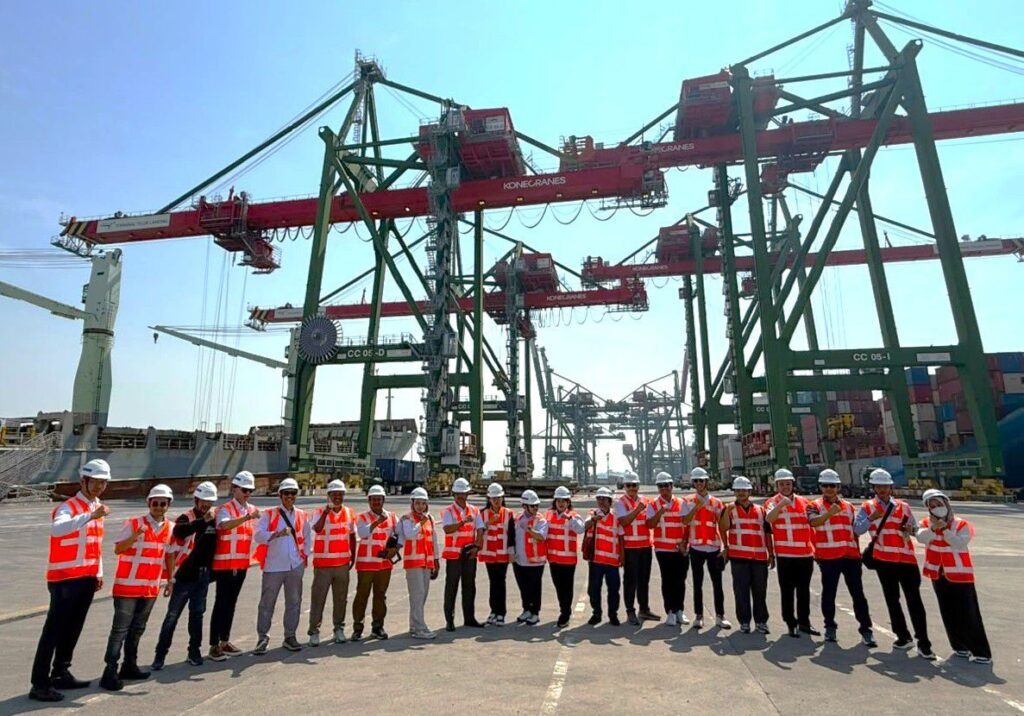
TTL said wider compliance with the booking system would help improve equipment utilization, reduce gate congestion, increase operational productivity and provide greater service certainty for customers.
To support the initiative, the terminal has also established a Green Shelter waiting area capable of accommodating up to 66 trucks before they enter the terminal according to their scheduled slots.
APTRINDO welcomed the dialogue and said regular communication between terminal operators and trucking companies was essential to addressing operational challenges.
“We appreciate the opportunity to engage directly with TTL management,” Wayan said.
“Open communication allows operational issues to be understood from different perspectives and enables stakeholders to identify the best solutions together,” he said further.
During the meeting, APTRINDO proposed several measures for consideration, including evaluating dedicated service lanes for refrigerated containers, expanding buffer-area capacity outside the existing waiting area and improving coordination with domestic shipping lines regarding the availability of empty containers.
TTL said it would review the proposals with relevant stakeholders to assess their operational feasibility, safety implications and potential benefits for supply-chain efficiency.
Representatives from logistics companies attending the meeting also acknowledged improvements in terminal services in recent years while emphasizing the need for trucking operators to improve scheduling discipline and driver management.
Both parties agreed to continue strengthening coordination, outreach and communication efforts to support a more efficient, reliable and competitive logistics system.
“Efficient service times are a shared objective for the logistics industry,” Wayan said. “Collaboration between terminals and service users is essential to achieving better service performance.”