
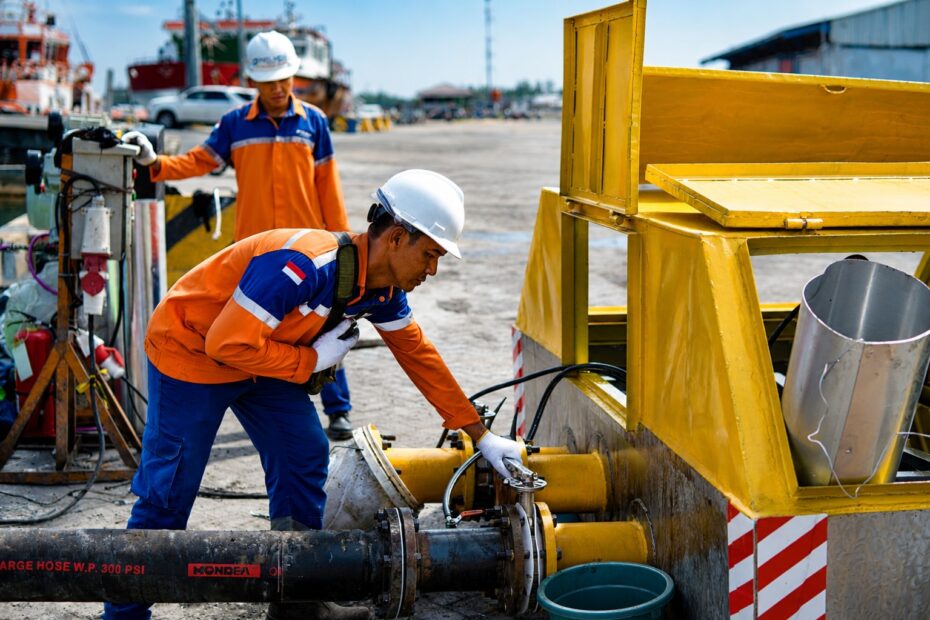
Drop tank operations improve loading productivity, strengthen palm oil supply chains, and support growing trade and logistics activity through the port
Pulau Baai Port in Bengkulu has expanded its liquid bulk handling capabilities through the use of a drop tank system, a move aimed at improving operational efficiency, supporting palm oil downstream industries and strengthening the region’s logistics network.
The operation was carried out by PT Pelabuhan Tanjung Priok (PTP Nonpetikemas), a subsidiary of the Pelindo Group and operator of the non-container terminal at Pulau Baai Port. The latest activity involved the loading of 3,500 metric tons of olein onto the MT Bangun Rejo for shipment to Central Java.
The loading process, which began on June 8, uses a drop tank system that allows liquid cargo delivered by trucks to be temporarily stored in transit tanks before being pumped onto vessels. The method is designed to improve loading efficiency, accelerate turnaround times and maintain cargo quality and safety throughout the operation.
Mochammad Choiron Yusuf, Branch Manager of PTP Nonpetikemas Bengkulu, said the system forms part of the company’s efforts to enhance service quality, operational efficiency and safety standards in liquid bulk handling.
“The loading of 3,500 tons of olein demonstrates Pulau Baai Port’s readiness to serve liquid bulk commodities more effectively, efficiently and safely,” Choiron said.
He said the operation marked the second liquid bulk service using the drop tank system at the Bengkulu terminal following its inaugural deployment in May.
According to Choiron, the system has significantly improved operational performance. Loading productivity reached 84 tons per gang per hour, exceeding the Ministry of Transportation’s target of 63 tons per gang per hour and nearly doubling the productivity of conventional loading methods, which average around 40 tons per hour.
Olein, a derivative of palm oil, is widely used in the food industry, cooking oil production and various manufacturing processes. Efficient distribution of the commodity is considered important for supporting industrial activity and maintaining supply chain reliability.
Dimas Rizky Kusmayadi, General Manager of Pelindo Regional 2 Bengkulu, said the operation reflects growing utilization of Pulau Baai Port as a logistics gateway for regional commodities.
“Pulau Baai Port plays a strategic role as a trade and logistics gateway for Bengkulu Province. Along with ongoing efforts to normalize shipping channels, we are optimistic that port capacity and activity will continue to increase, creating greater opportunities for cargo growth, logistics connectivity and industrial development,” Dimas said.
He added that Pelindo and its subsidiaries continue to strengthen service reliability and infrastructure readiness to accommodate increasing logistics demand.
Liquid Bulk, the Strongest Growth
PTP Nonpetikemas Bengkulu handled 1.02 million tons of cargo through May 2026, up 3.88% from 983,700 tons and cubic meters during the same period a year earlier.
Liquid bulk cargo recorded the strongest growth, rising 93.97% year-on-year to 212,700 tons from 122,000 tons. The volume also exceeded the company’s budget target by 174.38%.
Bagged cargo throughput increased 79% to 33,500 tons, compared with 18,700 tons in the corresponding period last year, while dry bulk cargo remained the terminal’s largest business segment, contributing 774,700 tons through May.
Pulau Baai Port serves as a key logistics hub for Bengkulu, handling major dry bulk commodities including coal, clinker, limestone and shells, alongside liquid bulk products such as crude palm oil and asphalt, as well as general cargo and containerized shipments.
Pelindo said it will continue to strengthen operational readiness, service quality and infrastructure capacity to support growing trade flows and regional economic development.