
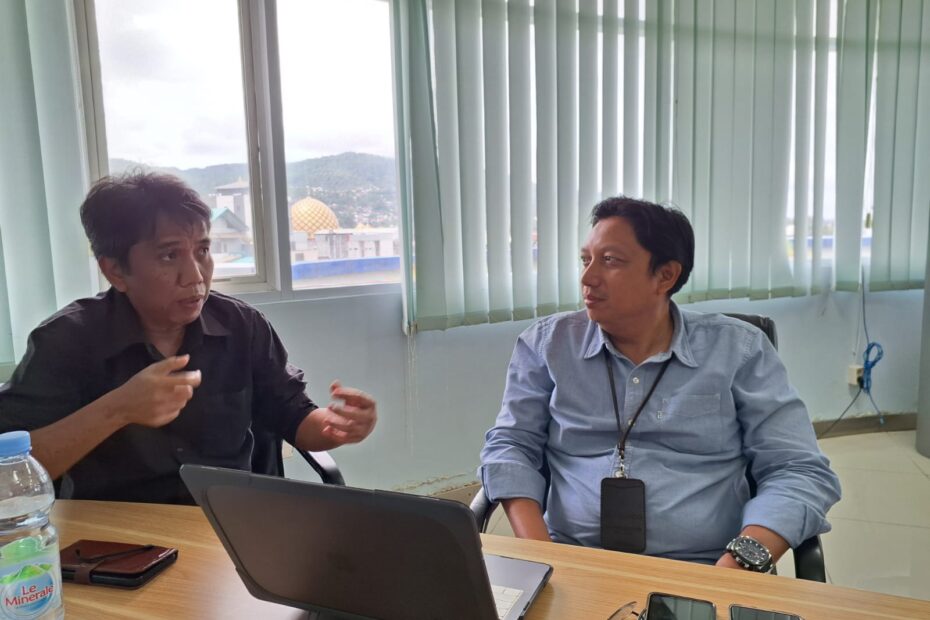
Photo: Moh. Akira Fauzi (R) and Yandi Sofyan Hadi (L)
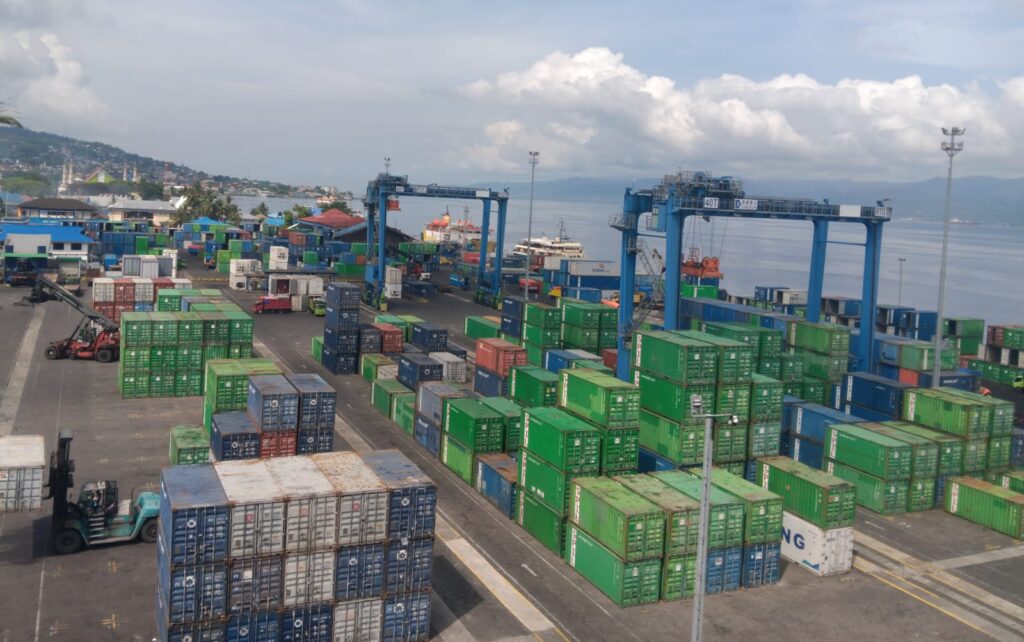
The rail extension for the Container Crane at Ambon Container Terminal is set to be completed soon, allowing the terminal to operate with two berths equipped with quay container cranes (QCC). This upgrade will enable TPK Ambon to accommodate two ships simultaneously, significantly enhancing operational efficiency.
Moh. Akira Fauzi, General Manager of Pelindo Regional 4 Ambon, stated that the project is in its final stages. “Our target is to finish the work before the end of the year, so the berth will be operational in January 2025,” he noted.
In 2024, Ambon Port strengthened the pier and extended the QCC rail from 120 meters to 320 meters. This extension aims to make all berths in the port accessible to the QCC, eliminating the need for ship cranes. As a result, productivity is expected to increase, and loading and unloading operations will be expedited.
While completing the dock reinforcement and rail installation, TPK Ambon has effectively operated with only one berth. Nevertheless, this has not hindered the terminal’s performance, as evidenced by its continually growing productivity. As of Q3 2024, TPK Ambon’s throughput reached 78,478 TEUs (twenty-foot equivalent units), marking a 4.75% year-on-year increase from 74,919 TEUs in Q3 2023.
Several shipping lines have expressed appreciation for the program and hope for its swift completion to enable the simultaneous servicing of two ships. “For almost a year, we’ve only been able to optimize one berth. We hope the pier work and installation of the QCC rail will be completed soon,” said Abraham Wattimena, Head of PT Salam Pacific Indonesia Lines (SPIL) Ambon Branch.
Key Programs
In line with the intensive transformation program following the merger, Ambon Port continues to implement various improvements, focusing on both infrastructure upgrades and initiatives that support its transition to a green port.
Beyond standardization and automation of services at Yos Sudarso Port, which handles container operations, Akira emphasized several programs at other ports under Pelindo Regional 4 Ambon, particularly those related to environmental sustainability. Pelindo Regional 4 Ambon oversees three additional ports: Slamet Riyadi Port, Bandanaira Port, and Siwobesi, which cater to local shipping vessels (Pelra).
Several current initiatives, not to mention the pier strengthening and QCC rail extension, include: first, electrification of equipment: Electrification of container loading and unloading equipment at the Ambon Container Terminal (TPK) is underway to promote a green port.
Second, shore power connection: An independent electric platform (ALMAN) has been installed at the pier of Slamet Riyadi Port to provide electrical energy for local boats (Pelra ships).
Third, Clean Water Cooperation: A partnership has been established with the Ambon City Government and the Regional Drinking Water Company (PDAM) to meet the demand for clean water at the port. Additionally, collaboration with the Regent of Central Maluku and PDAM aims to ensure clean water at Bandanaira Port, where clean water installations are being implemented to support an average of 30 ships, including Pelni and Pioneer vessels.
Fourth, Passenger Terminal Revitalization: Plans are underway to expand and renovate the Yos Sudarso port passenger terminal.
To address security concerns related to potential weapons shipments from Ambon to Papua, a detection device (X-Ray) will be installed at the passenger terminal in 2025.
“While we await the procurement of the X-Ray machine, we are coordinating with the TNI and Polri (Army and Police) to tighten security and supervision of goods at the Passenger Terminal,” Akira noted.
Yandi Sofyan Hadi, Head of the Ambon Container Terminal (TPK), added that the Planning and Control (P&C) service facilities at Ambon Port will be integrated with all port activities.
Currently, the P&C service is limited to ship and goods operations at TPK, but future plans include integration with non-container services (multipurpose), passenger services, and Line 2 activities of Multi Terminal Indonesia (MTI).