
Indonesia is stepping up port security measures to bolster global trust and competitiveness, the Indonesian Port Business Association (ABUPI) said on Thursday, as maritime threats become increasingly complex.
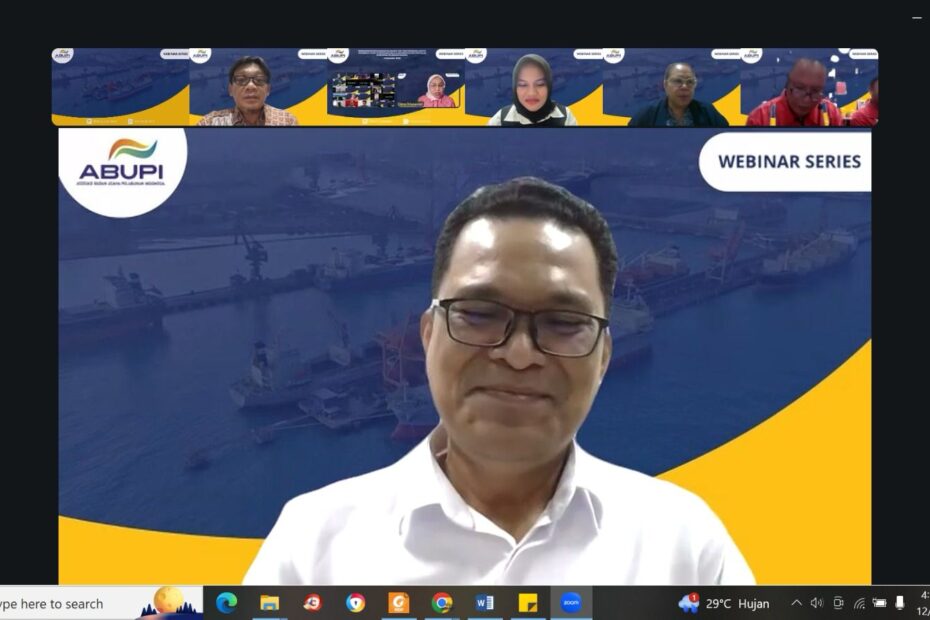
ABUPI hosted a webinar titled “ISPS Code Implementation: Building a Standardized, Adaptive, and Internationally Competitive Port Security System”, bringing together port managers, industry players, and association members to discuss strategies for strengthening operational preparedness.
In her opening remarks, ABUPI Chairperson Liana Trisnawati stressed that the International Ship and Port Facility Security (ISPS) Code is more than a regulatory obligation. “Port security is the main foundation for the sustainability of national logistics. Implementing the ISPS Code must be seen as a strategic investment, not simply an administrative procedure,” she said.

The webinar featured two keynote speakers: Capt. Marcellus Heking Jayawibawa, representative of the Indonesian Port Security Association, and Heri Setiawan, Security and PFSO Manager at PT Krakatau Bandar Samudra. Their discussion focused on three critical dimensions of ISPS implementation.
Global Standards and Compliance
The ISPS Code provides universal security standards covering access control, threat detection, and mandatory compliance, allowing Indonesian ports to align with international best practices. Officials said this framework enhances cross-border cooperation and strengthens supply chain integrity.
Adapting to Modern Threats
With maritime threats evolving to include cyberattacks alongside physical risks such as smuggling and sabotage, port authorities must integrate digital and physical security measures. Speakers emphasized early threat detection, regular personnel training, and deployment of advanced security technologies as essential steps to protect port operations.
Roles of Security Officers and Organizations
The effectiveness of port security relies heavily on the Person in Charge of Facility Security (PFSO) and Recognized Security Organizations (RSO). Regular evaluations, audits, and inter-agency coordination are critical to ensure adherence to the ISPS Code. Panelists highlighted that compliance requires a shared commitment from all stakeholders, from management to frontline personnel.

The webinar concluded with Trisnawati underscoring that port safety is a collective responsibility. “A safe port is not solely the responsibility of the operator, but a shared responsibility across the logistics and maritime ecosystem. Effective ISPS implementation will enhance the global reputation of Indonesian ports,” she said.
ABUPI reiterated its commitment to capacity building, modernizing security systems, and expanding ISPS Code awareness across national ports, framing these initiatives as vital for operational stability and maintaining international trust.