
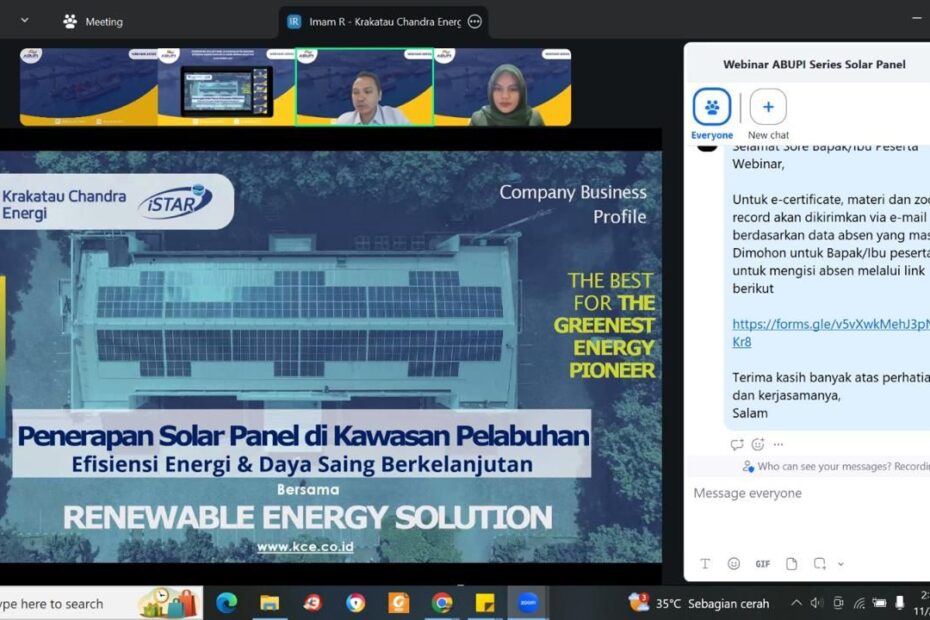
The Indonesian Port Business Association (ABUPI) on Friday urged port operators across the country to accelerate the use of solar power as part of a broader shift toward greener and more competitive port operations.
Speaking at a webinar titled “Solar Panel Implementation in Ports: Energy Efficiency and Sustainable Competitiveness,” ABUPI Chairperson Liana Trisnawati said rising global pressure to meet Net Zero Emissions (NZE) targets and the mounting cost of conventional energy had left ports with little choice but to embrace renewable solutions.
“The cost burden from traditional energy sources continues to weigh heavily on port activities,” she told participants, which included ABUPI members, port authorities, and maritime industry representatives. “Solar energy is becoming increasingly relevant—not only to cut electricity spending but also to strengthen the competitiveness of Indonesian ports in the global market.”
The discussion featured two speakers—Donny Adolf, ABUPI’s Head of Sustainable Commitment, and Imam Rojani, Group Head of Sales at PT Krakatau Chandra Energi—who outlined three reasons solar power is quickly becoming a strategic necessity for the sector.
Energy efficiency as a competitive edge
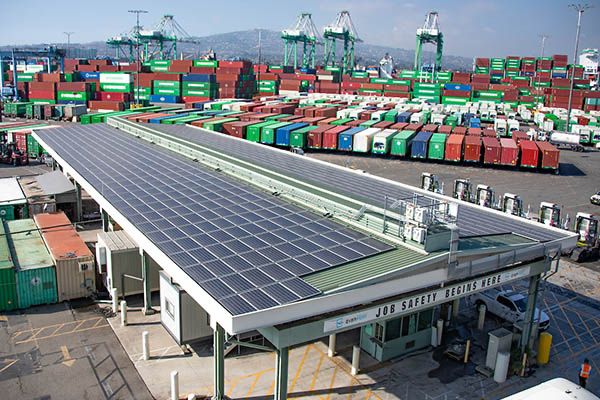
Donny said electricity usage remains one of the largest operational costs for ports, covering lighting, terminal operations, and support equipment. Solar installations, he added, could significantly trim reliance on the national grid while helping ports align with international Green & Smart Port standards that are increasingly shaping global benchmarks.
Lower investment risks
Imam noted that solar adoption no longer requires heavy upfront spending. Energy providers now offer financing models such as zero-capex schemes, enabling port operators to cut electricity costs immediately without major capital investment. “This flexibility is accelerating the industry’s shift toward solar technology, especially for businesses prioritizing long-term efficiency,” he said.
A foundation for low-emission operations
Solar power also plays a central role in the transition toward Zero Emission Berths—dock facilities designed to support vessels without producing emissions. Donny said the availability of clean energy within port areas will be critical to meeting future environmental standards and securing Indonesia’s place within the global green port ecosystem.
ABUPI said the move toward renewable energy should be viewed not merely as regulatory compliance but as a long-term business strategy. Lower operating costs, reduced emissions and stronger competitive positioning, the association added, are tangible benefits that port operators can gain from early adoption.
The organisation expressed hope that more ports will integrate solar power into their operations, calling the shift a key step in ensuring Indonesia’s port industry remains resilient, efficient and globally relevant amid rapid changes in the maritime sector.