
Indonesia’s logistics industry is expected to expand strongly in 2026, supported by rising domestic consumption, continued government-backed industrialisation and the steady growth of e-commerce, the Indonesian Logistics and Forwarders Association (ALFI) said.
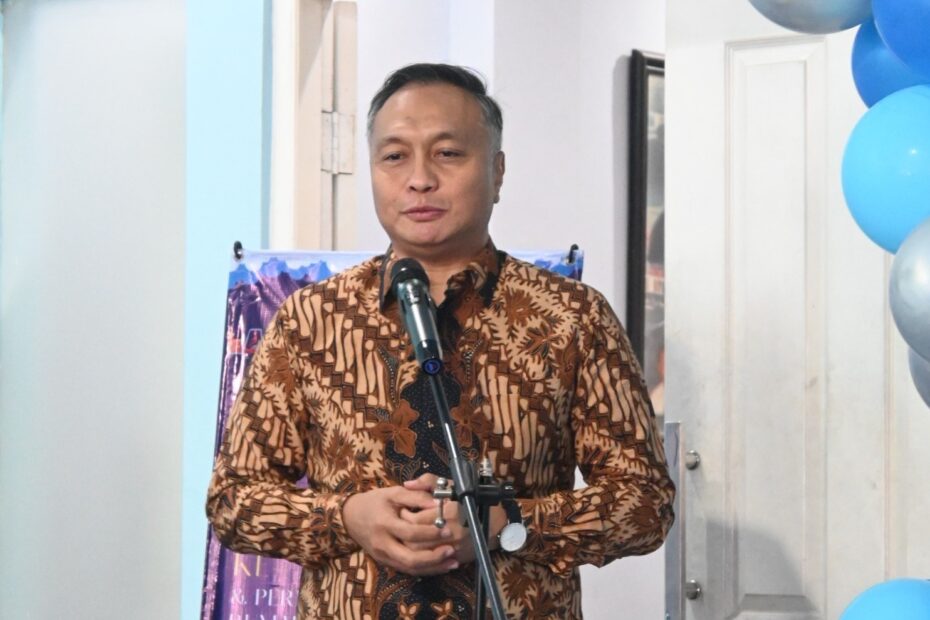
Sebastian Wibisono, chairman of ALFI’s East Java Chapter, said logistics activity next year would remain “dynamic” and could see a surge in freight flows in several regions, particularly in industrial corridors linked to ports and special economic zones.
“The logistics business is entering 2026 with a high level of optimism,” Wibi said.
“Domestic consumption is growing, government programmes remain supportive, and the sector has shown resilience throughout 2025,” he explained.
The logistics sector’s contribution to the economy is projected to reach about 1,700 trillion rupiah ($110 billion), he said, with growth expected to outpace Indonesia’s overall economic expansion, which is forecast at around 5.4%. The industry’s focus in the coming year will be on efficiency, modernisation and stronger collaboration across supply chains.
Transportation and warehousing are expected to remain key drivers of growth, underpinned by the rapid expansion of online commerce and the restructuring of domestic supply chains.
Industrial zones drive freight flows
One of the strongest growth engines for logistics in East Java is the Java Integrated Industrial and Ports Estate (JIIPE) in Manyar, Gresik, which has developed into a fully integrated special economic zone (SEZ).
The zone has attracted major investment, including PT Freeport Indonesia’s copper smelter, and offers integrated infrastructure such as electricity, water, gas and telecommunications, alongside fiscal and non-fiscal incentives provided by the government.

JIIPE Industrial zone one of the leading drivers
“JIIPE is becoming a centre for downstream industrialisation, particularly with the presence of Freeport’s copper smelter, which increases the added value of domestic natural resources,” Wibi said.
The SEZ is directly connected to a deep-sea port with a 16-metre draft, as well as rail and road networks, allowing efficient domestic and international logistics flows. It also provides centralised, one-stop utilities and services, ranging from waste management to telecommunications.
According to Wibi, JIIPE has attracted a broad range of industries, including chemicals, fertilisers, food processing and renewable energy, with multinational companies among its tenants.
“Over the next five years, JIIPE will continue to be a major investment destination,” he said, citing new tenants such as PT Xinyi in glass and solar manufacturing, and Golden Elephant, alongside existing large-scale operations.
“Overall, JIIPE Manyar reflects the industrial modernisation of East Java and plays an important role in Indonesia’s downstreaming strategy.”
Ports and infrastructure transformation
While opportunities are strong, 2026 is also expected to be a challenging year for logistics operators, particularly around Indonesia’s main eastern gateway, Tanjung Perak port in Surabaya.
Wibi said regulatory changes and rising competition would require logistics firms to adapt through service transformation and operational improvements.
“Tanjung Perak is undergoing a major transformation to strengthen its competitiveness as an international port,” he said, adding that modernisation efforts were essential to support increasing cargo volumes and more complex supply chains.

Photo: Terminal Teluk Lamong shows how port transformation supports trade flows
Despite these challenges, he said transport and warehousing activities would continue to support economic growth next year, driven by e-commerce demand and industrial supply chains.
Data from Statistics Indonesia (BPS) show that Indonesia’s economy grew 5.05% as of October 2025, while the transportation and warehousing subsector expanded by 12.53% during the year, highlighting the sector’s strong momentum.
Calls for a ‘comfortable’ investment climate
Wibi said sustained growth in logistics would depend heavily on a stable and conducive investment environment.
Business players, he said, expect “investment comfort” in the form of legal certainty, efficient licensing, predictable regulations and security guarantees.
The government has taken steps to improve the investment climate, including the Job Creation Law, which aims to streamline business regulations and reduce bureaucracy. Regional governments have also pledged to ensure political stability and investor security.
In addition, incentives and facilities offered in special economic zones, along with risk-based business licensing managed through one-stop integrated services agencies, are intended to accelerate and simplify the permit process.

Indonesia’s macroeconomic stability, political conditions, natural resource base and favourable demographics continue to be key attractions for global investors, Wibisono added.
Outlook and risks
The logistics sector’s optimism is also supported by broader economic indicators. The government has repeatedly stated its ambition to push national economic growth to between 6% and 6.5% by 2026.
Indonesia’s manufacturing purchasing managers’ index (PMI) rose to 51.2 in October 2025 from 50.4 a month earlier, signalling expansion and improved activity in manufacturing and commodities, which typically translates into higher demand for logistics services.
BPS data show that the warehousing and transportation industry grew 8.52% in the second quarter of 2025 and 8.62% in the third quarter. Bank Indonesia projects growth of between 10.8% and 11.6% for the sector in 2026.
Growth in new industrial areas along Java’s northern coast and on other major islands is also expected to improve reverse logistics flows, which have long contributed to high transportation costs.
However, industry players remain cautious about risks, including extreme weather, natural disasters, regulatory shifts in taxation and licensing, and global geopolitical tensions that could disrupt trade and investment.
Despite these pressures, the International Federation of Freight Forwarders Associations (FIATA) has expressed optimism about Indonesia’s logistics outlook in 2026, citing the sector’s resilience to global shocks in 2025 and stable domestic demand.
FIATA senior vice president and ALFI advisory board chairman Yukki Nugrahawan Hanafi said logistics had made a significant contribution to Indonesia’s roughly 5% economic growth this year.
“Even amid geopolitical tensions and global trade disputes in 2025, the national logistics sector continued to grow and provide a strong foundation for 2026,” he said.