
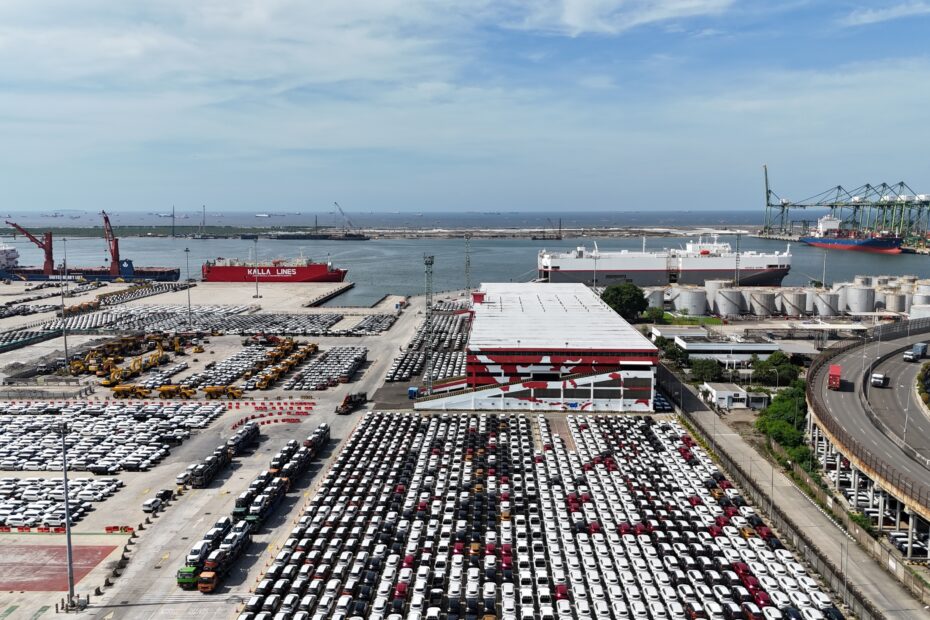
A sharp uptick in cargo volume and a disciplined focus on operational efficiency helped PT Indonesia Kendaraan Terminal Tbk. (IDX: IPCC), a car terminal operator, post strong results in the first half of 2025, as the company adapts to changing global trade dynamics and growing electric vehicle demand.
The state-affiliated port operator, a subsidiary of Pelindo Multi Terminal and part of the broader Pelindo Group, reported consolidated cargo flow growth of 10.9% year-on-year, totaling 52,562 units through June. That operational momentum translated into a 15.35% jump in revenue to IDR 415.55 billion, while net profit surged 41.1% from the same period last year to IDR 113.85 billion.
IPCC’s performance comes amid a cautious automotive outlook. While the company recorded record throughput, Indonesia’s national car sales are expected to soften this year, with Gaikindo revising its target downward to 900,000 units.
Still, IPCC’s core business, terminal services, continues to anchor growth, especially at its flagship Jakarta terminal. The port has seen a rising tide of electric vehicle (EV) cargo, with 28,978 EV units handled in the first half, representing leading Chinese brands such as BYD, VinFast, Geely, and AION. This growing EV footprint signals Jakarta’s emergence as a regional hub for auto logistics and reflects Indonesia’s broader push into EV manufacturing and import-export flows.
Innovation and Synergy, Debt-Free
IPCC President Director Sugeng Mulyadi credited the company’s robust performance to strategic partnerships and a pivot toward operational innovation.
“The positive trajectory in our financials is a reflection of the company’s ability to adapt, through digital transformation, cross-terminal integration, and improved customer engagement,” he said. He highlighted the company’s Pre-Delivery Center (PDC) service, which allows automakers to store vehicles ahead of shipment, as a key value-added initiative.
IPCC has also enhanced its logistics offerings, partnering directly with automakers to optimize distribution flows. These collaborative models, Mulyadi added, are helping to maximize terminal utility and customer satisfaction in a highly competitive market.
Behind the numbers is a business operating on firm financial footing. “We remain debt-free, with no bank loans or bond obligations, giving us the flexibility to expand without constraints,” said Wing Megantoro, IPCC’s Director of Finance, Human Resources, and Risk Management.
Profitability indicators also point to operational strength. Net profit margin held steady at 26.24%, while EBITDA margin came in at 44.8%. Earnings per share rose to Rp62.61, up from Rp44.37 in the first half of 2024.
Cost management continues to be a priority. “Our focus is on operational discipline—streamlining processes across all supporting functions to ensure sustainable growth and long-term shareholder value,” Megantoro said.
Positioning for Long-Term Growth
IPCC’s operational revamp is far from cosmetic. According to Director of Operations and Engineering Bagus Dwipoyono, the company has launched multiple initiatives to expand capacity and digitize terminal management.
“Standardizing layouts, redesigning stacking yards, and rolling out our PTOS-C digital operating system are all part of a long-term transformation to modernize our services,” Dwipoyono said. These efforts are expected to support growing cargo flows, especially in the EV segment, as major Chinese automakers set up factories near the capital.
Looking ahead, the company is accelerating expansion into underserved regions, particularly in central and eastern Indonesia, with the goal of connecting terminals nationwide. This inter-terminal connectivity, executives say, will reduce logistics costs, optimize cargo distribution, and provide more integrated services to clients.
“The future of logistics lies in efficient, sustainable, and connected infrastructure,” Mulyadi said. “And that’s exactly where we’re headed.”