

Indonesia’s Ministry of Trade has begun formally introducing a series of newly issued import regulations, aiming to streamline procedures and boost the country’s trade environment amid evolving global economic challenges.
During a public briefing on Thursday, Trade Ministry officials outlined nine newly issued ministerial regulations that restructure import licensing based on commodity clusters. The changes, according to officials, are aligned with Indonesia’s Trade Law, the Job Creation Law, and Presidential guidelines on commodity balance.
“These regulations are designed to create greater flexibility and clarity in managing import flows while ensuring national interests are protected,” said Iman Kustiaman, Director of Imports at the Ministry of Trade, during the event which was also broadcast online.
The new policies deregulate various import procedures and ease restrictions on selected goods, with the government aiming to reduce bureaucratic red tape and better respond to market demands.
Iman explained that the deregulation framework carves out exemptions for certain goods from the country’s restricted and prohibited imports list (Lartas). These include: strategic commodities covered under the national commodity balance system, such as rice, sugar, salt, corn, garlic, and petroleum; security and environmental-sensitive goods (known as K3LM), including rough diamonds, ozone-depleting substances, and alcoholic beverages; and industrial and labor-intensive goods, ranging from textiles and garments to steel products.
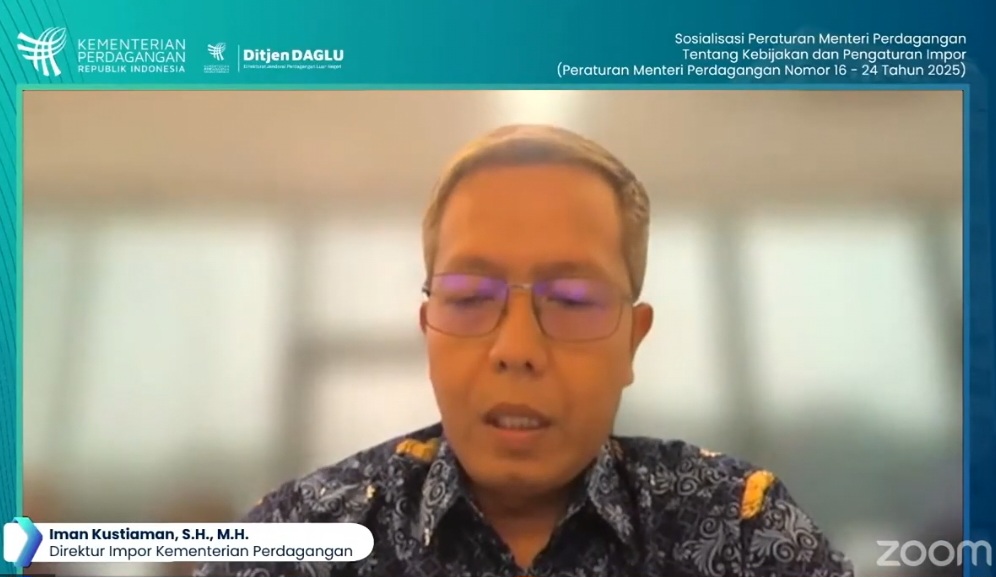
In total, 482 tariff lines have been relaxed, affecting raw materials, strategic industrial products, and goods supporting national programs. Examples include plastic feedstock, fertilizers, saccharin, bicycles, forestry products, and stainless steel trays.
“This is part of our commitment to support industry and business by adapting to global dynamics,” Iman said. He added that the ministry remains open to feedback from industry players to ensure that policy implementation meets their operational needs.
Deregulation, Business Clustering
The business community responded positively to the changes. Taufan, Deputy Chairman of the Indonesian Importers Association (GINSI), said the outreach effort reflects the government’s seriousness in creating a more business-friendly environment.
“We truly appreciate the deregulation initiative. It helps accelerate the business climate and supports national economic growth,” Taufan said. He expressed hope that similar outreach events will be held in key regions such as Medan, Surabaya, and Semarang to ensure broader understanding of the regulatory changes among importers.
The association has also welcomed the revocation of four older trade regulations that previously complicated import processes. Among them is the 2007 regulation on trade business licensing, which had undergone multiple amendments over the years.

The nine new regulations, all issued in 2025, group import policies by commodity category for more agile policymaking. They include: Permendag No. 16 on General import regulations and Permendag No. 17–24: Sector-specific regulations covering textiles, agricultural goods, salt, fisheries, chemicals, electronics, industrial items, consumer goods, and used or non-hazardous waste
Trade Minister Budi Santoso has stated that clustering import rules by commodity enables more dynamic adjustment in response to market and policy shifts, particularly in areas affected by geopolitics and global trade disruptions.
The deregulation move also supports the government’s broader economic agenda under President Prabowo Subianto and Vice President Gibran Rakabuming Raka, which targets 8% economic growth in the coming years.
“This is a step in the right direction,” said Taufan. “We hope other ministries and institutions will follow suit to improve the ease of doing business across all sectors.”