
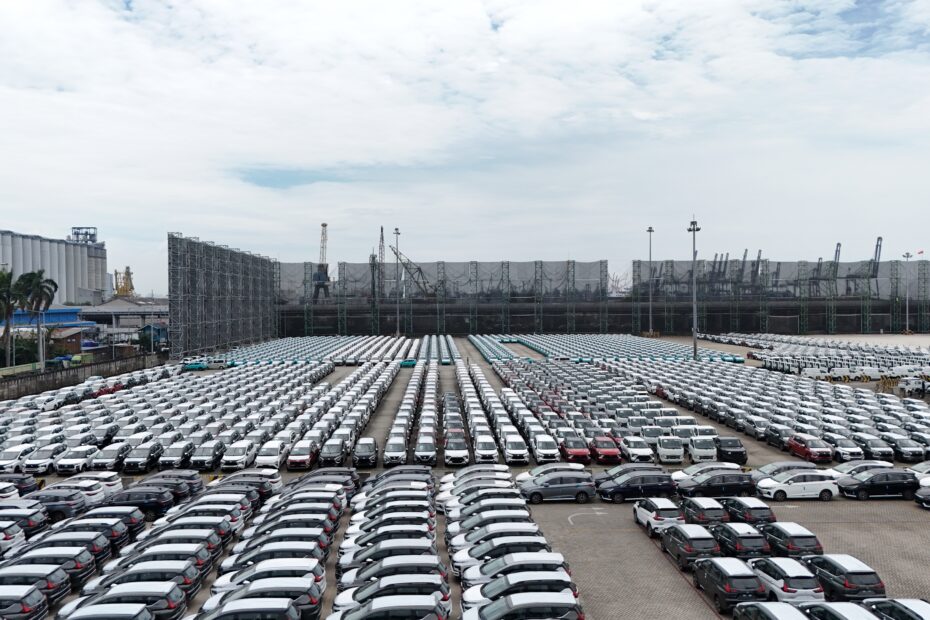
The throughput of the Indonesia’s leading car terminal operator PT Indonesia Kendaraan Terminal (IKT/IPCC) grew by 11.12% year-on-year through February 2025, marking a significant improvement compared to the same period in 2023.
This growth aligns with the broader expansion of the national automotive industry, which saw an impressive 16.7% increase.
By February 2025, IPCC had handled 238,819 vehicles, reflecting an increase of 23,916 units over the same period in 2023. Monthly performance in February showed further growth. The terminal handled 127,045 units in February alone, a jump of 15,271 units, or 13.6%, compared to January 2025.
According to data from Gaikindo (the Association of Indonesian Automotive Industries), car sales in February reached 72,295 units, representing a 16.7% month-on-month increase from January 2025. Total car sales from January to February amounted to 134,227 units.
In addition to cargo performance, the number of ship calls throughout IPCC terminals nationwide, including the upcoming Banjarmasin satellite terminal set to open on October 1, 2024, increased by 17.7% year-on-year, totaling 526 calls—an additional 79 calls during the first two months of 2025.
These positive results are attributed to a growing influx of vehicle imports, particularly in the CBU (Completely Built Unit) category, with 6,778 units of Battery Electric Vehicles (BEVs) from Asian manufacturers like BYD, Vinfast, AION, and other brands.
At the same time, the export volume of vehicles from Indonesia has risen, reflecting the increasing demand for locally produced cars in international markets.
By February 2025, IPCC had also handled 17,620 units of truck and bus, marking a 16.3% year-on-year increase. This growth was driven by the import of electric buses from China, part of Transjakarta’s plan to rejuvenate its fleet with 200 new electric buses by 2025.
Additionally, large-capacity trucks for the domestic mining sector have seen rising demand, aligned with the President’s “Asta Cita” vision of downstreaming and industrialization to boost domestic added value and support Indonesia’s 2045 vision.
CBU cargo handling reached 133,585 units by February 2025, showing a 9.6% increase over the previous year, with 49,954 units exported—an uptick of 4.19%. As reported by Gaikindo, total CBU production through February 2025 was 165,166 units.
Meanwhile, heavy equipment cargo grew by 712 units (16.2%), with 33,710 units handled by IPCC. This performance was driven by exports and imports of heavy machinery, predominantly from well-known brands such as Hitachi, Caterpillar, Sumitomo, Hyundai, and Komatsu.
Strategic Initiatives to Reach Target
“In line with our 2025 roadmap focused on Integrated Connectivity, we are enhancing our satellite terminal network, strengthening service connectivity, and collaborating actively with cargo owners,” said Bagus Dwipoyono, Director of Operations and Engineering at IPCC.
“These initiatives are steps toward establishing IPCC as a leader in the vehicle terminal ecosystem and expanding our stacking fields to ensure we continue to meet the expectations of our service users.”
Echoing the view, Endah Dwi Liesly, Corporate Secretary at IPCC, explained that the strategic initiatives will support the company to reach its yearly target. “Based on our operational performance through February 2025, we are confident that IPCC will surpass last year’s results, supported by strategic initiatives in commercial and operational areas,” said Endah.
“These initiatives include implementing PTOS-C at international and satellite terminals, expanding our core services to automakers who haven’t yet partnered with us, and optimizing the use of digital-based information technology,” she added.