
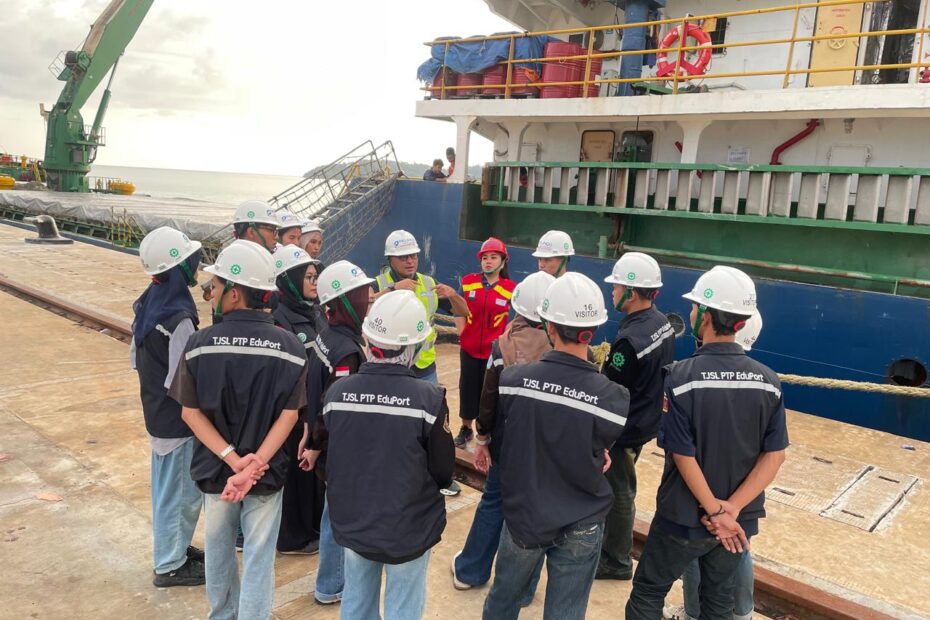
PT Pelabuhan Tanjung Priok (PTP Nonpetikemas) has called on university students to contribute innovation ideas to strengthen operations at Kijing Terminal, a key logistics hub in West Kalimantan.
The initiative is part of the company’s Social and Environmental Responsibility (TJSL) programme, built on a Creating Shared Value (CSV) approach that links business performance with community development.
The programme’s showcase event on Monday drew senior officials from the Pelindo Group, local government, port agencies and universities, underscoring growing collaboration between industry and academia to build a port-based learning ecosystem.
Internship and Innovation Pipeline
Under the EduPort programme, 15 students from Tanjungpura University and Muhammadiyah University of Pontianak completed a month-long internship combining fieldwork, technical learning and innovation design.
After a series of presentations and judging, five projects were selected as the best in categories including safety, environmental health, engineering and operations.
Two innovations, an oil-absorbing pad and a rubber mat puzzle, are expected to be implemented by the end of 2025. Three others are slated for rollout in 2026.
“This innovation doesn’t stop here,” said Bambang Sakti, Director of Finance, Human Resources and Risk Management at PTP Nonpetikemas.
“We are proud that this social investment builds relationships, supports the business and inspires our daily workforce. The programme encourages collaboration between the community and students and strengthens both human resources and the local logistics ecosystem,” he said further.
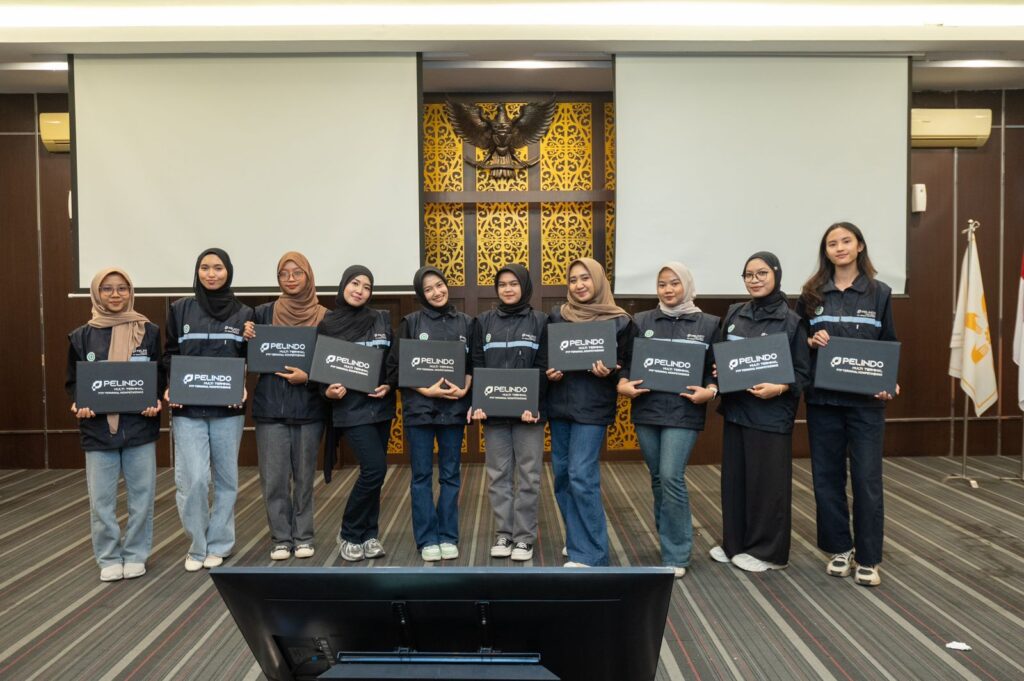
Bambang said the initiative shows that ports function not only as logistics centres but also as learning platforms. Inputs from students, he added, offer fresh perspectives for boosting efficiency, HSSE standards and operational excellence. He also noted that training and certification for daily workers helps develop a trained local workforce that meets national standards for liquid bulk, dry bulk and general cargo handling.
One participant, Muhammad Afiq, said he and his team had not expected to be selected. “At first we lacked confidence, but we’re grateful to have been accepted,” he said. Students began the programme by refining their scientific papers and expressed hope that their ideas would benefit Kijing Terminal’s operations.
Beyond student innovation, PTP Nonpetikemas has launched a certification and training programme for daily workers. Nine workers completed initial training and gained certification from the National Professional Certification Agency (BNSP) in liquid bulk, dry bulk and general cargo handling.
Stakeholder Endorsement
Pelindo Regional 2 Pontianak’s General Manager, represented by Business Compliance Manager Mustafa, praised the programme, saying it reflects the Group’s commitment to developing local talent. He highlighted Kijing Terminal’s strategic role as one of western Indonesia’s key supply-chain gateways, especially for palm-oil derivative exports.
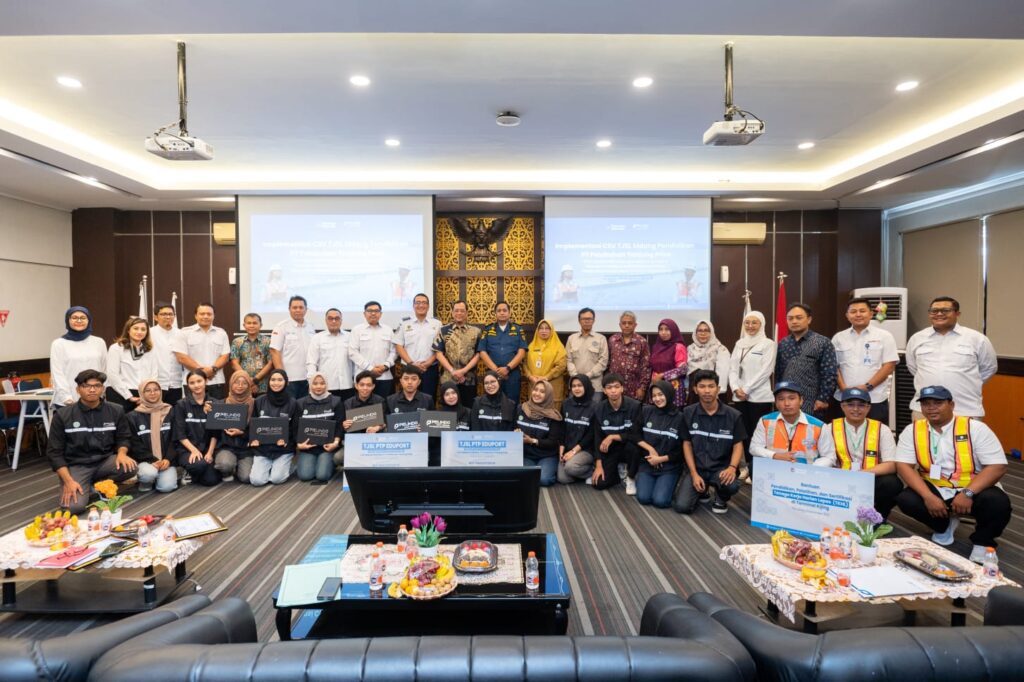
Local officials also voiced support. Johana Sari Margiani, Head of the Mempawah Industry and Manpower Office, said the programme aligns with Indonesia’s “Golden Indonesia 2045” vision by widening access to education and accelerating the availability of skilled labour. She called PTP Nonpetikemas a model for other companies in the region.
The Pontianak Class I Harbormaster and Port Authority (KSOP) also commended the initiative. KSOP representative Heriansyah said the programme strengthens operational performance at Kijing and helps build long-term competency in port human resources.
Operational Strengthening
The company said its CSV-based education programme enhances community human resources while supporting the sustainability of port operations. PTP Nonpetikemas expects the model to be replicated in other branches to expand its social impact.
Kijing Terminal handles liquid bulk, dry bulk and palm-oil derivative cargoes and serves as a buffer port for Pontianak’s congested Dwikora Port.
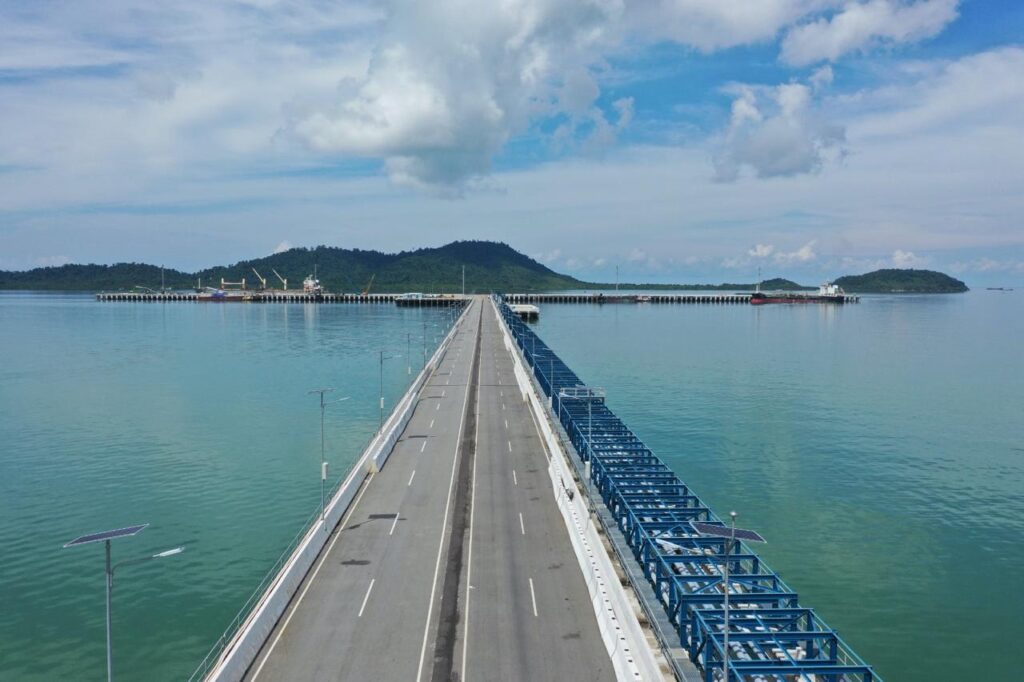
As of October 2025, the PTP Non-Container Pontianak Branch recorded throughput of 3.21 million tonnes, up 46% from 2.2 million tonnes in the same period last year.
With growing capacity and strategic positioning, Kijing Terminal is increasingly seen as a key logistics solution supporting Indonesia’s national supply chain and global competitiveness in port services.