
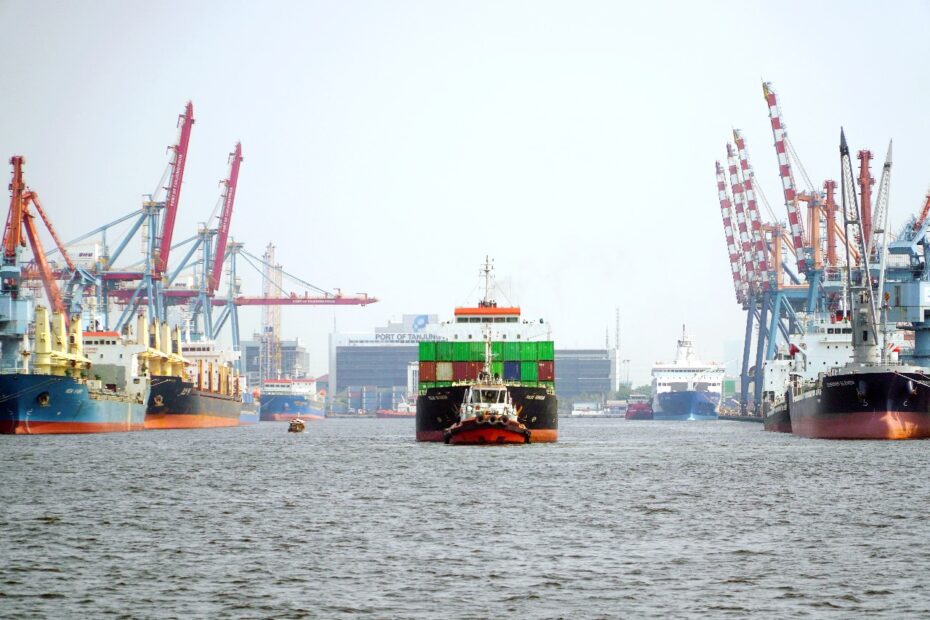
PT Pelindo Terminal Petikemas (SPTP), a subholding of the state-owned port operator PT Pelindo, which operates key container terminals across Indonesia, has posted impressive performance in 2024, driven by a series of transformation efforts since the merger in 2021.
The total container throughput across all SPTP-managed terminals reached 12,489,927 TEUs (twenty-foot equivalent units) in 2024, reflecting a 7.1% year-on-year increase, from 11,661,489 TEUs in 2023. The breakdown includes 8,494,402 TEUs from domestic shipments and 3,995,525 TEUs from international trade.
Widyaswendra, Corporate Secretary of SPTP, attributed the growth to the broader economic expansion within the regions it serves. “Container flow growth is closely tied to the economic performance of both local and international markets,” he explained. “Typically, we see annual growth in container volumes of 4-6%, which we consider organic growth.”
To continue this growth trajectory, SPTP is implementing both organic and inorganic strategies. A key focus is transforming the Makassar New Port (MNP) into a logistics consolidation hub for Indonesia’s eastern region.
The company is also forming strategic partnerships with terminal operators and collaborating with logistics and shipping companies to increase containerization of commodities and expand shipping routes.
Many of these initiatives are already in motion. MNP is fully operational, and SPTP has teamed up with INA-DP World to operate the Belawan New Container Terminal (BNCT). Additionally, between 2022 and 2024, the company introduced 32 new container shipping routes. With these efforts, SPTP is targeting a throughput of 15.7 million TEUs by 2029.
ONGOING TRANSFROMATION DRIVES GROWTH
Industry experts have expressed optimism about SPTP’s growth and transformation. Siswanto Rusdi, Director of the National Maritime Institute (Namarin), commended SPTP’s efforts to boost containerization and underscored the need for continued improvements in ports, particularly in Eastern Indonesia. He pointed to the ongoing upgrades at terminals in Makassar, Sorong, Jayapura, Ambon, and Bitung as strong indicators of progress.
“To fully support international transshipment, a comprehensive study involving all stakeholders, including the government, is critical. This will ensure the development of a robust ecosystem, including bunkering facilities, efficient berthing, and advanced financial and payment systems,” Rusdi said.
He also emphasized the importance of Pelindo’s international expansion, particularly within Southeast Asia, as a valuable next step.
Maritime expert Saut Gurning, from Sepuluh November Institute of Technology (ITS) in Surabaya, noted that the Pelindo merger has already resulted in improved port services and increased operational efficiency. He stressed the importance of enhancing hinterland connectivity to lower logistics costs, which is key to remaining competitive in global trade.
Gurning also emphasized that modern, reliable terminal equipment is essential for smooth container handling. Additionally, infrastructure improvements, including facilities to accommodate larger vessels, are critical for ensuring optimal service.
“The international market presents significant growth potential, but we must also account for macroeconomic factors, such as geopolitical stability, which can greatly impact global trade,” Gurning added.
Looking forward, SPTP remains committed to leveraging its ongoing transformational initiatives to strengthen its market position both domestically and in Southeast Asia. These efforts set the stage for continued growth and further expansion in the years to come, positioning the company as a key player in global container shipping.