
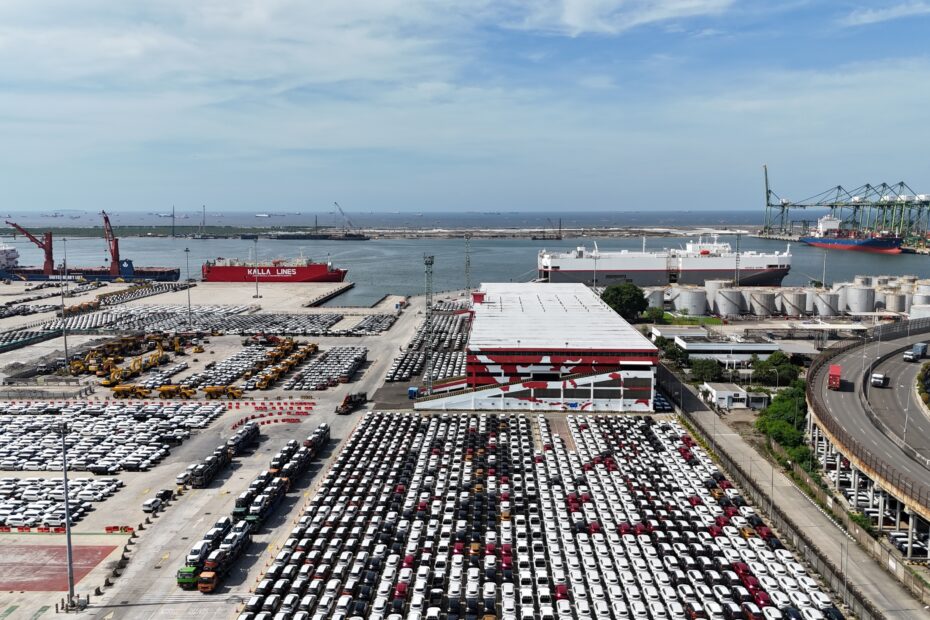
Indonesia’s leading car terminal operator PT Indonesia Kendaraan Terminal Tbk (IKT – IDX: IPCC) reported a significant boost in operational performance for the first four months of 2025, fueled largely by a surge in electric vehicle (EV) imports.
From January to April, IKT handled a total of 277,512 Completely Built-Up (CBU) vehicles, marking a year-on-year (YoY) increase of 9.24% compared to the same period in 2024. This growth is largely attributed to rising demand for electric-powered passenger vehicles, which aligns with Indonesia’s broader push towards a sustainable transportation ecosystem.
According to the latest data from the Association of Indonesian Automotive Industries (Gaikindo), CBU vehicle production reached 368,468 units by the end of April 2025. The growing EV trend—spanning Battery Electric Vehicles (BEVs), Hybrid Electric Vehicles (HEVs), and Plug-in Hybrid Electric Vehicles (PHEVs)—has been a significant driver of this upswing.
Operating under Subholding Multi Terminal, a subsidiary of state-owned port operator Pelindo, IKT is a dedicated automotive terminal specializing in non-containerized cargo. As of April, the company handled a total cargo throughput of 481,213 units, encompassing CBUs, trucks and buses, heavy equipment, general cargo, and motorbikes.
IKT Corporate Secretary Endah Dwi Liesly noted that despite a challenging global and domestic economic climate, the company has consistently delivered strong results.
“We remain committed to our shareholders and service users. IKT continues to grow sustainably while enhancing operational performance,” Liesly stated on Friday (May 30).
That growth was evident across several key performance indicators. IPCC recorded a 17.14% YoY increase in total throughput, driven in large part by rising imports of EVs. Additionally, the terminal handled 1,030 vessel calls, a 14.06% increase from the same period last year—signaling growing confidence in Indonesia’s automotive logistics sector.
Truck and bus handling also showed solid performance, reaching 63,706 units by the end of April, up 15.91% YoY.
As Indonesia accelerates its transition toward cleaner mobility, IPCC appears well-positioned to play a central role in supporting the evolving needs of the nation’s automotive supply chain.