
Container terminal operator PT IPC Terminal Petikemas (IPC TPK) is reinforcing its commitment to workplace safety through initiatives aimed at strengthening safety awareness among port workers and partners, as operations intensify at Indonesia’s busiest container terminals.
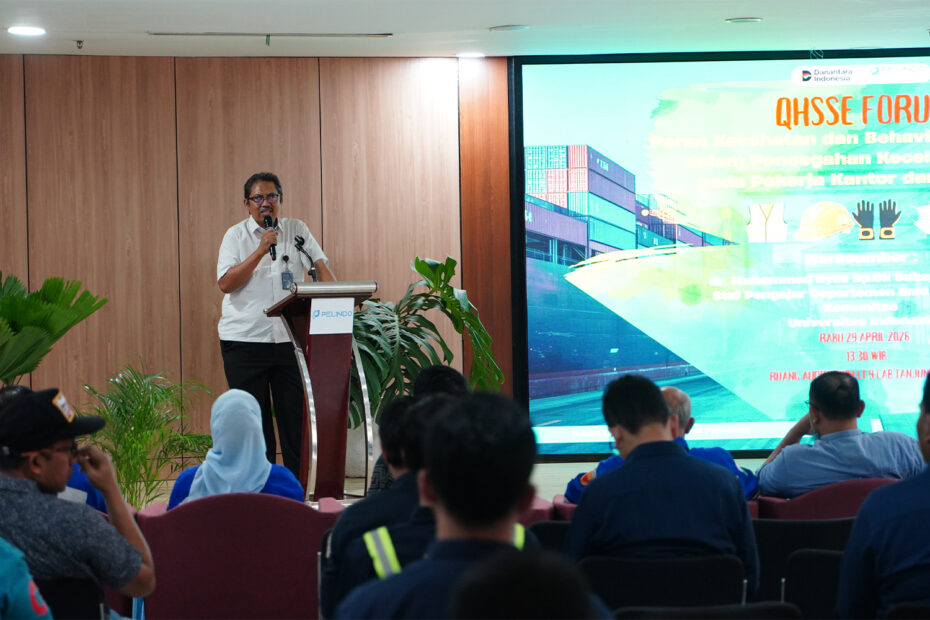
The company held a “Safety Awareness 2026” sharing session on April 30 at the Pelindo Regional 2 building in Tanjung Priok, bringing together employees, contractors and port stakeholders to promote a stronger safety culture across terminal operations.
The event, held in a hybrid format, focused on the role of occupational health and behavior-based safety in preventing workplace accidents among both office and field workers.
“Safety must be the top priority in every operational activity,” IPC TPK President Director Guna Mulyana said. “We work not only to achieve performance targets, but to ensure that everyone arrives and leaves safely.”
Container terminal operations involve round-the-clock activity, heavy equipment and high worker mobility, increasing the risk of accidents if safety standards are not strictly observed.
Guna said workplace incidents could lead not only to human and financial losses, but also disrupt port operations and broader logistics chains.
To address these risks, IPC TPK is promoting a behavior-based safety (BBS) approach, which emphasizes discipline, vigilance and greater awareness of occupational hazards among workers.
Occupational health expert Muhammad Ilyas said unsafe behavior, low risk awareness and fatigue were among the main causes of workplace accidents in port environments.
“Fatigue management, healthy lifestyles and stronger safety awareness are key to reducing human error in high-risk operations,” he said during the session.
The event was also attended by Yandri Trisaputra, Executive General Manager of Pelindo Regional 2 Tanjung Priok, along with representatives of stevedoring companies and IPC TPK management.
IPC TPK said collaboration among all stakeholders is essential to building a sustainable safety culture across port operations.
The company aims to embed safety practices as a shared responsibility among employees and business partners, ensuring that operational efficiency is matched by high safety standards.
“Going forward, we must continue improving and prioritising safety for both field and office workers,” Guna said.