
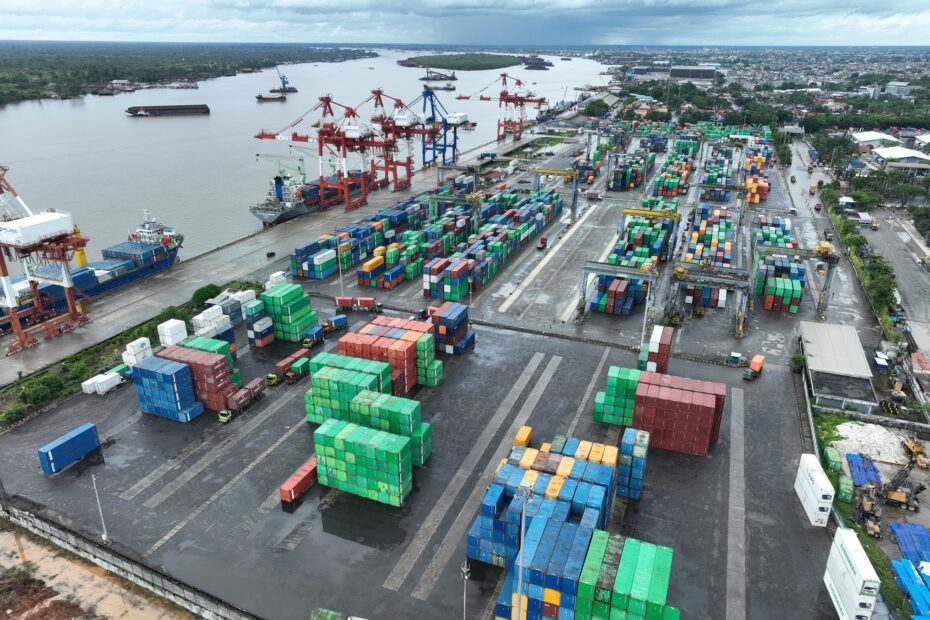
Banjarmasin Container Terminal (TPK Banjarmasin) posted a 5.5% increase in container throughput in 2025, handling 569,596 twenty-foot equivalent units (TEUs), up from 539,789 TEUs a year earlier, the terminal operator said.
The growth, equivalent to an additional 29,807 TEUs, was driven by operational improvements and closer coordination with stakeholders, according to Terminal Head Sirin Purnomo.
“The increase reflects our commitment to continuously improving operational performance,” Sirin said.
“Higher loading and unloading productivity, more efficient vessel berthing times, and reliable facilities and equipment have been key to maintaining customer trust,” he explained.
Throughout the year, the terminal implemented a series of transformation measures, including workforce competency development through seven batches of Container Terminal Operations training, stronger operational planning and control, and routine daily meetings to evaluate performance, manage risks and enhance cross-functional coordination.
The measures helped ensure smooth container flows despite operational challenges, the company said.
The improved performance has also drawn attention from local authorities, who say the higher throughput has supported regional trade and industry.
Faisal Akly, head of the Trade Strengthening and Development Division at the Banjarmasin City Department of Trade and Industry, said the terminal’s performance has contributed to smoother goods distribution, more stable supply chains and lower logistics costs.
“Reliable port services help ensure the availability of basic goods, support industrial activity and strengthen Banjarmasin’s position as a regional trade hub,” Faisal said.
Looking ahead, the terminal plans to continue its transformation programme in 2026, focusing on digitalisation and system integration through the TOS Nusantara platform to improve operational planning and on-site efficiency.
TPK Banjarmasin is also expanding its equipment fleet with the addition of four electric rubber-tyred gantry cranes (e-RTGs), which are expected to begin operating in the second quarter of this year.
With these initiatives, the terminal aims to reinforce its role as a key logistics hub and contribute to economic growth in South Kalimantan, the company said.