
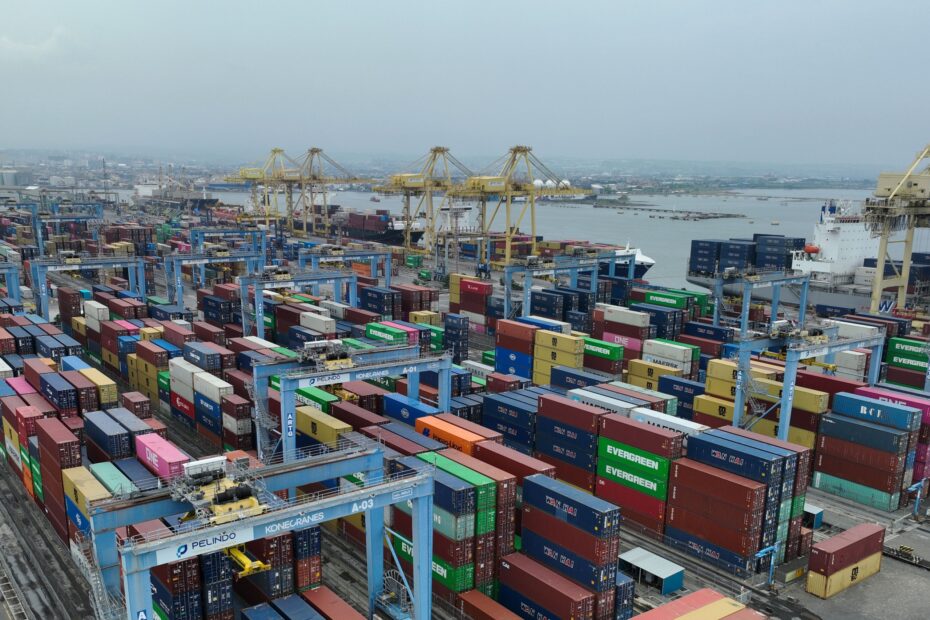
Container throughput at terminals operated by PT Pelindo Terminal Petikemas rose 6.87% in 2025 from a year earlier, driven by higher domestic distribution and growing international trade flows, the company said on Wednesday.
Total container traffic reached 13.34 million twenty-foot equivalent units (TEUs) in the January–December period, up from 12.48 million TEUs in 2024. Domestic containers accounted for 8.94 million TEUs, while international volumes reached 4.40 million TEUs.
Corporate Secretary Widyaswendra said the increase reflected stronger demand for containerised cargo across several regions, alongside higher ship calls at Pelindo-managed terminals.
“We recorded increased ship calls at several terminals, which is in line with rising commodity volumes in each region. Demand and distribution of goods are both increasing,” he said.
Pelindo reported growth across a number of regional terminals, including Jambi, where container throughput rose in line with higher cement demand linked to property development.
Traffic at the Ternate terminal increased due to mining-related shipments from Halmahera, while volumes at the Merauke terminal rose alongside the implementation of national strategic programmes in South Papua.
International container traffic grew 10.28% from a year earlier, rising from 3.99 million TEUs in 2024 to 4.40 million TEUs in 2025, the company said.
One of the key contributors was the Teluk Lamong terminal in East Java, which recorded around 25% growth after adding five new international shipping services during the year.
“International container flows are also increasing due to higher shipments to Korea, the United States, Japan and China via TPK Semarang,” Widyaswendra said.
Linked to economic growth
The growth in container traffic is closely tied to Indonesia’s broader economic performance, according to Didik J. Rachbini, a senior economist at the Institute for Development of Economics and Finance (INDEF).
Indonesia’s economy expanded 5.04% year-on-year in the third quarter of 2025, official data showed. Rachbini said further acceleration would depend on stronger industrial activity.
“Industry, especially manufacturing, is a key driver of the national economy. Higher trade activity increases exports and employment, which in turn boosts container traffic,” he said.
He pointed to the government’s nickel downstreaming programme as an example of how industrial policy can lift logistics demand. Exports of nickel-derived products reached $33.9 billion in 2024, up from $3.3 billion in 2017, he said.
Rachbini added that sustained growth in industry, investment and exports would be essential for Indonesia to approach its long-term economic growth target of 8%.
“Container flows are part of logistics services. Without strong industrial dynamics, achieving high growth will be difficult,” he said.
Agus Pambagio, managing partner at PH&H Public Policy Interest Group, said improvements in port infrastructure and supporting facilities were critical to strengthening Indonesia’s competitiveness.
He added that ports should be developed as efficient transshipment hubs, supported by consistent and investment-friendly policies.
“Regulations must be aligned and supportive of development. Poorly coordinated policies can lead to infrastructure that does not function optimally,” he said.