
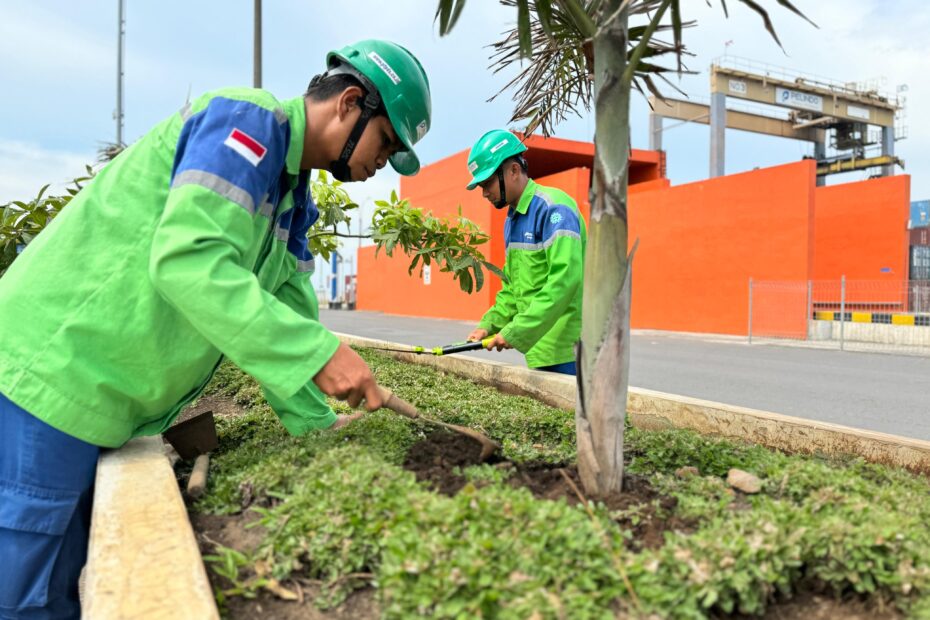
TPK Semarang strengthens decarbonization strategy aiming to improve emissions transparency, operational efficiency and competitiveness amid rising global demand for sustainable and low-emission logistics practices.
This container terminal is strengthening its decarbonization strategy by implementing an internationally standardized greenhouse gas (GHG) management system as part of efforts to improve operational sustainability and competitiveness in the logistics sector.
The initiative was introduced through a Focus Group Discussion (FGD) and ISO 14064 workshop aimed at building a structured framework for emissions management and reporting across the company’s operations.
TPK Semarang said the program covers the identification of emission sources, the establishment of organizational and reporting boundaries, and the application of quantification methods aligned with the ISO 14064-1:2018 standard.
The company said the framework is designed to ensure emissions inventories are measured consistently and transparently, while supporting future emissions reduction strategies.
“The implementation of this standard not only strengthens regulatory compliance but also lays the foundation for energy efficiency improvements and sustainable emission reductions,” Head of Terminal I Nyoman Sutrisna said in a statement.
“This is part of our commitment to becoming a competitive green port at both the national and global levels,” he added.
The workshop also highlighted five core principles in greenhouse gas reporting — relevance, completeness, consistency, transparency and accuracy — which are considered essential for producing credible emissions data and supporting strategic decision-making.
Fauzia Lutfiyya Haz, Lead Auditor at ID Survey, said TPK Semarang had demonstrated a strong commitment to implementing emissions management and reporting systems in line with international standards.
“Based on our verification results, the GHG emission management system is already running well,” Fauzia said.
“However, further strengthening is still needed in documentation, data consistency and supporting evidence, while process controls must continue to be improved to ensure the credibility and sustainability of the system,” she added.
The company also emphasized the importance of converting emissions into carbon dioxide equivalent (CO2e) units using the latest Global Warming Potential (GWP) values to improve calculation accuracy and support the development of future reduction targets.
The initiative aligns with broader Environmental, Social and Governance (ESG) commitments and Indonesia’s PROPER environmental performance program, which evaluates companies’ environmental management practices.
TPK Semarang said it plans to continue developing data-driven environmental initiatives, including optimizing energy consumption, improving equipment efficiency and strengthening sustainability practices across operational activities.
The company said the standardized emissions inventory system is expected to contribute to emissions reduction efforts in Indonesia’s logistics and port sector as demand grows for greener supply chains and sustainable port operations.