
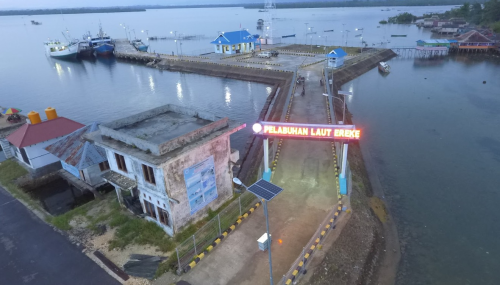
The Ministry of Transportation (Kemenhub) is enhancing its supervision and regulation of port operations, focusing on tightening controls over the issuance of operational permits for port activities.
The ministry, said Captain Antoni Arif Priadi, Director General of Sea Transportation has granted operational permits to ports listed in the National Port Master Plan (RIPN), including Special Terminals (Tersus) and Terminals for Self-Interest (TUKS) that have been granted approval to become Port Business Entities (BUP).
“In addition, the Ministry has never issued operational permits for unofficial ports,” Antoni said in a press release on Sunday (February 9, 2025).
Currently, there are 636 port locations included in the National Port Master Plan (RIPN), as outlined in the Minister of Transportation’s Decree Number KP 432 of 2017. These include 28 Main Ports, 164 Collector Ports, 166 Regional Feeder Ports, and 278 Local Feeder Ports. Additionally, there are 1,322 Port Location Plans and 57 Terminals that are part of public ports.
“Ports listed in the RIPN are those planned for construction, operation, and future development. Therefore, every port must have the necessary permits and must be managed in accordance with Good Corporate Governance (GCG) principles. No party should misuse their authority to serve interests other than those specified,” Antoni emphasized.
A key characteristic of a port with a valid operational permit is the installation of a port nameplate. This includes the installation of a Legality Information Board for Business Licensing at Special Terminals (Tersus) and Terminals for Self-Interest (TUKS), in line with the Decree of the Director General of Sea Transportation No A.963/AL.308/DJPL, which governs the implementation of these Legality Information Boards for Special Terminals/TUKS and Terminals for Self-Interest temporarily serving the public interest.