

The Indonesian Port Business Association (ABUPI) recently conducted a comprehensive training session for 70 newly appointed ABUPI organizational executive boards ahead of their official inauguration.
This initiative forms part of ABUPI’s broader efforts to consolidate its organizational vision and align future development strategies. The training was led by ABUPI Chairperson, Liana Trisnawati.
During the briefing, Liana reinforced ABUPI’s forward-looking vision: “ABUPI with Global Competitiveness.” This guiding principle serves as the cornerstone for all strategic planning, work programs, and action plans across the organization.
As part of the training, the management team was introduced to five strategic missions designed to enhance the competitiveness and sustainability of Indonesia’s port sector: First, regulatory acceleration. With the current complexity of port regulations, ABUPI is committed to evaluating their efficiency and advocating for simplification. Streamlining regulations is seen as essential for fostering a more dynamic and competitive business environment.
Second, inclusion. Strengthening collaboration among members and enhancing the association’s public image are key priorities. ABUPI aims to build synergy across the industry to reinforce the collective competitiveness of Indonesia’s port ecosystem.
Third, competence through human capital development. Elevating the competence of human resources is critical. ABUPI is focused on ensuring that personnel within port business entities are well-trained and equipped to meet industry demands.
Fourth, Technology – integration and standardization. A major focus will be placed on the application of unified technology across port services, including integrated supply chains and modernized maritime traffic management systems.
Fifth, sustainability. Environmental, social, and economic sustainability will be central to ABUPI’s mission. The goal is to promote long-term industry growth while contributing positively to national development.
With this structured approach, ABUPI is confident that its new leadership will play a pivotal role in advancing Indonesia’s port industry.
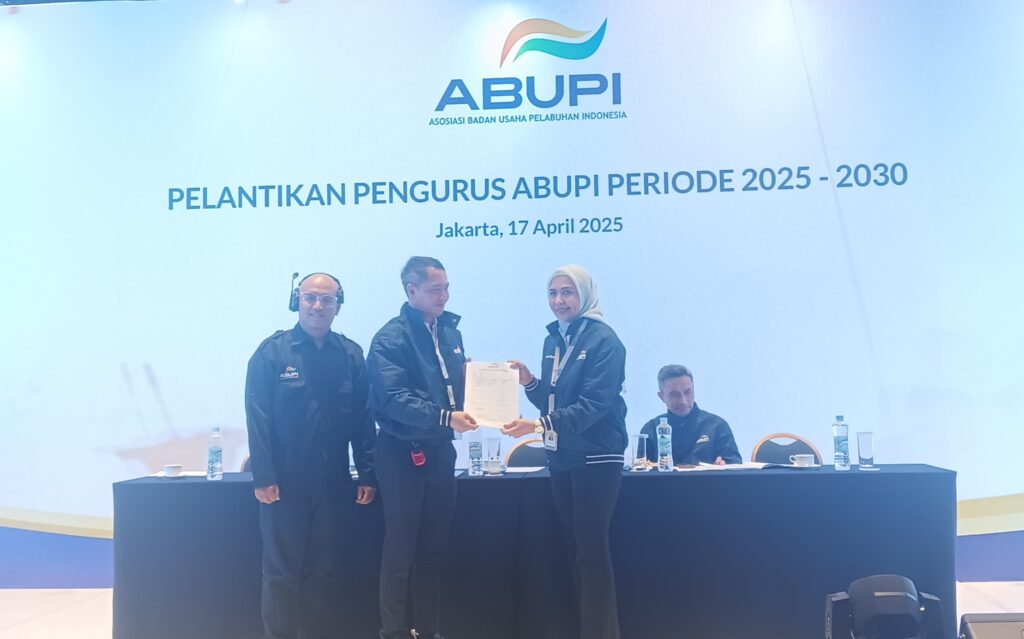
Photo: Clustering recommendations on action plans
Liana concluded the session with a call for continued collaboration and a shared spirit of transformation toward a stronger, more inclusive, and globally competitive ABUPI.
Strengthening Organizational Structure and Vision
Hikmatul Laila, Chairperson of the Event Committee and General Treasurer of ABUPI for the 2025–2030 period, shared that the training program was divided into two key sessions: a management briefing and the official inauguration ceremony.
“This activity marks an important milestone in aligning the direction and strategy of the entire management team in support of ABUPI’s global vision,” Hikmatul noted.
The new leadership team comprises 70 individuals representing 47 ABUPI member companies. In addition to central leadership, this event also reinforced management structures within four Regional Leadership Councils (DPW) and several Branch Leadership Councils (DPC), as part of the organization’s strategic regional expansion.
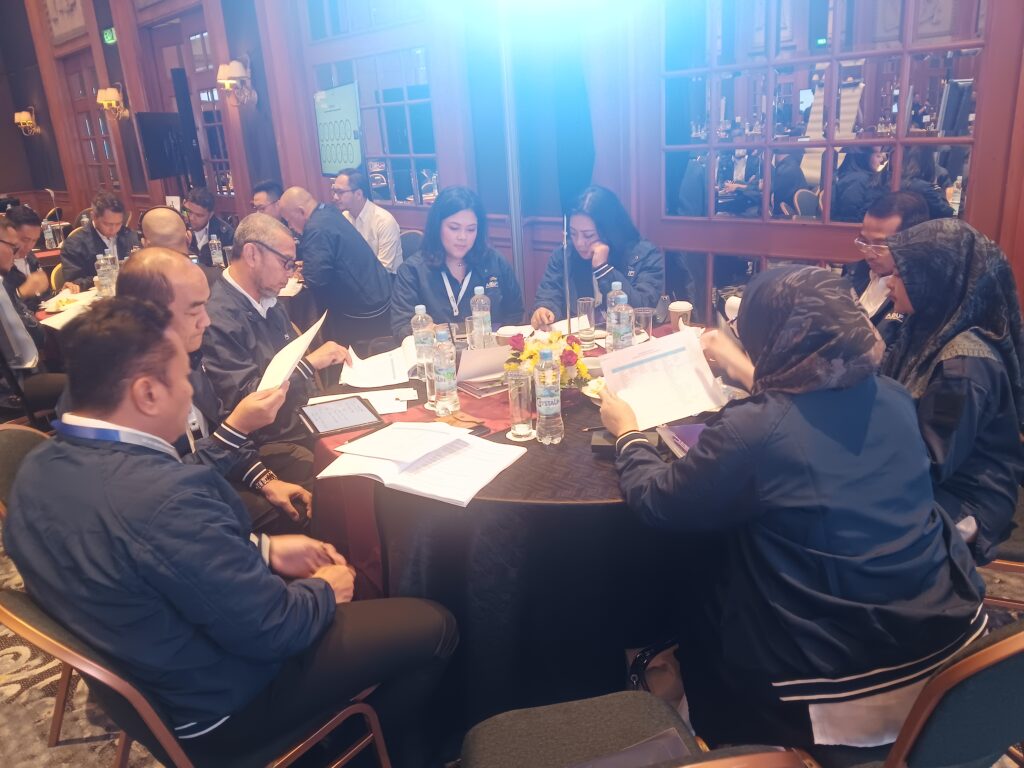
Photo: Clustering Discussion
“We extend our gratitude to all parties involved in making this event a success. We are optimistic that the 2025–2030 ABUPI management will fulfill their responsibilities effectively and collectively realize a more competitive, inclusive, and sustainable national port ecosystem,” she said.
Positioning ABUPI as a Bankable and Investable Organization
As part of the briefing, ABUPI also addressed the importance of making the organization—and the broader port industry—more attractive to financial institutions and investors. This effort supports ABUPI’s overarching goal of achieving global competitiveness.
Dr. Lucky Bayu Purnomo, a member of ABUPI’s Financial and Investment Expert Council, delivered an insightful presentation on building a robust port business ecosystem from a financial and investment standpoint.
“The port sector holds significant potential, but it must be developed through a more integrated and systematic approach to unlock banking access and attract investment,” said Dr. Lucky.
He emphasized the need to overcome business fragmentation and establish a comprehensive financing ecosystem. According to him, ABUPI should serve as a strategic bridge between port business entities, financial institutions, and potential investors.
To that end, Dr. Lucky provided management with practical insights into banking mechanisms and adaptable investment models for port development. He stressed the importance of presenting the port sector as a vital component of national logistics and the global supply chain—thereby positioning it as a long-term, high-value opportunity for investors.
“This sector must be seen as a strategic economic driver. When packaged correctly, it will attract both banks and investors,” he said.
He also shared that ABUPI has already initiated collaborations with several banks to support investment initiatives. As part of the training, administrators were equipped with the knowledge and tools necessary to help members become more bankable and investable.
With a unified vision, clearly defined strategic missions, and a dedicated leadership team, ABUPI is well-positioned to guide Indonesia’s port industry into a new era of professional, sustainable, and globally competitive growth.