
The Ministry of Transportation has called on the Indonesian Port Business Association (ABUPI) to encourage holders of Port Business Entity (BUP) permits to fully engage in port operations.
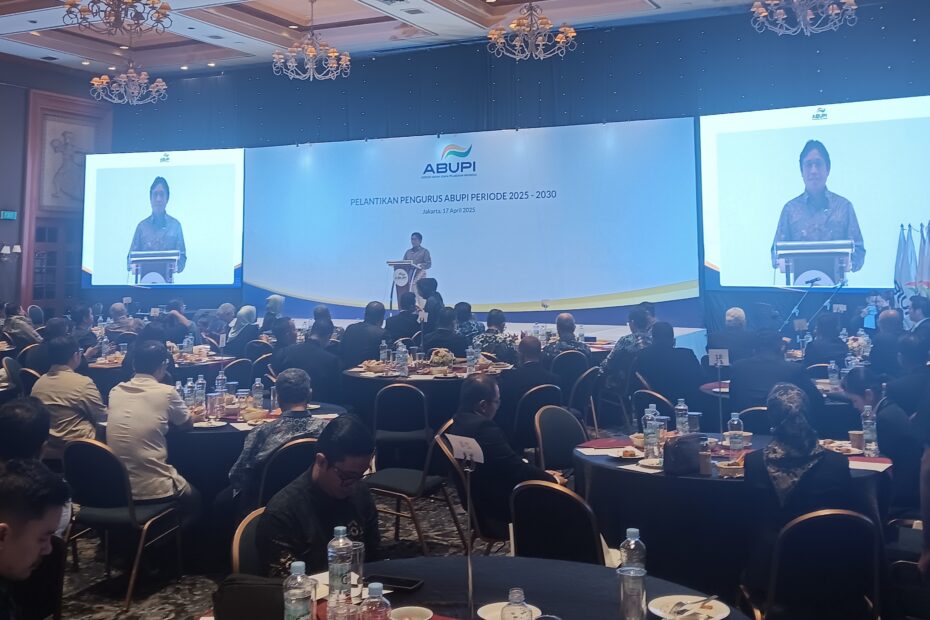
This message was delivered by M. Masyhud, Director of Port Affairs at the Directorate General of Sea Transportation, during the inauguration of ABUPI’s 2025–2030 management board held today at the Arya Duta Hotel, Central Jakarta.
The inauguration ceremony was led by ABUPI Chairperson Liana Trisnawati, following a briefing session for the newly appointed board members. The event marked a significant step in ABUPI’s ongoing efforts to strengthen its organizational structure and enhance leadership capacity across all levels, in support of the national port sector’s development.
This latest management structure was established by the elected Chairperson and the Formatur Team in accordance with ABUPI’s Articles of Association and Bylaws (AD/ART). It is designed to be functional and strategic, enabling the organization to be more agile, adaptive, and responsive to industry dynamics—both domestically and globally.
“With a clear division of responsibilities, each member of the leadership team is expected to serve as an agent of change, working wholeheartedly for shared progress,” said Liana Trisnawati in her address.
In a speech read on behalf of the Director General of Sea Transportation, Capt. Antoni Arif Priadi, M. Masyhud emphasized that ABUPI should not only act as a port operator but also as a catalyst for change, aiming to improve the efficiency and global competitiveness of Indonesia’s port services.
He also highlighted the need for greater synergy within the sector, encouraging collaboration over competition. “ABUPI must become a strategic government partner in building world-class port services,” he stated.
The Directorate General has so far issued 1,482 BUP licenses. However, only around 10% are currently active. This low activation rate was identified as a key issue requiring attention from ABUPI’s leadership.
A Heavy Responsibility Ahead
In her speech, Liana Trisnawati acknowledged the significant responsibility borne by the newly inaugurated ABUPI board for the 2025–2030 term. “The challenges facing our national port sector are intensifying amid global shifts. ABUPI must lead the way in championing the advancement of Indonesia’s port industry,” she said.

To address these challenges, ABUPI has committed to a vision of “Creating a modern, inclusive, sustainable, and globally competitive port ecosystem.” This vision is supported by five strategic pillars: Acceleration, Inclusion, Competence, Technology, and Sustainability—outlined in 18 strategic programs.
Earlier in the day, a briefing session was conducted for all incoming ABUPI officials, including representatives from the Central Executive Board (DPP), Regional Boards (DPW and DPD), and Branch Boards (DPC). The session covered ABUPI’s vision, mission, and work strategies, as well as the organization’s role in driving transformation and fostering collaboration across Indonesian ports.
The official inauguration ceremony was held in the afternoon and attended by Director of Ports Muhammad Masyhud, newly inaugurated board members, ABUPI members, the Expert Council, Advisory Council, Supervisory Board, and representatives from various maritime and logistics stakeholder associations.
In closing, the ABUPI Chairperson called on all members—both board members and general members—to stay actively engaged. “Let’s align our steps, our voices, and our energy to build a stronger, more united, and more impactful ABUPI,” she concluded.