
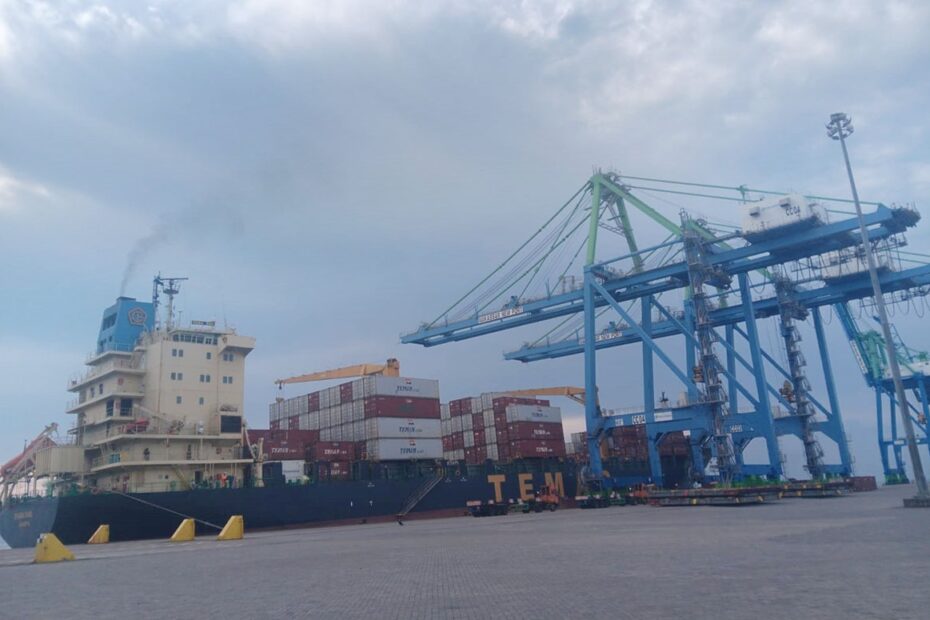
Despite its state-of-the-art infrastructure and rising throughput, the TPK New Makassar Terminal in South Sulawesi currently sees exports making up just 10% of total container traffic.
But that figure may soon rise, thanks to growing support from shipping, logistics, and export sectors working to position Makassar as Eastern Indonesia’s international trade gateway.
One of the key players pushing for stronger export performance is SITC Container Lines, a global shipping company headquartered in China. As of now, SITC remains the only operator offering direct international container services out of TPK New Makassar.
Speaking in Makassar on May 5, 2025, Dwi Indriyani, Branch Manager of SITC Makassar, highlighted the importance of the company’ CMI service. The route connects Makassar with Batangas, Shanghai, Xiamen, Nansha, Jakarta, and Surabaya, creating direct trade links across Asia.

Photo: Dwi Indriyani
“Each vessel call handles up to 450 TEUs, which reflects the growing momentum of export-import activity here in Makassar,” Dwi said.
The terminal’s main exports include nickel, seaweed, and fresh fishery products. The fishery products are all shipped using refrigerated containers to maintain freshness. Dwi also praised state-owned port operator PT Pelabuhan Indonesia (Pelindo) for investing in reefer infrastructure to support these temperature-sensitive goods.
Looking ahead, SITC has expressed full support for the planned relocation of operations from Terminal 1 to the more advanced Terminal 2. With a deeper draft and modern cargo-handling equipment, Terminal 2 is expected to better accommodate larger international vessels. However, Dwi noted that further development is still needed, particularly long-room facilities to enhance cargo security.
“With expanded routes and improved infrastructure, we’re confident that Makassar will grow into a vital export hub for Eastern Indonesia,” she concluded.
Calling for Stronger Promotion, Market Expansion
The Indonesian Exporters Association (GPEI) has echoed this optimism but insists that infrastructure alone is not enough. To truly unlock South Sulawesi’s export potential, GPEI is calling on both exporters and government bodies to step up efforts in global promotion.
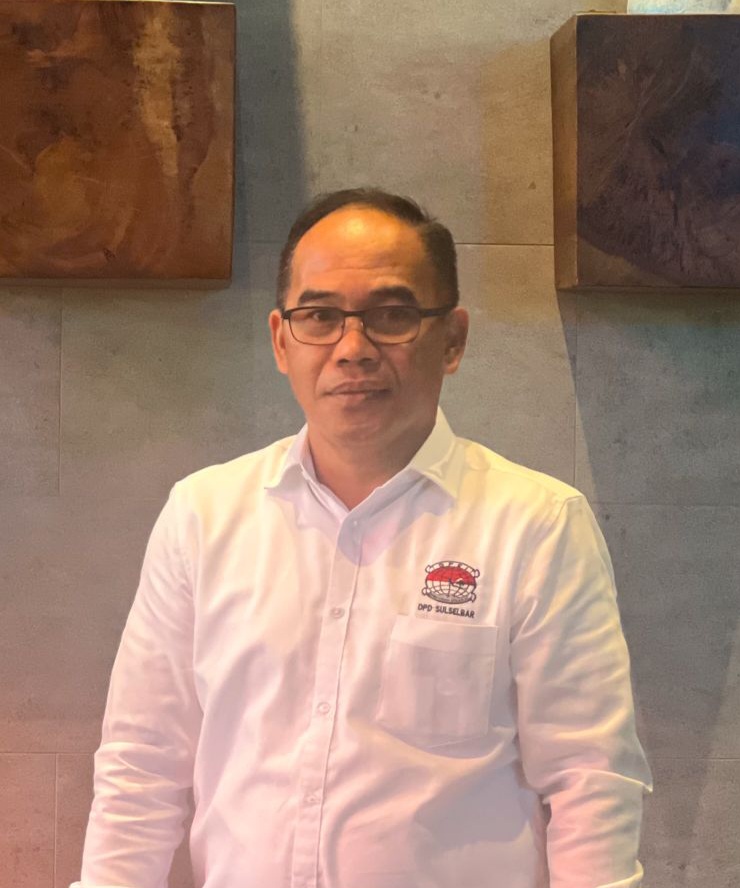
Photo: Arief R. Pabetinggi
Arief R. Pabetinggi, Chair of GPEI for South and West Sulawesi, believes integrated marketing strategies are critical to boosting regional exports. He called on the provincial government to actively showcase South Sulawesi’s products—especially in key overseas markets.
“Promotion is key. Without strong branding and outreach, our local products won’t gain traction in competitive global markets—particularly as the world continues to reel from supply chain disruptions and geopolitical uncertainty,” Arief said.
Despite challenges, he sees opportunity. South Sulawesi’s seaweed and nickel have already gained significant traction in China, and he believes other commodities such as cloves, candlenuts, and even meat could follow suit with the right market development.
“Our infrastructure is ready. We have direct-call shipping services, a modern port, and even international airport access. What we need now is a more aggressive push to connect with buyers abroad,” he added.
LCL Consolidation Services
While large-scale exports gain momentum, stakeholders are also pushing for better services to accommodate smaller shipments. The Indonesian Logistics and Forwarders Association (ALFI) is advocating for the introduction of less-than-container load (LCL) cargo consolidation services at TPK New Makassar. This would allow exporters with smaller volumes to ship more affordably—directly from Makassar, without rerouting through Surabaya or Jakarta.

Photo: Yodi Nailendra
“There’s already a solid LCL market here—over 100 tons per week—but the cargo is still being shipped through other ports,” said Yodi Nailendra, Chair of ALFI for South and West Sulawesi.
Yodi, who was recently elected to lead ALFI through 2030, revealed that discussions are underway with logistics partners in Surabaya and with Pelindo’s logistics subsidiary PT Multi Terminal Indonesia (MTI) to develop warehousing and consolidation services locally.
“By pooling demand and creating centralized LCL facilities at the port, we can cut logistics costs and make exports from Makassar more competitive,” Yodi said.
Popular LCL export items include processed seaweed, agricultural products, massage oil, and handcrafted items like broomsticks. Yodi also emphasized the need for skilled labor, saying that ALFI is preparing human resource development programs to support Makassar’s emergence as a full-fledged international logistics hub.
Currently, around 150 logistics and forwarding companies are registered with ALFI in the region, with 100 actively operating in Makassar.
Toward Hub Status
Teguh Firdaus, Head of TPK New Makassar, affirmed that the port is being steadily transformed into a domestic hub for Eastern Indonesia, while promoting for oceangoing services. Among recent innovations is the launch of a Terminal Booking System (TBS) for trucks, introduced in February 2025, which has helped streamline cargo movements.

Photo: Teguh Firdaus
According to terminal data, key export commodities include nickel, marble, frozen fish, seaweed, plywood, and cocoa beans. Imports primarily consist of electronics, frozen food, and mining equipment. Domestically, the terminal handles essential goods such as rice and cement.
As infrastructure and shipping services evolve in tandem with stronger private-sector engagement, TPK New Makassar is on track to become more than just a port—it’s shaping up to be a strategic engine for South Sulawesi’s entry into global trade.