
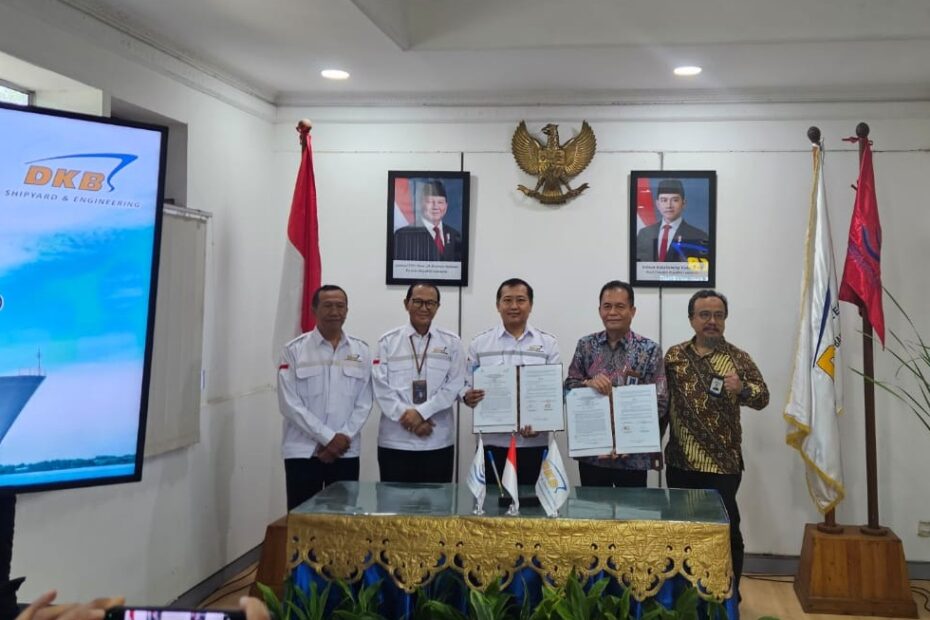
Indonesian state-owned shipbuilder PT Dok dan Perkapalan Kodja Bahari (Persero) – DKB – has secured a renewed agreement with national shipping firm PT Dharma Lautan Utama (DLU) to handle the docking and maintenance of its fleet through 2026.
Under the two-year memorandum of understanding (MoU) signed in Jakarta on Tuesday, DKB will service four DLU vessels in 2025, with plans to expand to 10 vessels in 2026. The agreement extends a similar cooperation from 2024 and aims to ensure operational continuity for DLU while supporting DKB’s shipyard utilization.
The signing ceremony was attended by DKB President Commissioner Laksda (Purn) TNI Sudarmoko, who witnessed the agreement alongside senior executives from both companies
“This cooperation significantly contributes to DKB’s revenue,” said Ari Rochmat Basuki, President Director of DKB, who was joined by Business Development Director Rudolf Valintino at the signing ceremony.
“It reflects the growing trust of national shipping companies in our quality, cost-competitive services, and timely delivery.”
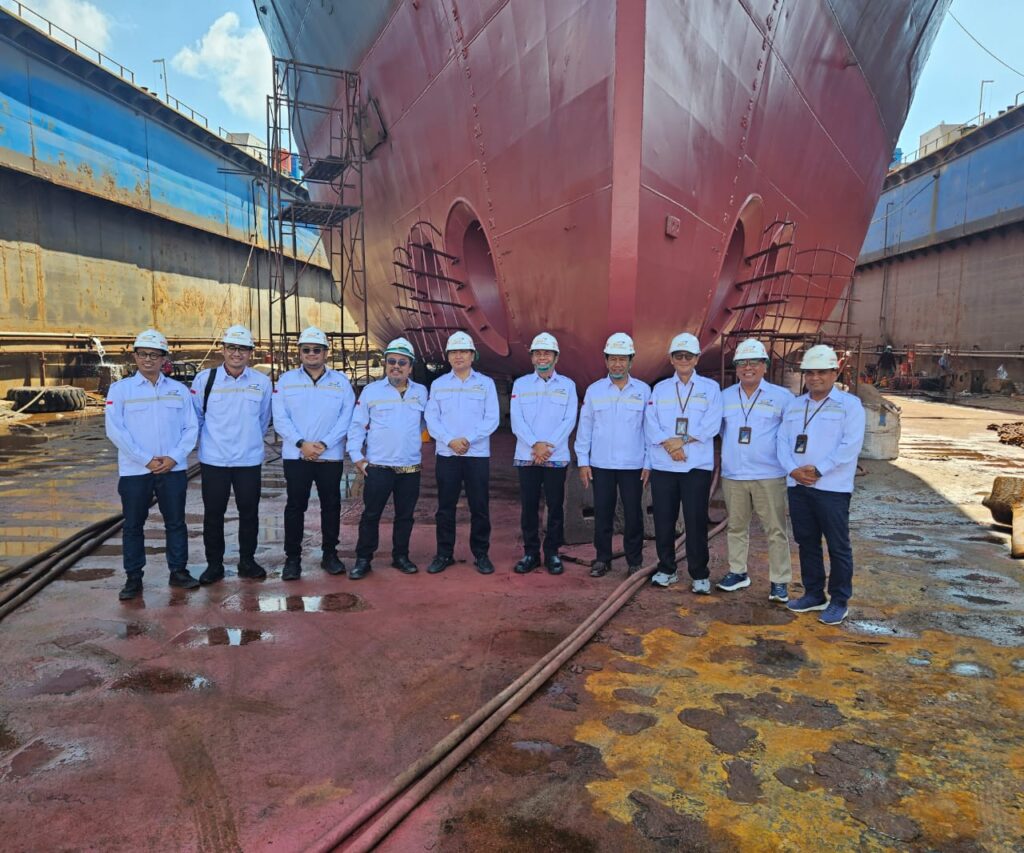
In 2024, DLU docked six vessels with DKB, three at Jakarta Shipyard I, including KM Dharma Kartika IX, KM Kirana IX, and KM Kumala, and three at Jakarta Shipyard II, comprising KM Mustika Kencana, KMP Dharma Kartika VIII, and KMP Dharma Kartika I.
DLU’s Finance Director Khoiri Soetomo praised DKB for its recent breakthroughs in shipyard services, noting growing satisfaction among domestic operators with the BUMN (state-owned enterprise) shipbuilder’s performance.
DKB operates eight shipyards across the archipelago, with two in Jakarta and others located in Cirebon, Semarang, Palembang, Sabang, Banjarmasin, and Batam. Its core business includes shipbuilding, docking, and maintenance services.
The company also manages two subsidiaries: PT Indonesian Air & Marine Supply (Airin), which handles port logistics, and PT Kodja Terramarin, which operates in the chemical and general trading sectors.
DKB’s leadership emphasized its commitment to continuous innovation and service quality as it competes with private shipyards in Indonesia’s growing maritime industry.