
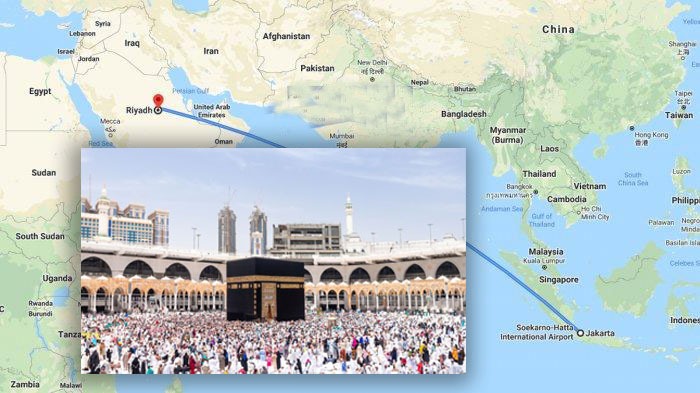
For decades, Indonesia policymakers have called the maritime sector a pillar of national development. Now, some industry players are asking whether the sea could also carry millions of Indonesian Muslims on one of their most sacred journeys: the pilgrimage to the Holy Land.
With around 1.8 million Indonesians performing Umrah annually, according to the Ministry of Religion Affairs, the country ranks among the world’s largest sources of pilgrims, rivaling nations such as Pakistan. Nearly all travel by air, boarding packed flights bound for Saudi Arabia.
But amid fluctuating airfares, limited flight slots and fierce competition among travel agencies, a proposal is gaining quiet traction: transporting Umrah pilgrims by ship.
The concept is not entirely new. In the early 20th century, Indonesian pilgrims endured weeks-long sea voyages to reach Mecca. Today’s proponents, however, say the idea is less about nostalgia and more about business innovation, combining maritime tourism, religious travel and cruise-style hospitality into a new premium offering.
“This is an open opportunity for national shipping companies,” said M. Izam, a member of the Indonesian Travel Agents Association (ASTINDO). He argues that state-linked operators such as PT Pelayaran Nasional Indonesia (Persero) (Pelni) and PT ASDP Indonesia Ferry (Persero) have the operational experience, port networks and public-service track record to test the waters.
Turning the idea into a viable commercial service, however, poses formidable challenges. A sea voyage from Indonesia to Saudi Arabia could take at least 15 days, depending on the route. That duration demands ships far beyond the standard passenger ferries that ply domestic routes.
Industry analysts say vessels would need cruise-ship specifications: private cabins, proper prayer halls, halal-certified catering, onboard medical facilities and leisure amenities. In effect, the product would need to be positioned as an “Umrah cruise” rather than simple transport, a slower, more immersive journey that appeals to middle- and upper-income pilgrims seeking a distinctive experience.

Photo: M. Izam, a member of the Indonesian Travel Agents Association (ASTINDO)
Such positioning could also allow operators to integrate stopovers in South Asia or the Middle East, transforming the voyage into a broader religious tourism package. The target market, observers say, would not be price-sensitive first-time pilgrims, but repeat travelers looking for something different.
The financial calculus remains complex. Building or retrofitting ships to cruise standards would require significant capital expenditure. Operators would also need clarity on international maritime regulations, port access and immigration arrangements in Saudi Arabia. Bilateral coordination between Jakarta and Riyadh would be essential.
Malaysia has launched what it calls a new chapter in modern worship with the Aroya Islamic Cruise, Southeast Asia’s first luxury umrah voyage, priced at about 58 million rupiah ($3,700).
The 16-day, 15-night journey retraces historic maritime routes once used by pilgrims from the Malay archipelago. Departing from Port Klang, the vessel sails to Banda Aceh in Indonesia, the Maldives and Oman before arriving in Jeddah, the gateway to Mecca.
At each port of call, passengers are offered guided visits to Islamic heritage and cultural sites, blending religious pilgrimage with leisure travel.
For Indonesia, governance will be just as critical as hardware. The Umrah sector has in the past been marred by failed departures and mismanaged funds. Any maritime offering would require strict cost transparency, consumer protection safeguards and integrated halal certification across the service chain, from food and accommodation to onboard programming.
Some experts suggest a phased approach. Before venturing into complex international routes, operators could refine cruise-style services domestically, linking destinations such as Bali or eastern Indonesia. Building a strong safety and service reputation at home, they argue, would lay the groundwork for overseas expansion.
At stake is more than a niche travel product. Advocates frame sea-based Umrah as part of a broader maritime transformation — one that connects shipping, tourism, Islamic finance and diplomacy. Indonesia already commands the world’s largest Muslim population. The question is whether it can leverage that demographic strength into a new maritime industry segment.
For now, the proposal remains at the level of study and discussion. Yet as Indonesia seeks to assert itself as a global maritime fulcrum, the idea of pilgrims once again crossing oceans — this time aboard modern cruise vessels — is drawing renewed attention.
The potential is vast. Whether it becomes reality will depend on political will, commercial discipline and the ability to turn a centuries-old voyage into a 21st-century enterprise.
An Opportunity for State Shipping Company Like ASDP
Carmelita Hartoto, chairwoman of the Indonesian National Shipowners Association (INSA), says sea-based religious tourism offers strong potential, but requires careful study, prioritising safety and comfort.
“This is an open opportunity for national shipping companies. But, it needs a comprehensive study,” Carmelita said.

According to Carmelita, Indonesia has previously floated the idea of transporting Hajj pilgrims by sea, though the plan has yet to move beyond preliminary discussions. Expansion into pilgrimage services would require thorough research and regulatory review.
“If a company wants to expand its business in that direction, that’s fine,” she said. “But it must be comprehensively studied, considering various aspects. This would open up a new route.”
Indonesia, the world’s largest Muslim-majority country, sends hundreds of thousands of pilgrims annually to Saudi Arabia for Hajj and Umrah, most of whom travel by air.
However, she does not expect the state shipping companies to focus on domestic marine tourism as it is already developing, particularly in eastern Indonesia, though the sector remains dominated by smaller private operators.
Destinations such as Raja Ampat and Labuan Bajo have seen growth in sea-based tourism, supported by hundreds of Indonesian-flagged vessels. According to INSA data, around 670 tourist vessels operate under the national flag, including phinisi boats, speedboats and yachts. Roughly 500 of those are live-on-board vessels catering to diving and leisure travellers.
Foreign cruise liners calling at Indonesian ports largely serve international passengers who embark and disembark overseas, she added.
Carmelita said tourism shipping does not fall under public service obligations typically assigned to state-owned enterprises. As a result, companies such as PELNI should not prioritise domestic tourism routes.
“Tourism is not a basic need,” she said. “There is no public service obligation there.”
However, she noted that state-owned operators could have a role in pilgrimage transport, given the scale and national significance of Hajj travel.
For companies considering entry into tourism shipping, Carmelita stressed that safety must be paramount.
“First, there must be a comprehensive study. Safety is the priority, and comfort is also essential. After all, what is being transported is not goods,” she said.
The government has been promoting higher-value tourism through its “Go Beyond Ordinary” campaign, focusing on marine tourism, wellness and gastronomy. In eastern Indonesia, entrepreneurs have converted traditional phinisi vessels into luxury tourist boats, mirroring models seen in Vietnam’s Ha Long Bay.