
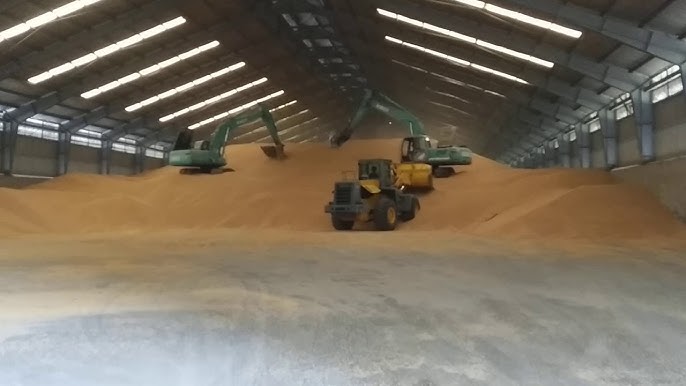
Indonesia’s wheat imports continue to show a significant upward trend, driven by the growing demand for raw materials used in wheat flour-based processed food products.
According to data from the Central Statistics Agency (BPS), Indonesia’s wheat imports reached 9.45 million tons from January to September 2024. This marks a 19.5% year-on-year (YoY) increase compared to the same period in the previous year. The volume is approaching the total wheat imports for all of 2023, which stood at 10.87 million tons.
Australia remains Indonesia’s largest wheat supplier, with 2.15 million tons imported by September 2024, followed by Canada (2.02 million tons), Argentina (1.80 million tons), Ukraine (1.66 million tons), and Russia (956,010 tons).
Indonesia imports four main types of wheat: durum wheat (HS 10011900), hulled wheat (HS 10019912), wheat other than durum and hulled wheat (HS 10019919), and meslin (HS 10019999).
Franciscus Welirang, Chairman of the Indonesian Wheat Flour Producers’ Association (Aptindo), stated that the surge in wheat imports aligns with the rising national demand for wheat flour, particularly in anticipation of seasonal demand spikes. These include the upcoming Ramadan 2025, which the industry has been planning for since late 2024.
“The increase in wheat imports is reasonable, as national wheat flour demand has risen by approximately 10% compared to last year,” said Franciscus.
According to Aptindo data, national wheat flour consumption from January to September 2024 reached 5.54 million metric tons, which corresponds to a wheat requirement of around 7 million tons.
Aptindo Executive Director Ratna Sari Loppies further explained that some of the imported wheat is used by the animal feed industry as a substitute for corn, which has been in short supply. “Wheat is being imported as a substitute for corn, which is still in limited supply,” she noted.
The increase in wheat imports is also linked to the decline in global wheat prices during mid-2024. However, these prices have since risen again due to factors such as geopolitical instability in major wheat-producing countries, climate change, and the strengthening of the US dollar.
Despite these price fluctuations, the domestic wheat flour industry is performing positively. The high demand for wheat flour from the processed food industry, MSMEs, bread producers, and instant noodle manufacturers has been a major driving force.
“The domestic wheat flour industry is growing steadily, with an expected growth rate of around 8%-9% this year,” said Ratna.
Wheat Flour Export Increasing
In addition to wheat imports, Indonesia is also actively exporting processed wheat flour products. By September 2024, the value of wheat flour exports reached US$ 1.06 billion, with key destinations including China, Malaysia, Vietnam, the Philippines, and Thailand.
Aptindo predicts that demand for wheat flour will continue to grow in line with the country’s economic development and initiatives such as the provision of free nutritious meals.
“The wheat flour industry is growing, which means wheat imports will also increase,” concluded Ratna. Currently, Indonesia operates 31 wheat flour mills with a combined production capacity of 14.8 million metric tons per year.