
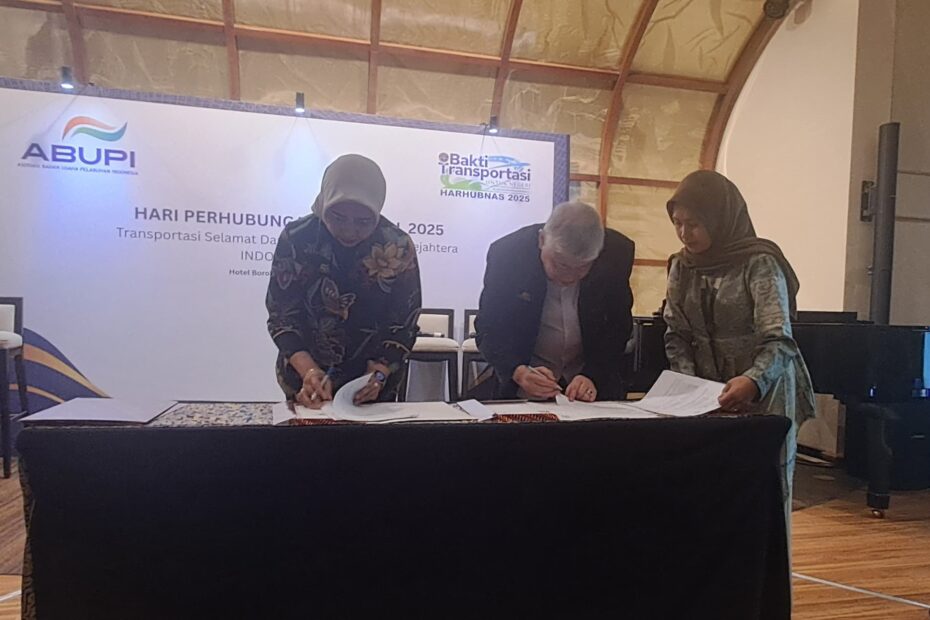
Several of Indonesia’s key maritime business groups signed a memorandum of understanding on Monday, September 15, 2025, aimed at strengthening collaboration across the country’s port and shipping services, as the sector navigates rising global challenges and domestic inefficiencies.
The agreement, signed in Jakarta, brings together the Indonesian Port Business Association (ABUPI), the Indonesian Stevedoring Companies’ Association (APBMI), the Indonesian Shipping Agencies’ Association (ISAA), and the Association of Local Government-Owned Enterprises (PERDASI).
The signing was held during ABUPI’s annual gathering to mark National Transportation Day, themed “Bakti Transportasi untuk Negeri”- Transportation Service for the Nation. The event drew senior government officials, including Deputy Minister of Transportation Suntana and Director General of Sea Transportation Muhammad Masyhud, as well as industry leaders from across the maritime and logistics sectors.
ABUPI Chairperson Liana Trisnawati said the MoU is designed to promote greater coordination and collective action among port stakeholders, particularly as the industry adapts to shifting trade flows, regulatory demands, and technological disruption.
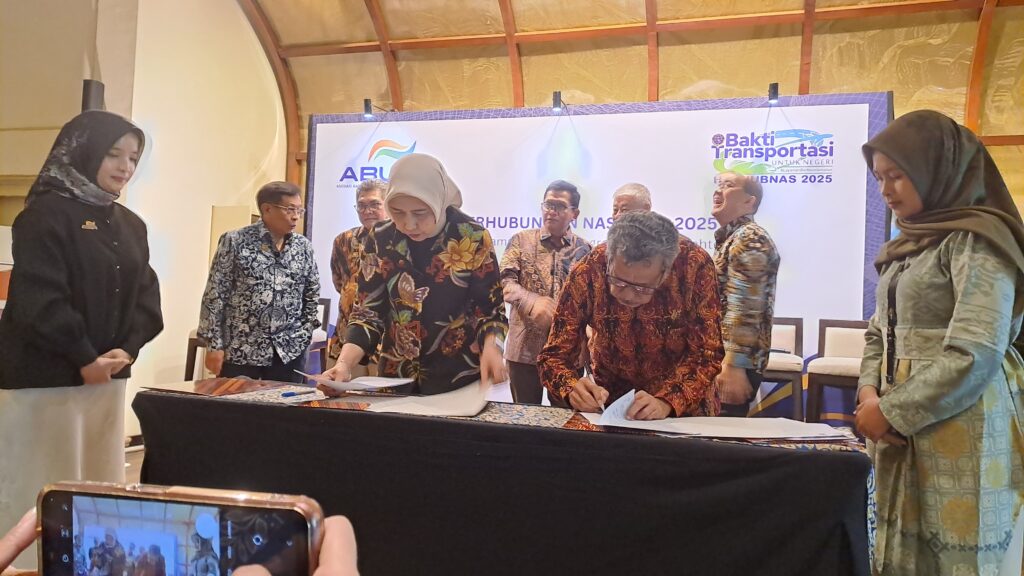
Photo: ABUPI Chairperson Liana Trisnawati and ISAA Chairman Aries Hartoyo signing the MoU on improving port business services
“Strengthening the port sector requires well-calibrated, collaborative strategies,” Trisnawati said. “ABUPI is committed to facilitating transparent regulations, enhancing investment opportunities, and fostering international partnerships.”
She outlined five strategic priorities under the MoU: enhancing workforce competence, accelerating digital transformation, promoting green port initiatives, conserving port environments, and improving energy efficiency.
Deputy Minister Suntana urged industry groups to work more closely with the government to tackle persistent logistical inefficiencies. He noted that Indonesia’s logistics costs, currently at 14% of GDP, remain among the highest in the region.
“We aim to gradually lower this figure to 8–9% through sustained, collaborative efforts,” he said. “Stronger connectivity among ports is key to reducing overall costs and improving competitiveness.”
The MoU is expected to serve as a framework for long-term cooperation, aimed at bolstering the operational resilience and global standing of Indonesia’s port sector.