
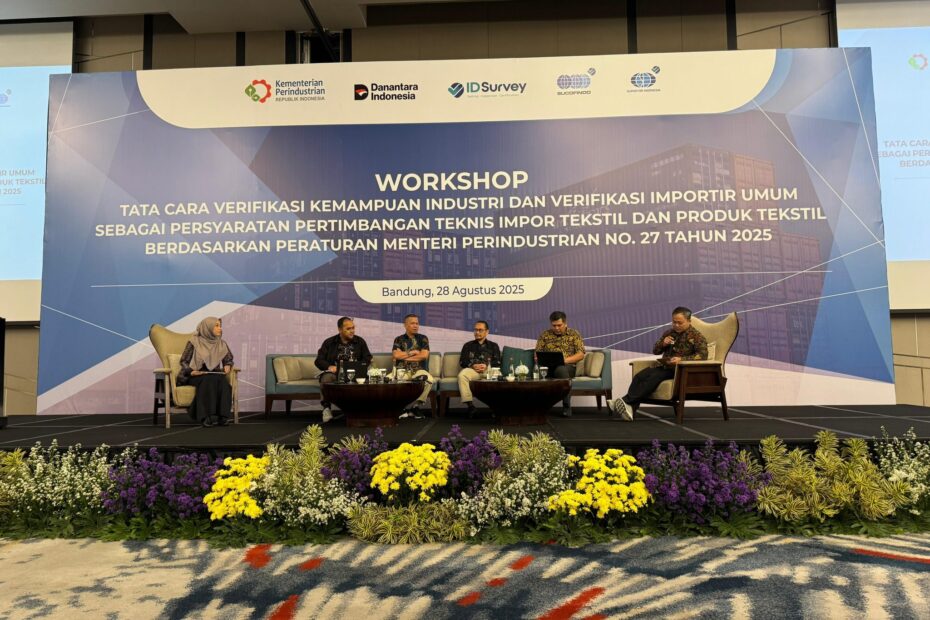
Indonesia will begin selectively easing import restrictions on raw and auxiliary materials for the textile and textile products (TPT) industry, a move officials say is designed to protect domestic manufacturing amid global trade disruptions and growing competitive pressure.
The policy shift, outlined in newly enacted regulations, underscores the government’s efforts to shore up a vital sector that employs millions and contributes significantly to exports and national GDP.
“In the first half of 2025, the TPT sector grew by 4.5% and contributed 1.22% to GDP,” said Rizky Aditya Wijaya, Director of the Leather and Footwear Industry at the Ministry of Industry, during a workshop in Bandung on Thursday. “Exports reached $5.86 billion, with a trade surplus of $1.3 billion.”
The textile, leather, and footwear sectors together employ over 3.76 million workers, roughly 19% of Indonesia’s manufacturing workforce.
New Rules to Safeguard Industry
The new rules, stipulated under Minister of Trade Regulation Nos. 16 and 17 of 2025 and Ministry of Industry Regulation No. 27/2025, reinstate technical verification requirements for importing ready-made clothing and accessories. The goal is to prevent a flood of consumer goods from undermining local producers while ensuring adequate supply of raw inputs for domestic manufacturers.
“The downstream segment, particularly the apparel industry, plays a strategic role,” Rizky said. “It absorbs a large workforce and stimulates demand in upstream sectors like yarn and fabric. Ensuring its sustainability is critical.”
The Ministry said imports of raw materials would be facilitated based on a supply-demand assessment, with an emphasis on maintaining balance between domestic needs and trade openness. Consumer goods imports, meanwhile, will face tighter controls.
The TPT industry faces mounting challenges from both domestic inefficiencies and international pressures. Global oversupply—particularly from China—along with protectionist policies and geopolitical tensions have created a volatile trade environment.
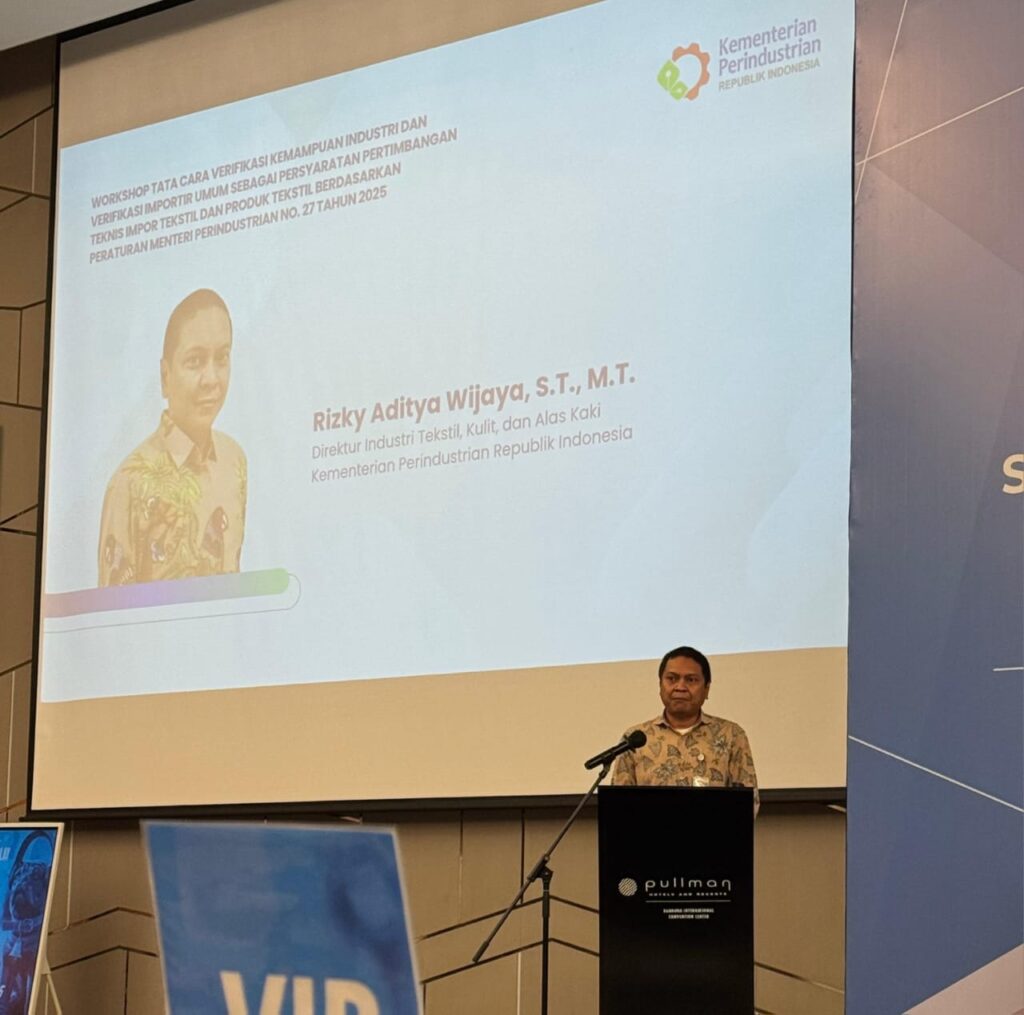
Still, Rizky pointed to a recent U.S. tariff cut as an opportunity for Indonesian exporters. “The import duty for Indonesian textiles to the U.S. has dropped from 32% to 19% as of August 1. We must seize this momentum to expand our export market,” he said.
Stakeholder Engagement and Oversight
The workshop – organized by the Joint Operational Cooperation (KSO) between state-owned surveyors Sucofindo and Surveyor Indonesia – aimed to align stakeholders on the implementation of the new regulation.
“These workshops are critical to ensuring transparency and accountability,” said Rohindra Meison, Deputy Head of the KSO. “Verification of industrial capacity and general importers is an essential first step for orderly and regulation-compliant trade.”
He added that collaboration between ministries, agencies, and business actors would be key to ensuring the policy’s success.
Importers Welcome Legal Clarity
Industry groups responded positively to the outreach. Erwin Taufan, Deputy Chairman of the Indonesian National Importers Association (GINSI), said the regulation provides much-needed legal clarity for businesses.
“Importers now have a better understanding of the procedures, especially regarding raw material imports for textile products, bags, and footwear,” he said. “It strikes a balance between industrial needs and the protection of domestic products.”
The Ministry emphasized that the regulation – effective since July 30 – includes requirements for legality verification and streamlines the issuance of technical import approvals. It also aims to support a more connected industrial value chain, reduce red tape, and limit import-driven disruption.
“This regulation, if implemented properly, will strengthen the competitiveness of our textile industry and safeguard its role in the global supply chain,” Rizky said.