
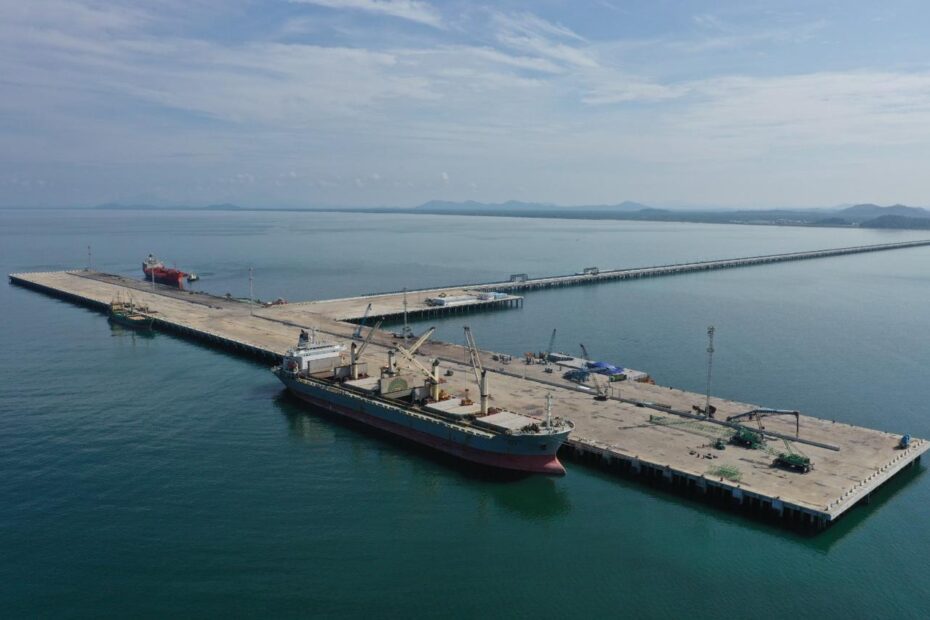
Cargo throughput at Terminal Kijing in West Kalimantan is expected to exceed 4 million tons in 2025, driven by rising exports of palm oil products and growing volumes from mining and industrial projects, its operator said.
The terminal, located in Mempawah and operated by PT Pelabuhan Tanjung Priok’s non-container unit (PTP Nonpetikemas) through its Pontianak branch, has emerged as a key logistics hub in the province since beginning operations in August 2022.
Throughput rose to 2.75 million tons in 2024 from 1.95 million tons a year earlier, with volumes projected to reach 4 million tons next year, the company said.
Strategically positioned near the Malacca Strait, one of the world’s busiest shipping lanes, Kijing Terminal supports export and import flows for West Kalimantan and surrounding regions. The port can accommodate up to 15 vessels at a time, including ships of up to 100,000 deadweight tons, with a draft of up to 15 metres and a pier extending more than 1,900 metres.
West Kalimantan is among Indonesia’s top three producers of crude palm oil (CPO), supported by dozens of plantations, processing facilities and dedicated terminals. Kijing Terminal serves as the province’s main export gateway for palm oil derivatives, equipped with modern loading and unloading facilities including mobile cranes, conveyors and liquid bulk handling systems.
In addition to palm oil products, the terminal handles coal, fertiliser, palm kernel, bauxite and heavy cargo, supporting infrastructure development and national supply chain resilience in western Indonesia.
“As a new international port in West Kalimantan, Kijing Terminal is expected to drive regional trade and support national economic growth,” said Dwi Rahmad Toto S., director of commercial and business development at PTP Nonpetikemas.
He added that the terminal is prepared to support the government’s downstream processing programme and serve both non-containerised and containerised cargo.
Rising volumes
As of November 2025, total throughput at Kijing Terminal reached 3.59 million tons, dominated by dry bulk cargo at 2.03 million tons, according to the company. A significant share of the volumes came from companies under state-owned mining holding Mining Industry Indonesia (MIND ID), including PT Borneo Alumina Indonesia, in support of national strategic projects.
Handled commodities included bauxite, coal and aluminium hydroxide as dry bulk cargo, caustic soda as liquid bulk, and aluminium hydroxide as general cargo.
Dry bulk throughput at the terminal rose 342% year-on-year by November 2025, the company said. Average productivity increased to 3,620 tons per ship per day, up from 879 tons per ship per day in the same period a year earlier.
“We continue to focus on operational efficiency by optimising loading and unloading processes, managing logistics flows and reducing vessel berthing times,” said Suwanda, branch manager of PTP Nonpetikemas Pontianak.
PTP Nonpetikemas’ Pontianak branch operates four non-container terminals in West Kalimantan — Dwikora, Sintete, Ketapang and Kijing — handling commodities such as rubber, palm kernel meal and plywood.
The company said the reallocation of assets within its port network has helped improve operational performance and customer service, while supporting continued growth at Kijing Terminal.