
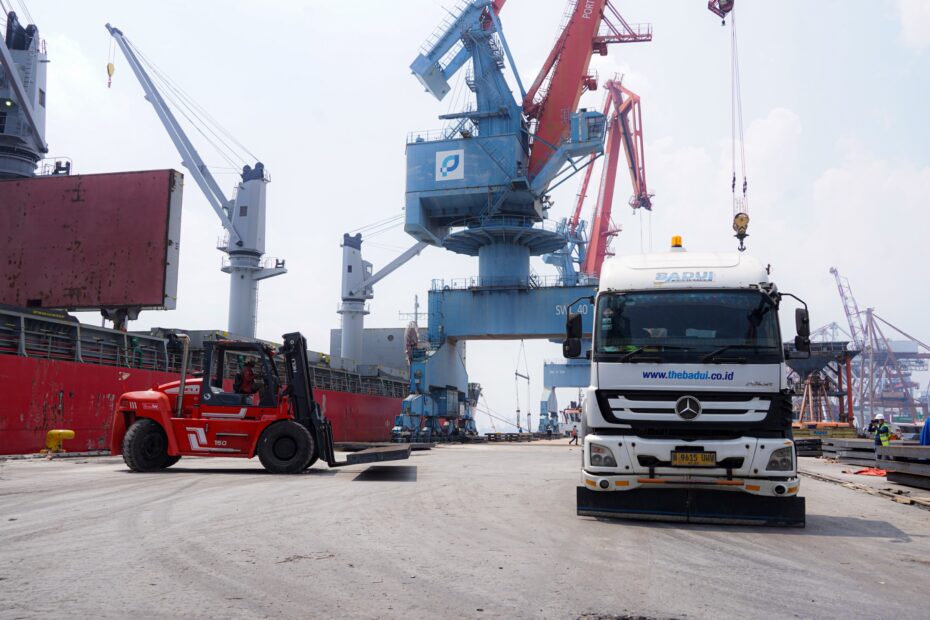
Indonesia’s largest non-container terminal operator is emerging as a critical pillar in the country’s industrial supply chain as rising shipments of coal, crude palm oil, fertilizer and minerals drive cargo growth across a vast network of ports stretching from Sumatra to Kalimantan.
PT Pelabuhan Tanjung Priok, wellknown as PTP Nonpetikemas, handled 12.04 million tons of non-containerized cargo in the first quarter (Q1) of 2026, underlining the increasingly strategic role of bulk and multipurpose terminals in Southeast Asia’s largest economy.
The company, part of state-owned port operator Pelindo Group, has become a key logistics player for commodities that underpin Indonesia’s industrial expansion and export-oriented economy.
While container terminals often dominate global shipping attention, PTP Nonpetikemas operates the less visible but essential backbone of Indonesia’s logistics system, handling dry bulk, liquid bulk, fertilizer, minerals, heavy equipment and project cargo across multiple islands.
Its cargo mix mirrors the structure of Indonesia’s commodity-dependent economy. Dry bulk cargo accounted for 46% of total throughput during the quarter, followed by liquid bulk at 25%, general cargo at 24% and bag cargo at 5%.
The strongest growth came from liquid bulk shipments, which rose 16% YoY to 3.09 million tons, exceeding the company’s internal target of 2.52 million tons. The increase was driven by stronger crude palm oil exports, industrial raw material distribution and energy-related cargo movements across regional ports.
Dry bulk cargo reached 5.76 million tons, broadly in line with company targets, while general cargo volumes declined 5% YoY to 2.92 million tons. Bag cargo fell 3.3% to 656,000 tons.
The figures reflect broader changes taking place across Indonesia’s economy, where downstream processing, industrialization and domestic logistics integration are increasing demand for specialized bulk terminals capable of handling high-volume commodity flows.
Commodity Specialization Shapes Terminal Network
At the center of the company’s operations remains Tanjung Priok, Indonesia’s busiest port and PTP Nonpetikemas’ largest revenue contributor.
The Jakarta terminal handled around 4.03 million tons of cargo in the quarter, accounting for more than half of the company’s revenue.
Unlike many of the company’s regional ports, Tanjung Priok functions less as a single-commodity gateway and more as Indonesia’s industrial consolidation hub. Steel products, pulp, fertilizer, project cargo and industrial raw materials move through the terminal.
Its strategic importance lies in connectivity. The port links shipping lines, trucking corridors, warehousing facilities and industrial estates surrounding the capital, making it the operational nerve center of PTP Nonpetikemas’ nationwide network.
Farther west in Lampung, Panjang Port plays a different role entirely. The terminal has evolved into southern Sumatra’s agricultural and industrial bulk corridor, handling commodities tied directly to food production, fertilizer distribution and energy supply chains.
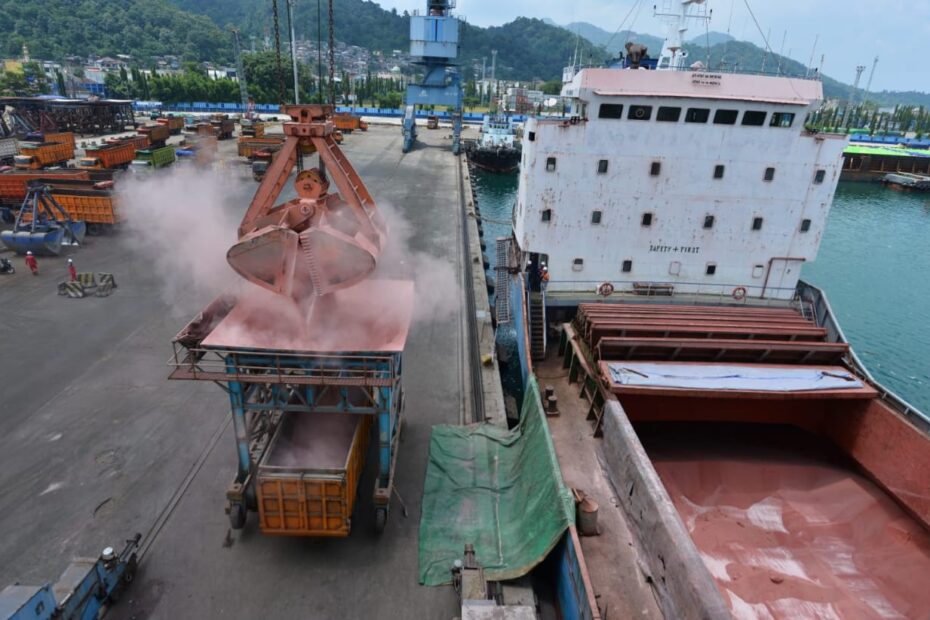
PTP Nonpetikemas Panjang, agricultural product hub
Dry bulk cargo at Panjang includes fertilizer, soybeans, raw sugar, corn, clinker and salt, while liquid bulk flows are dominated by crude palm oil and refined fuel products. The port’s hinterland covers plantation zones, food production centers and industrial areas connected through road and railway infrastructure.
Panjang has also emerged as one of the company’s main project cargo gateways. In 2025, the terminal handled the phased unloading of 54 imported locomotives from the United States, underscoring its growing capability in oversized industrial cargo operations.
“The operations highlight our capability to handle specialized cargo with high safety standards while strengthening integration between port and rail logistics,” Branch Manager of PTP Nonpetikemas Panjang Doddy Setiawan said.
On Sumatra’s western coast, Teluk Bayur has become one of Indonesia’s most important export gateways for processed palm oil products.
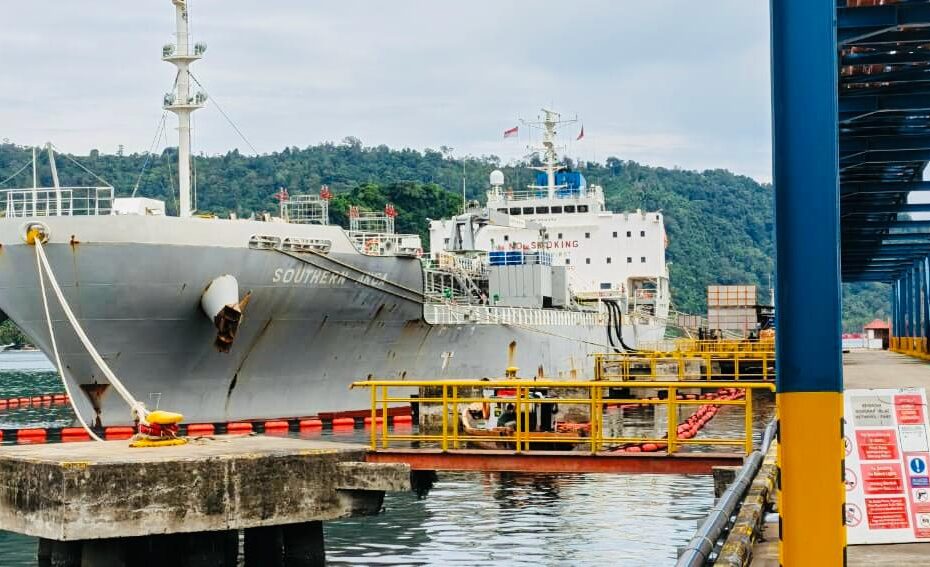
PTP Nonpetikemas Teluk Bayur, Indonesia’s Export Gateway for liquid (CPO) Products
The port handled 1.51 million tons of cargo during the first quarter, supported largely by rising shipments of refined palm derivatives such as olein, palm stearin and refined, bleached and deodorized palm oil.
Unlike raw commodity export terminals, Teluk Bayur increasingly reflects Indonesia’s downstream processing ambitions. One recent shipment involved 18,000 tons of refined palm products bound for Pakistan, highlighting the country’s push to export higher-value processed goods instead of crude palm oil alone.
The terminal’s Gaung Special Bulk Terminal has become central to that strategy as refinery activity expands across West Sumatra.
PTP Nonpetikemas has also turned Teluk Bayur into a showcase for greener port operations, electrifying gantry cranes and integrating billing and cargo systems digitally to improve efficiency and reduce emissions.
In West Kalimantan, Kijing Terminal represents another pillar of Indonesia’s downstream industrial policy, this time centered on minerals rather than plantations.
Located near the Strait of Malacca, Kijing has rapidly developed into a strategic export and industrial logistics hub for bauxite, alumina and coal. Since operations began in 2022, the terminal has become increasingly tied to Indonesia’s efforts to reduce raw mineral exports and expand domestic smelting capacity.
The terminal can accommodate vessels of up to 100,000 deadweight tons, providing a scale advantage uncommon among newer Indonesian bulk ports.
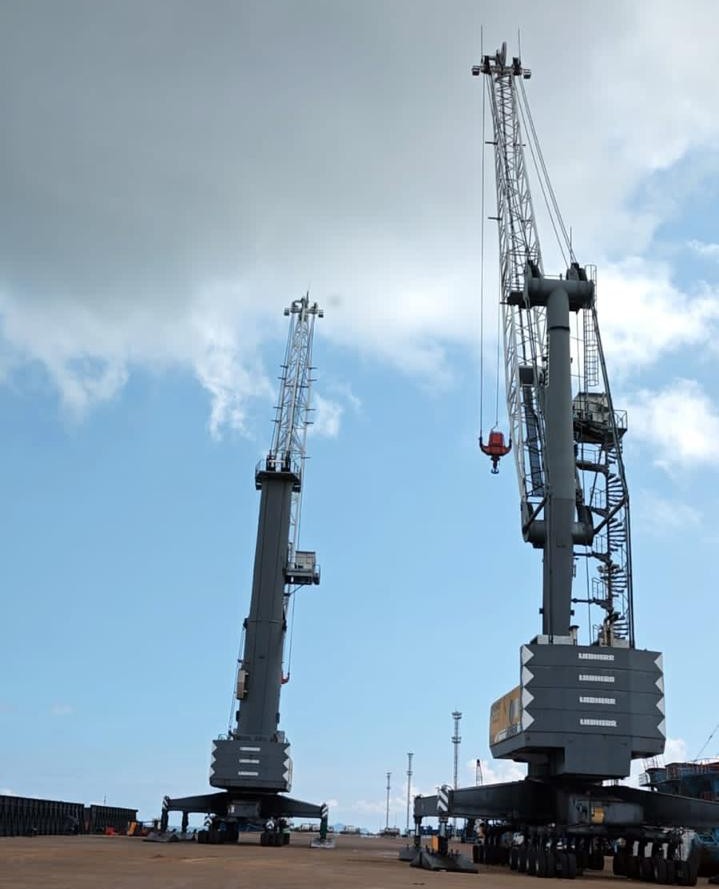
Photo: PTP Nonpetikemas Kijing supports the country’s down streaming industry program
Its operations are closely linked to the country’s aluminum supply chain, including logistics support for smelter-grade alumina refinery projects and mineral processing facilities across Kalimantan.
“Kijing Terminal is a key driver of West Kalimantan’s economy, supporting logistics flows and export activity,” Suwanda, Branch Manager of PTP Nonpetikemas Kijing, ever said.
Elsewhere in Sumatra, Jambi Port is strengthening its position as a regional energy and industrial logistics hub.
The branch handles coal, clinker, construction materials and heavy equipment, while liquid bulk cargo accounts for the majority of throughput. Operations are concentrated in Talang Duku and Muara Sabak, which support logistics distribution across inland industrial and plantation areas.
Throughput reached 1.55 million tons and cubic meters in 2025, driven largely by liquid bulk and bag cargo.
“We continue to drive improvements in operational performance and productivity to ensure smooth distribution of goods and provide the best service to our customers,” Branch Manager of PTP Nonpetikemas Jambi Romi Hasbeni said.
Further east, Pangkal Balam Port in Bangka Belitung has become increasingly specialized in crude palm oil and palm derivative logistics.
The terminal serves plantations across Bangka Island and is expanding handling capacity for liquid bulk cargo as palm production grows in the region.
The port has also widened its role in the palm processing chain by handling palm kernel shells and derivative products. Operational upgrades, including portable drop tanks and submersible pumping systems, are aimed at improving efficiency while minimizing environmental risks from liquid bulk handling.
In Banten, Ciwandan Port has evolved into a dedicated industrial bulk terminal supporting petrochemical, food-processing and manufacturing supply chains in western Java.
The terminal handles commodities ranging from paraxylene and wheat to corn and carbon materials, supported by specialized dry bulk and liquid bulk facilities.
PTP Nonpetikemas has focused heavily on “terminalization” at Ciwandan, a strategy aimed at creating commodity-specific terminals with standardized operations and digitalized systems.
“Digitalization has become a key milestone in improving services to customers while supporting industrial supply chains and the regional economy,” branch manager Andi Purwantoro said.
Meanwhile, Cirebon Port has reinforced its role as a strategic distribution hub for essential industrial commodities along the northern coast of Java.
The terminal handles imported salt, cement, gypsum, coal, biodiesel and palm products, alongside project cargo and offshore equipment.
Its role in maintaining national supply chains became visible in May when the port handled nearly 15,000 tons of imported Australian salt using ship-to-ship transfer operations to support domestic industrial and public consumption needs.
PTP Nonpetikemas said cargo traffic at Cirebon rose nearly 28% in the first four months of 2026, reflecting stronger demand for bulk commodity distribution across West Java and surrounding regions.
Together, the ports illustrate how Indonesia’s non-container logistics sector is becoming increasingly specialized, with each terminal serving a distinct role in the country’s industrial, agricultural and downstream export economy.
The growing specialization also reflects a broader trend in Indonesia’s maritime strategy, where regional ports are being developed according to the dominant commodity profile of their surrounding hinterlands rather than operating under a one-size-fits-all model.
Accelerating Green Transformation, a Key Strategy
Amid rising cargo volumes and expanding industrial activity, PTP Nonpetikemas is also accelerating a broader transformation strategy focused on green operations, digitalization and integrated logistics connectivity.
President Director Indra Hidayat Sani said the company’s performance reflected its ability to maintain operational stability despite shifting global trade flows and changing domestic logistics patterns.
“The first-quarter performance shows operations continue to run optimally, supported by growth in the liquid bulk segment,” Indra said.
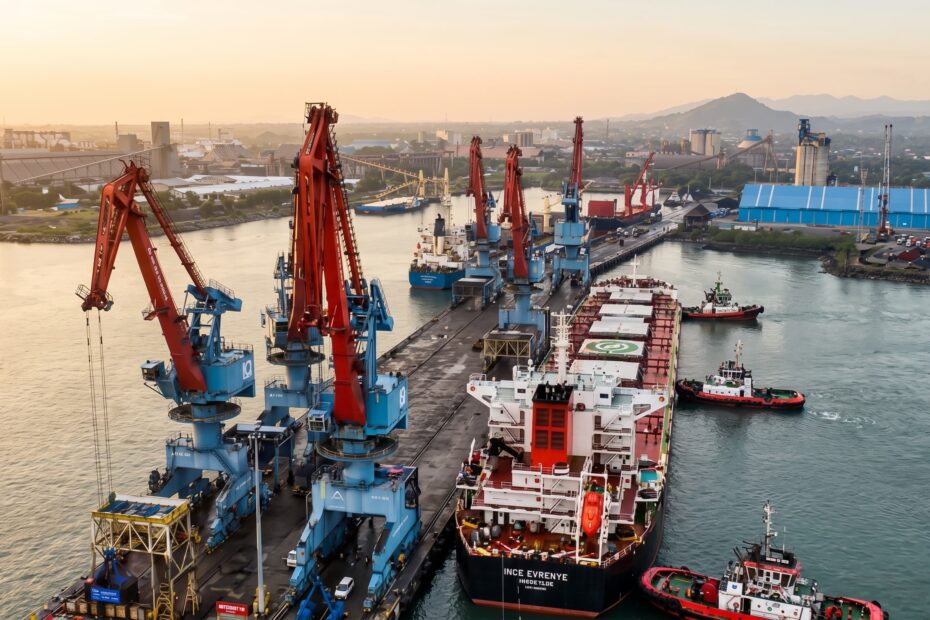
Behind the quarterly growth, however, lies a wider strategy aimed at repositioning PTP Nonpetikemas from a conventional port operator into an integrated national logistics connectivity platform.
The company is modernizing terminal infrastructure, accelerating equipment electrification, integrating digital operational systems and tailoring port development to the dominant commodity strengths of each region across Indonesia.
The transformation mirrors broader changes taking place in Indonesia’s port industry as the government pushes downstream industrialization, commodity processing and supply-chain resilience.
Ports are increasingly evolving from simple vessel transit points into industrial logistics hubs directly connected to manufacturing centers, plantations, mining operations and domestic energy distribution networks.
That shift has elevated the strategic role of non-container terminals, particularly for commodities such as coal, crude palm oil, steel products, fertilizer, cement and industrial raw materials that remain central to Indonesia’s export and domestic industrial activities.
PTP Nonpetikemas said one of its main priorities is strengthening environmentally sustainable operations through its green port strategy, which combines lower-emission cargo handling with worker health protection and long-term community programs.
The company has introduced electrified loading and unloading equipment, LED lighting systems and overhead cranes to reduce dependence on fossil fuel-powered machinery across several terminals.
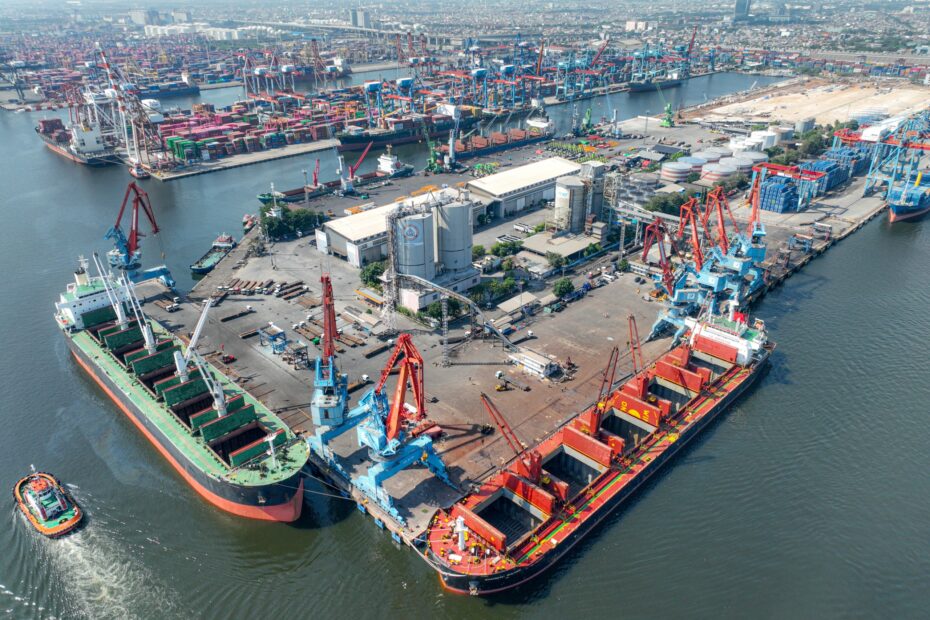
At its Tanjung Priok branch in North Jakarta, for example, the company deployed electrified cargo-handling equipment to unload 21,612 tons of steel billets carried by MV Shanghai Bulker from Nansha Port, China, in mid-May.
The cargo shipment was destined for PT The Master Steel Manufactory to support domestic steel manufacturing supply chains.
PTP Nonpetikemas said the operation demonstrated the terminal’s readiness to support strategic industrial cargo flows while maintaining environmentally sustainable operational standards.
“To strengthen environmentally friendly operational services, PTP Nonpetikemas Tanjung Priok Branch has implemented electrification of port loading and unloading equipment,” branch manager Ruly Arief Dwiyana said.
The branch serves as a key gateway for commodities including steel products, crude palm oil, bulk cement, rice, heavy equipment and general cargo supporting logistics distribution across Indonesia.
PTP Nonpetikemas said its environmental programs are aligned with Indonesia’s Green Port and Green & Smart Port initiatives promoted by the Coordinating Ministry for Maritime Affairs and Investment.
The company has implemented environmental management systems based on ISO 14001 standards and Indonesia’s PROPER environmental assessment framework, alongside emission controls, energy-efficiency programs and waste management initiatives based on reduce, reuse and recycle principles.
Worker health and safety have also become central components of the company’s transformation strategy, particularly in dry bulk operations where exposure to dust and operational hazards remains high.
Corporate Secretary Fiona Sari Utami said the transition toward greener operations was becoming increasingly important for the long-term sustainability of the port industry.
“Green ports are a necessity, not an option. The port industry must move towards cleaner and more sustainable operations because human health and safety remain the top priority,” Fiona said.
The company said it conducted more than 1.27 million safety patrols and over 14,000 safety briefings throughout 2025 while deploying a digital HSSE dashboard to monitor operational risks in real time across its 11 operational branches.
Recognition Beyond Cargo Performance
PTP Nonpetikemas is also gaining wider industry recognition as a series of national and international awards highlight its transformation in operations, governance and corporate strategy.
The company, which operates 11 non-container terminals across Indonesia, recently received awards covering innovation leadership, maritime connectivity, sustainability reporting, workplace safety and corporate communications.

Fiona Sari Utami (right), Senior Manager Corporate Secretary of PTP Nonpetikemas, receives the INSAN PR INDONESIA 2026 Award trophy at the PR INDONESIA Awards 2026 in Yogyakarta, Feb. 13, 2026.
President Director Indra Hidayat Sani won the “Most Innovation” award at the 2026 Indonesia Best 50 CEO Awards organized by The Iconomics, recognizing leadership driving business transformation and competitiveness.
“This award is not just for me personally, but reflects the commitment of the entire PTP Nonpetikemas team to providing adaptive, innovative and customer-oriented services,” Indra said.
The company has accelerated digitalization of terminal operations, infrastructure upgrades and collaboration with logistics stakeholders to improve efficiency and productivity across Indonesia’s maritime supply chain.
PTP Nonpetikemas also received the National Hub Port & Strategic Maritime Connectivity award at the 15th BUMN Awards 2026 for its contribution to strengthening Indonesia’s logistics network and improving maritime connectivity.
Senior Manager Corporate Secretary Fiona Sari Utami said the recognition reflected the company’s efforts to improve service quality and strengthen governance standards.
The company also secured Gold Awards at the League of American Communications Professionals Vision Awards 2024/25 for both its Annual Report and Sustainability Report, with both publications ranked among the Top 100 Worldwide.
The recognition underscored growing international acknowledgment of the company’s transparency and sustainability reporting standards.
“This promotion from Silver to Gold reflects our continuous improvement, not only in business performance but in how we communicate our strategy and responsibility to stakeholders,” Fiona said.
Operationally, the company earned the Best Terminal for HSSE Risk Control and Strengthening & Recognition award for 2025 within Pelindo Regional 2, reflecting efforts to strengthen workplace safety and operational reliability.
For PTP Nonpetikemas, the challenge now lies not only in handling growing cargo volumes, but in ensuring that Indonesia’s maritime logistics system evolves into a more connected, efficient and sustainable industrial network capable of supporting the country’s broader economic ambitions.