

Photo: Barge Sindo Garuda Kencana berthing at TPK Talang Duku on November 26, 2024, and loading 172 TEUs exported to Singapore
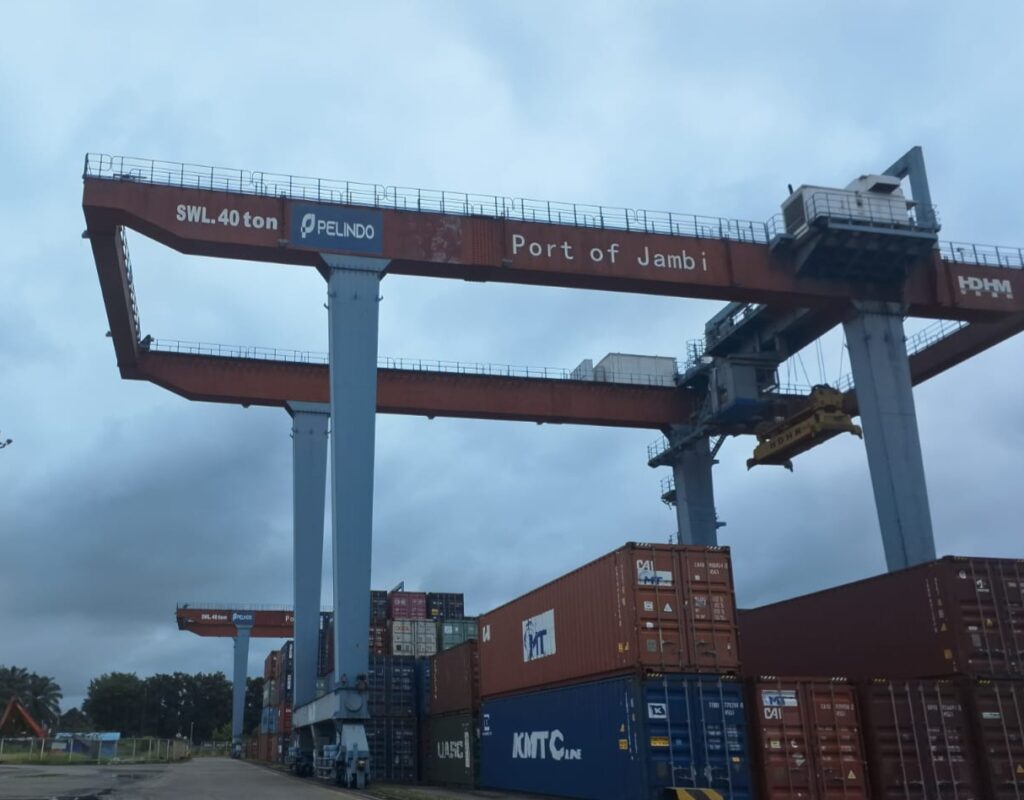
Despite a slowdown in export-import activities, Jambi Container Terminal (TPK Talang Duku) saw throughput growth through October 2024, driven largely by increased domestic trade. However, the terminal is likely to miss its annual target.
According to IPC TPK Jambi’s data, total throughput in October reached 2,770 TEUs, marking an 11% year-on-year increase from 2,490 TEUs in October 2023. This contributed to a 4.6% rise in throughput from January to October 2024, reaching 29,740 TEUs, up from 28,430 TEUs during the same period in 2023. However, the terminal is unlikely to meet its yearly target of 36,558 TEUs.
“It’s true that international trade slowed down until October, but the significant increase in domestic trade has helped us maintain year-on-year growth,” said Wedhar Tani Aji, IPC TPK Area Manager in Jambi, in an interview with Indonesia Shipping Gazette.
Data from IPC TPK highlights declines in several export commodities, which limited overall growth. Exports of crumb rubber, betelnut, wood pallets, and copra fell by 95%, 86%, 97%, and 40%, respectively.
Nevertheless, some export commodities saw impressive growth, albeit insufficient to boost overall export volumes. Exports of coconut and palm acid oil increased by 221% and 151%, respectively.
On the domestic front, shipments of leading commodities such as cement increased significantly. Cement itself rose by 175%, driven by increased demand for infrastructure projects in Jambi City, including malls and business centers.
Challenges of a River Port
The Talang Duku Jambi Port faces limitations due to its location on the Batanghari River, restricting it to barges rather than larger container ships. The limited draft and shallow channel depth prevent the port from accommodating deep-draft vessels.

Photo: Wedhar Tani Aji
“We can only serve barges here, not container ships, because of the limited carrying capacity,” explained Wedhar Aji. “Barges often unload containers here, but due to waiting for cargo, they sometimes temporarily leave and return to complete the loading process.”
Despite these constraints, Wedhar Aji assured that container loading and unloading equipment at TPK Jambi are superior to those at other nearby ports. The terminal’s performance aligns with Pelindo’s key performance indicators (KPIs), with an average ship port stay of 10 to 12 hours.
Several factors have contributed to the export decline in Jambi, particularly in the container shipping sector. Rising export taxes on palm oil derivatives, including a sharp increase in the export tax on palm oil waste (from 5% to 40%), have negatively impacted exports, particularly to China.
Yoga Adhitiya Kurniawan, Head of the Indonesian Freight Forwarders Association (ALFI) in Jambi, noted that this increase in taxes had significantly slowed what was once a thriving export market for palm oil waste.
Additionally, the growing preference for land transport, spurred by the opening of the Trans Sumatra toll road, has seen more goods being shipped by land to Java, where shipping costs are more competitive. This trend further contributes to the slowdown at Jambi Port.

Photo: Faisal (Advantis Sabang Raya Logistik)
M. Ihsan Syafitri, Chairperson of the Indonesian Stevedoring Companies Association (APBMI) in Jambi, also pointed out that high freight rates have made Jambi Port less competitive compared to other regional ports like Panjang in Lampung or Tanjung Priok in Jakarta.
“Freight charges from Jambi are notably higher, which makes the port less attractive to businesses,” Syafitri stated. He recommended that PT Pelabuhan Indonesia (Pelindo) consider adjusting service rates to improve competitiveness, particularly against other terminals along the Batanghari River.
BSH Feedbacks, and Efforts for the Better future
Despite the slowdown in exports and imports, TPK Jambi’s throughput has grown thanks to domestic trade. While the terminal is unlikely to meet its 2024 target, ongoing efforts to improve infrastructure and shipping services are expected to support future growth.
The performance of IPC TPK Jambi has been positively recognized by its service users. Sofyan, a representative from PT Pelayaran Pulau Laut, praised the terminal’s efficiency, noting that the installation of the Jeep crane has significantly sped up loading and unloading operations.
Sofyan underlined that the Box/Ship/Hour (B/S/H) rate has increased significantly. “In fact, B/S/H can reach 26 the two Jeep cranes are used simultaneously to serve a single barge,” said Sofyan, confirming the significant operational improvements.

Photo: Sofyan, (PT Pelayaran Pulau Laut)
Faisal from Advantis Sabang Raya Logistik also commended the improved performance, particularly in the speed of container handling. However, he suggested that extending the pier to accommodate two barges simultaneously could further improve efficiency.
Faisal pointed to significant improvements in operational efficiency, saying “The loading and unloading speed at the port has increased dramatically. The average port stay is less than a day (12 hours), down from days previously. This is a major improvement from several years ago, when the average port stay was longer.”
Both representatives noted challenges with the road conditions leading to the port, highlighting traffic congestion and potholes as key issues affecting timely access to the terminal.
TPK Jambi is pursuing strategies to optimize its operations. One such initiative is the introduction of direct feeder ship services between Jambi and Jakarta, which began in July 2024. This service enables goods to bypass transshipment in Singapore and connect directly to Jakarta for further export, providing local businesses with a more efficient and cost-effective shipping option.
Wedhar Aji also outlined plans to upgrade the container terminal system to TOS Nusantara by the end of November 2024. The new system will reduce manual labor, enhance safety through improved detection tools, and streamline loading and unloading processes, making operations more efficient. “We’re also increasing safety awareness among all stakeholders and stevedoring workers and have implemented traffic flow instructions within the terminal to ensure smooth operations,” said Wedhar, who has been managing IPC TPK Jambi for seven months.