
Indonesia could reduce its national logistics costs by as much as IDR 100 trillion (approximately $6.5 billion) per year through widespread adoption of digital technology and structural reforms, according to the Indonesian Logistics and Forwarders’ Association (ALFI).
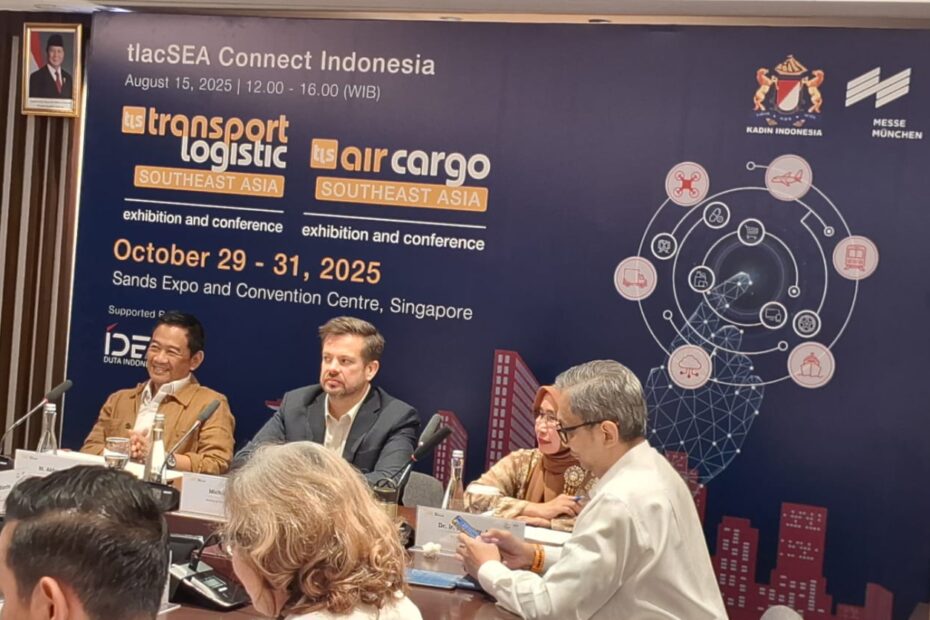
Speaking at a press briefing ahead of the Transport and Logistics & Air Cargo Southeast Asia (tlacSEA) exhibition, ALFI Chairman M. Akbar Djohan said logistics efficiency, particularly through digitalization, is critical for reducing distribution costs and improving Indonesia’s competitiveness in regional trade.
“Through collaboration and technology, we can strengthen the logistics ecosystem, support small businesses, and expand market access,” said Akbar at the Indonesian Chamber of Commerce and Industry (KADIN) Tower on Friday.
Indonesia’s logistics costs remain among the highest in Southeast Asia, accounting for more than 20% of GDP in recent years, roughly double the share in developed economies.
Akbar argued that infrastructure upgrades, port modernization, and digital supply chain integration have positioned the country as a logistics growth hub, but regulatory bottlenecks continue to hamper progress.
“Regulatory harmonization remains a challenge. We need stronger alignment to ensure business certainty,” he said.
Despite persistent global trade disruptions, Akbar noted that Indonesia’s domestic market and geographic scale provide resilience and opportunity. ALFI, he said, plans to support transformation efforts by promoting integration with the National Logistics Ecosystem (NLE), developing AI- and IoT-enabled logistics hubs, and expanding capacity through the ALFI Institute.
Government Signals Support and Indonesia Key Regional Role
Ismariny, Acting Assistant Deputy for Logistics at the Coordinating Ministry for Economic Affairs, echoed the importance of logistics transformation in achieving national development goals.

“I will report ALFI’s data to the Coordinating Minister for Economic Affairs,” she said. “He is very focused on measurable outcomes, and savings of IDR 80 trillion to 100 trillion annually is a strong case.”
The government, she added, remains committed to enhancing connectivity and leveraging big data to support economic growth.
Indonesia’s role in regional logistics transformation was also underscored by Michael Wilton, CEO of MMI Asia Pte Ltd, the organizer of tlacSEA. “From infrastructure investment to supply chain digitization, Indonesia is pivotal to Southeast Asia’s logistics future,” he said.
Wilton added that events like tlacSEA, held in both Indonesia and Singapore, are designed to align national priorities with regional strategies and foster practical solutions for sustainable growth.
Teguh Anantawikrama, KADIN’s Deputy Chair for Technology Transformation, MSMEs, and Digitalization, said Indonesia’s participation in tlacSEA 2025 goes beyond exhibition.
“This is a strategic opportunity to showcase the strength of our logistics sector. We want global players to see Indonesia as a serious partner.”
Industry Leaders Convene Ahead of tlacSEA
A forum discussion following the press conference featured leading logistics figures, including Mahendra Rianto (ALI), Liana Trisnawati (ABUPI), Utami Prasetiawati (PPLBI), and Iman Sedayu Pusponegoro (ALDEI), who shared insights on sector challenges and opportunities.
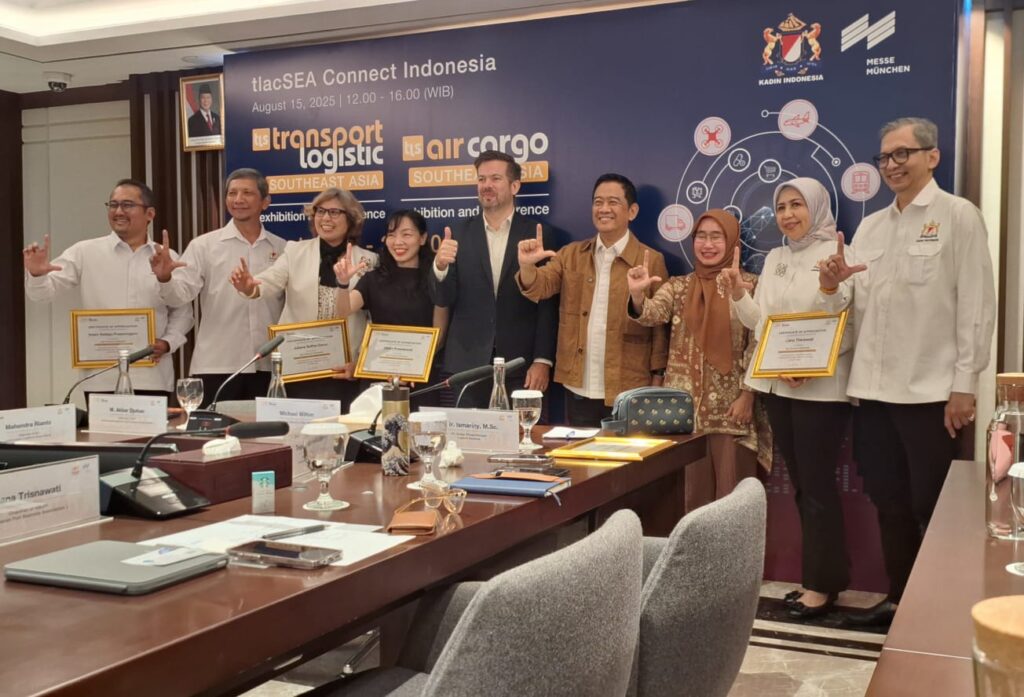
The tlacSEA 2025 event, scheduled for October 29–31 at the Sands Expo & Convention Centre in Singapore, is expected to draw more than 10,000 professionals, 300 exhibitors, and over 90 speakers. The event will spotlight supply chain innovation, cross-border connectivity, and sustainable logistics practices across the region.
Southeast Asia’s logistics sector is undergoing rapid transformation amid a surge in intra-ASEAN trade, booming e-commerce, and rising pressure to decarbonize.
For Indonesia, an archipelago with a complex geography, digitalization is seen as essential to building an efficient and globally competitive logistics network.
The country is also pushing ahead with key infrastructure projects, including the Trans-Sumatra Toll Road, major port expansions, and logistics hubs beyond Java, aimed at opening new trade corridors and supporting a growing industrial base expected to account for more than 21% of GDP by 2030.